Free EMS courier delivery across India
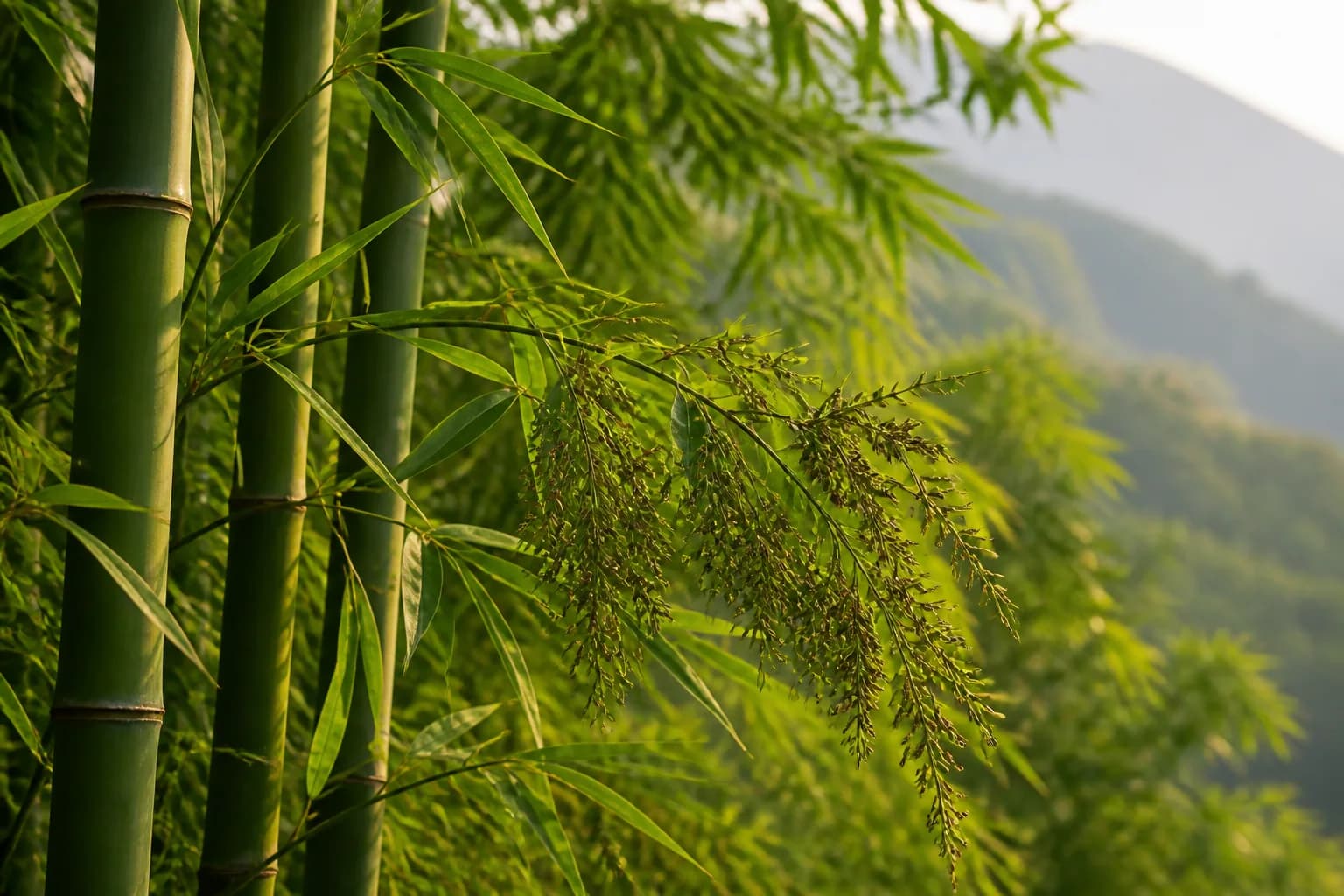
Green bamboo culms, leaves and seed heads in a Himalayan grove

Bamboo growing guide

How to grow bamboo from seedBambusa bambos

Bamboo seed is rare because clumps flower only once in decades, and it stays alive for a short time. Sow it fresh, shallowly and warm, keep it moist but not wet, and grow the seedlings on in shade before planting out in the rains.

≈ 30 °C
Germination temp.
5-10 days
Germination
≈ 5 mm
Sowing depth

At a glance

Germination temperature
Warm: about 30 °C (86 °F) is best; 20 °C (68 °F) is slow and 40 °C (104 °F) harmful.
Sowing depth
About 5 mm (0.2 in), covered with sand.
Germination time
Fresh seed starts in 5-10 days; a seedbed keeps emerging for 25-30 days.
Light
Partial shade under a shade net for seedbeds and young seedlings.
Pre-treatment
None essential. An overnight soak helps you remove empty, floating seed.
Transplant or direct sow
Sow in a nursery bed or tray, prick out into bags, plant out at the start of the rains.

Seed preparation

Seed preparation

Sow as soon as you receive the seed. Bamboo seed is short-lived: kept at room temperature and room humidity it can lose most of its viability within a few months, while seed kept dry and cool (about 4-5 °C, 39-41 °F) in a sealed container lasts much longer. If you must wait, keep the packet sealed in the refrigerator; damp seed loses its germination quickly.

Scarification

Not needed. The seed is a grain (caryopsis) like rice or wheat, with no hard coat.

Stratification

Not needed. Bambusa bambos and Dendrocalamus strictus are tropical bamboos and germinate without cold treatment.

Soaking

Optional. Soak overnight in water and discard the seeds that float; they are usually empty. Indian nursery guidance also protects the seed against fungi with a fungicide seed dressing or a one-hour soak in neem leaf extract, then air-drying before sowing.

Germination conditions

Germination temperature

Germination is highest and fastest near 30 °C (86 °F); at 20 °C (68 °F) it is slow and 40 °C (104 °F) damages the seed. These figures come from Dendrocalamus strictus; Bambusa bambos behaves as a typical warm-climate grass. In India sow during the warm months; in cool climates use a heated propagator.

Sowing depth

Sow in shallow drills or holes about 5 mm (0.2 in) deep and cover lightly with sand.

Growing medium

Nursery beds: soil, sand and compost or well-rotted farmyard manure, 3:1:1. Trays: vermiculite or clean sand, which gave clearly higher germination than plain soil in Indian bamboo trials.

Moisture

Keep the medium evenly moist with a fine sprinkler, never waterlogged. In trials a waterlogged substrate killed the seed at every temperature, and too little water left it unable to swell.

Light

Seed does not need to be exposed. Keep beds in partial shade, for example under a shade net, so the surface does not dry out.

Germination time

Fresh Bambusa bambos seed germinates in 5-10 days, with up to 80% germination. In nursery beds emergence starts after 5-7 days and continues for 25-30 days.

Transplanting and first growth

  1. Pricking out

    When seedlings have 4-6 leaves, move them into polybags about 15 × 20 cm (6 × 8 in) filled with soil, sand and manure 1:1:1. If they will stay in the nursery for a year or more, use larger bags (TNAU: 16 × 30 cm; 30 × 45 cm lets the rhizome develop better).

  2. Hardening

    Keep bagged seedlings under 50-75% shade for one to two months and water them daily, then move them gradually into full sun.

  3. Planting out

    Plant at the onset of the rainy season. Seedlings of 3-4 months can go out; older seedlings (1-1.5 years) raised in large bags establish well. Give each plant 5-10 kg of compost or farmyard manure in the planting pit. PROSEA suggests about 6 × 6 m (20 × 20 ft) between clumps of this large bamboo.

Common problems

ProblemFew or no seedlings
Cause
Old or damp-stored seed, or a soggy seedbed.
What to do
Sow fresh seed immediately, store it dry and cool if you must wait, and keep the medium moist but drained.
ProblemSeedlings collapse at soil level
Cause
Damping-off fungi (Rhizoctonia, Fusarium).
What to do
Use clean sand or vermiculite, do not overwater, give air movement, and dress seed with a fungicide or neem extract before sowing.
ProblemSeedlings scorch or stall after pricking out
Cause
Full sun too early or drying bags.
What to do
Keep them under shade net for one to two months and water daily until hardened.
ProblemRolled or eaten leaves
Cause
Bamboo leaf roller caterpillars and bamboo aphids, recorded on this species in India.
What to do
Check seedlings regularly and remove affected leaves; damage is usually local.

Practical growing tips

Expect slow clump building

A Bambusa bambos clump reaches about 5 m (16 ft) in 7 years and full size after about 20 years, when culms can be up to 30 m (100 ft) tall. Seedlings spend their first years producing many thin shoots.

Give it room and water

This is a very large, thorny, clumping bamboo of moist tropical valleys. Plant it well away from buildings and paths, and water young plants in long dry spells.

Feed for growth

Organic manure at planting and nitrogen fertilizer in later seasons speed up clump growth.

Why seed is rare

A whole population flowers together only once in decades (PROSEA: about 16-45 years), the flowering clumps die, and the seed must then be sown within months. Keep every seedling you raise; it is not a quick crop.

Bamboo seeds from Deodar

Sow bamboo seed as soon as it arrives, shallowly in warm, moist sand.

Browse seeds

Frequently asked questions

How long do bamboo seeds stay viable?

Not long. At room temperature many bamboo seeds lose viability within months; kept dry in a sealed container in the refrigerator they last much longer. Sow them as soon as possible.

How fast does bamboo grow from seed?

Germination is quick, often within one to two weeks, but the clump builds slowly: Bambusa bambos reaches about 5 m in 7 years and needs about 20 years to reach full size.

Will a seedling grow into the same bamboo as the parent?

It will be the same species, but seedlings vary a little from plant to plant. Unlike a division, a seedling starts as a small plant and takes many years to reach the size of the parent clump.

Can I grow this bamboo in a cold climate?

Bambusa bambos is a tropical bamboo for humid, frost-free areas. In cool climates it can be germinated indoors but will not survive outdoors in winter.