Free EMS courier delivery across India
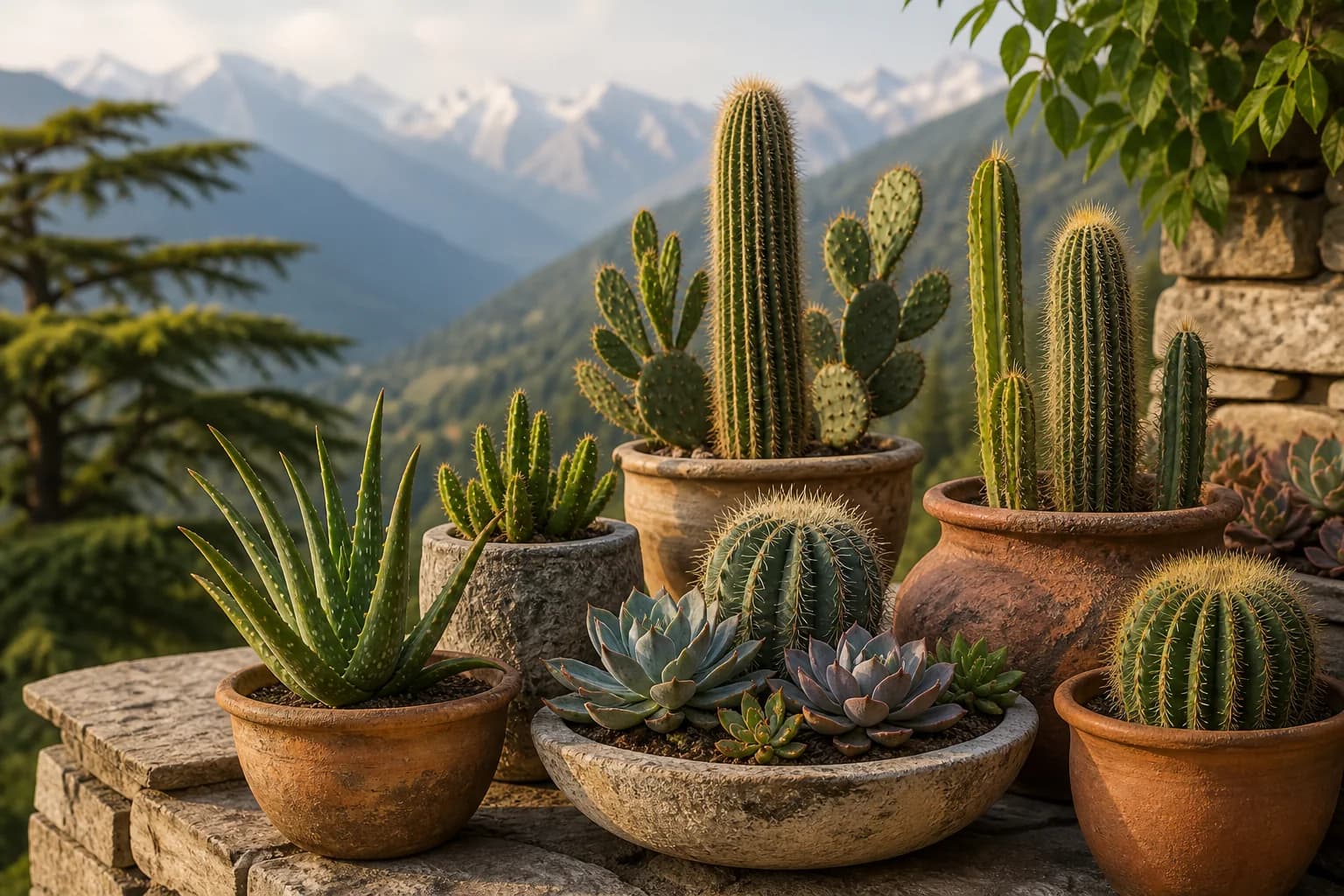
Cacti, aloe and rosette succulents arranged in natural terracotta planters

Succulent growing guide

How to grow succulents from seedmixed succulent species

Succulent seed is tiny and sown on the surface of a fine, gritty compost kept warm and humid. Most kinds sprout in one to two weeks, then grow slowly for their first year.

≈ 21-29 °C
Germination temp.
3-14 days
Germination

At a glance

Germination temperature
About 21-29 °C (70-85 °F) by day, ideally 24 °C (75 °F); about 15 °C (59 °F) at night is fine.
Sowing depth
On the surface; cover with grit no deeper than the seed's own size.
Germination time
Usually 3-14 days; some seed is sporadic.
Light
Bright light, no direct sun on the tray.
Pre-treatment
None needed for most succulents.
Transplant or direct sow
Sow in pots or trays; prick out when crowded.

Seed preparation

Seed preparation

This guide covers mixed succulent seed: leaf and stem succulents such as the rosette-forming kinds sold in mixes, and small cacti if included. Many seeds are dust-fine. Tip them onto a folded paper and tap them out evenly. If you can, sterilise the compost first: about an hour in the oven or three to four minutes in a microwave.

Scarification

Not needed for typical succulent mixes.

Stratification

Not needed for most succulents, which come from warm climates.

Soaking

Not needed. Dust-fine seed cannot be handled once wet; water the compost before sowing instead.

Germination conditions

Germination temperature

Keep the compost at about 21-29 °C (70-85 °F), ideally 24 °C (75 °F); outside this range germination is delayed. A drop to about 15 °C (59 °F) at night is fine. In India sow from late winter to spring, or in the cooler post-monsoon months; avoid the monsoon itself, when humidity makes seedlings rot.

Sowing depth

Sprinkle seed on the surface. Large, flat seeds can be pushed in on edge. Cover with fine grit or coarse sand no deeper than the seed is thick, or sow onto a grit layer and wash the seed down between the stones with a fine spray.

Growing medium

Fine seed compost, sieved if coarse, mixed with about a third fine grit, coarse sand or perlite. Do not use sand alone: it dries too fast and tiny seed slips between the grains. Aim for about pH 6.

Moisture

Stand the pot in water to half its depth until the surface darkens, then drain. Put pots in a clear bag or propagator so they never dry out or stay soggy.

Light

Bright light but no direct sun, which scorches seedlings. A grow light works well.

Germination time

Usually 3-14 days with steady moisture. Germination is often sporadic, so keep the pot going for several weeks.

Transplanting and first growth

  1. Opening up

    Once most seedlings are up and growing, open the bag or propagator vents a little more each day. Water in the morning so the surface dries before night.

  2. Pricking out

    Leave seedlings together until they crowd each other: in the same year for fast growers, the next year for slow ones. Some can be moved at three to four months. Lift the compost in one piece, tease roots apart and pot them into gritty compost.

  3. First year

    Growth is slow: many reach only pea size in six to twelve months, then speed up. A weak, balanced liquid feed helps seedlings develop faster.

Common problems

ProblemSeedlings collapse and rot
Cause
Damping off in wet, warm, still air.
What to do
Sterile compost, morning watering, gradual ventilation; a copper-based fungicide can help.
ProblemGreen film or moss on the surface
Cause
Constant wet surface without grit.
What to do
Top-dress with fine grit and do not overwater.
ProblemTall, pale seedlings
Cause
Too little light.
What to do
Move to bright light or under a grow light, but shade from hot midday sun.
ProblemWhite woolly insects on roots
Cause
Root mealybugs.
What to do
Wash roots, discard badly infested compost and repot; these are insects, so fungicides do not help.

Practical growing tips

Watering older plants

Once established, water thoroughly and let the compost dry before the next watering. The legacy advice holds: roughly every one to two weeks in the growing season and much less in the cool or dormant season.

Light

Give young plants bright light and get them used to direct sun gradually; sudden full sun scorches them.

Potting mix

For grown plants a free-draining succulent mix works, such as equal parts sand, perlite and soil, as the legacy guide suggests.

Repotting

Repot every two to three years in spring when plants fill the pot.

Succulent seeds from Deodar

Raise your own collection of succulents from seed on a bright, warm windowsill.

Browse seeds

Frequently asked questions

Should I cover succulent seeds?

Barely. Sow on the surface and add at most a thin layer of fine grit, no deeper than the seed is thick.

How long do succulent seeds take to germinate?

Most sprout in 3-14 days at about 24 °C (75 °F) if the compost stays moist, but some keep coming for weeks.

Why do my succulent seedlings rot?

Usually too much water with too little air. Water from below in the morning, use a gritty top dressing and ventilate once seedlings are growing.