
Seed preparation
Eucalyptus seed comes mixed with fine chaff, which is normal; one gram holds hundreds to thousands of seeds. Mix the seed with an equal amount of dry sand so it spreads thinly and evenly.
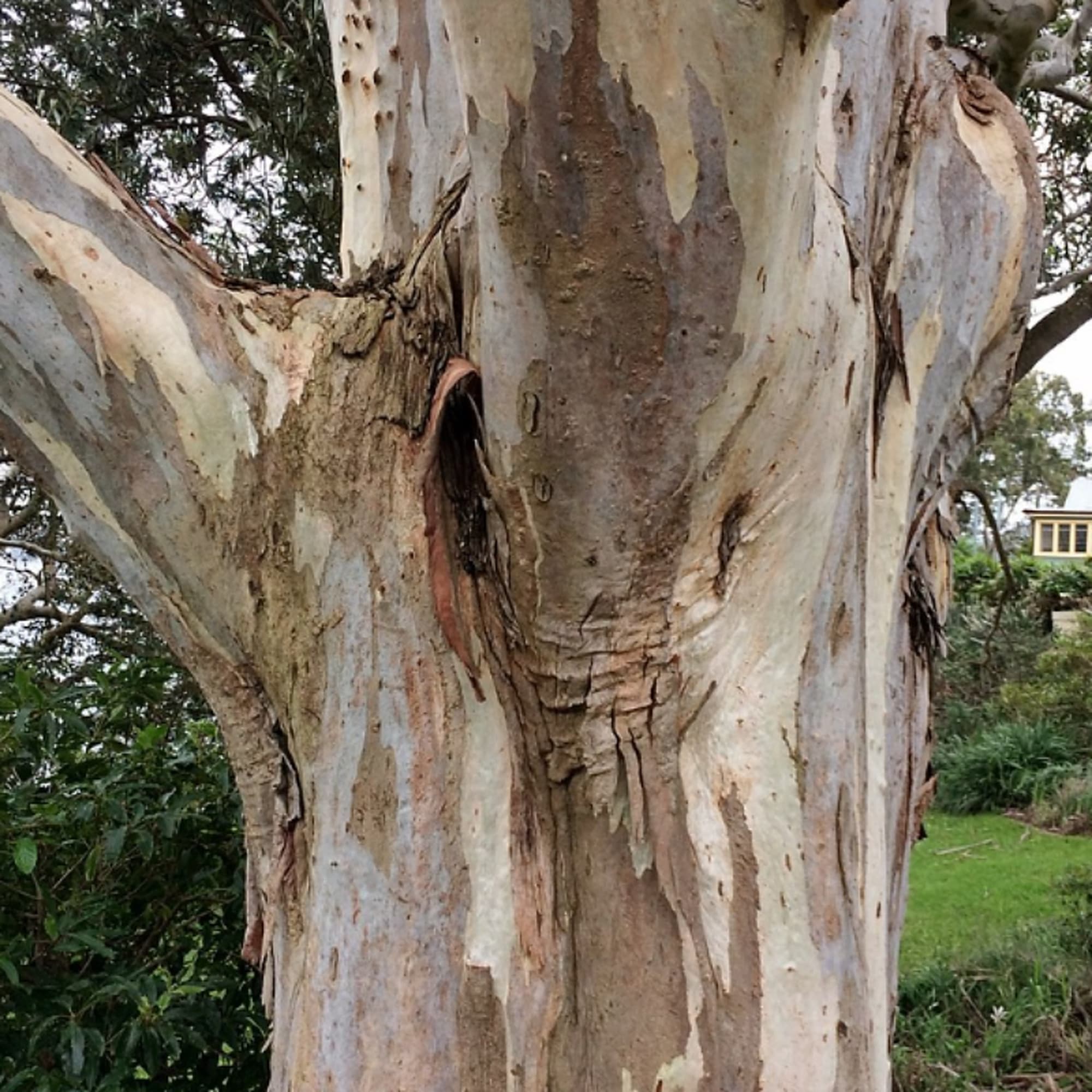
Tree growing guide
Eucalyptus seed is as fine as dust and needs no pre-treatment: scatter it thinly on the surface, keep it moist and shaded, and seedlings appear within one to three weeks. This guide covers forest red gum (Mysore gum) and similar plains eucalypts.
Eucalyptus seed comes mixed with fine chaff, which is normal; one gram holds hundreds to thousands of seeds. Mix the seed with an equal amount of dry sand so it spreads thinly and evenly.
Not needed. The seed absorbs water readily.
Not needed for E. tereticornis, E. camaldulensis and other plains species. Some cold-climate eucalypts from high altitudes benefit from moist chilling; Tasmanian forest seed testing chills samples at 4 °C (39 °F) for 28 days.
Not needed. Soaked fine seed clumps and is hard to sow evenly.
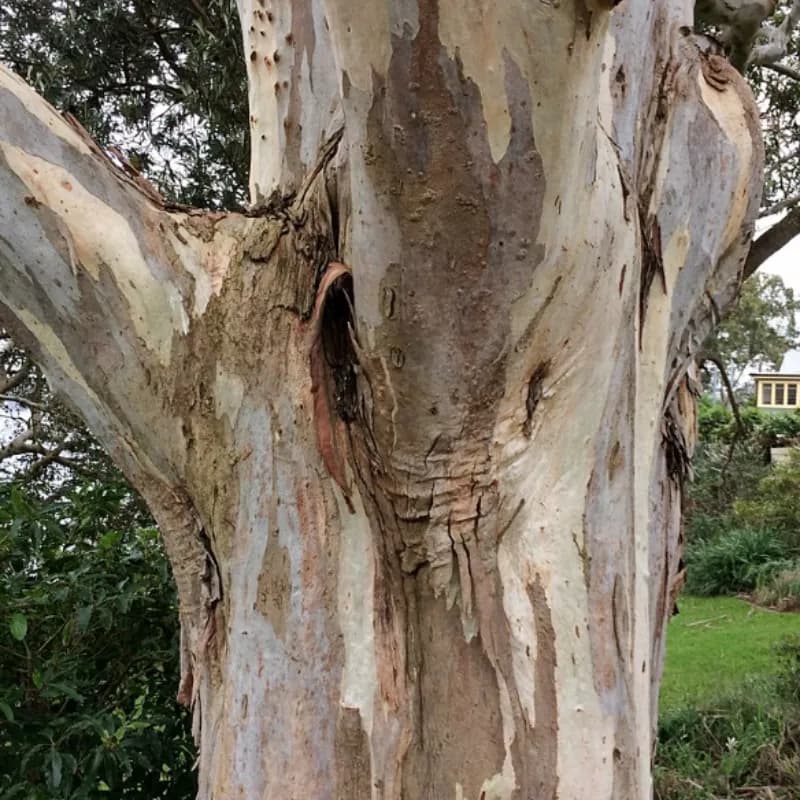
Sow in the warm season. TNAU sows E. tereticornis nursery beds from January to March in Tamil Nadu; seed labs germinate eucalypt seed at about 20 °C (68 °F).
Scatter the seed-sand mix on the surface and add only a very light sprinkling of fine sand. Indian nurseries cover beds with a thin layer of sand or soil and a mulch of dry grass, paddy straw or coir waste.
Raised nursery beds about 2 x 1 m and 15 cm (6 in) high, or seed trays of fine, free-draining seed mix. Avoid rich, soggy compost.
Keep the surface damp but not wet; TNAU waters beds twice daily. Wet, soggy soil causes root rot and fungal attack.
Shade the beds for the first fortnight, then give full light so seedlings do not stretch.
The first seedlings appear after 3-7 days and most are up within about 2-3 weeks. Do not oversow, or the seedlings form a dense carpet that is hard to separate.
When seedlings have 2-4 leaves (within about 30 days), lift them carefully and move each into a 13 x 25 cm polybag filled with a red-soil potting mix.
Grow seedlings on in full sun. Move the bags every month so roots do not grow through into the ground, and protect them from ants and termites.
Plant during the monsoon rains when seedlings are 25-30 cm (10-12 in) tall, in pits with a basket of compost or manure and a saucer-shaped basin to hold rainwater. TNAU spaces trees 2 x 2 m for pulpwood, 4 x 1 m in agroforestry and 1 x 1 m for fuelwood.
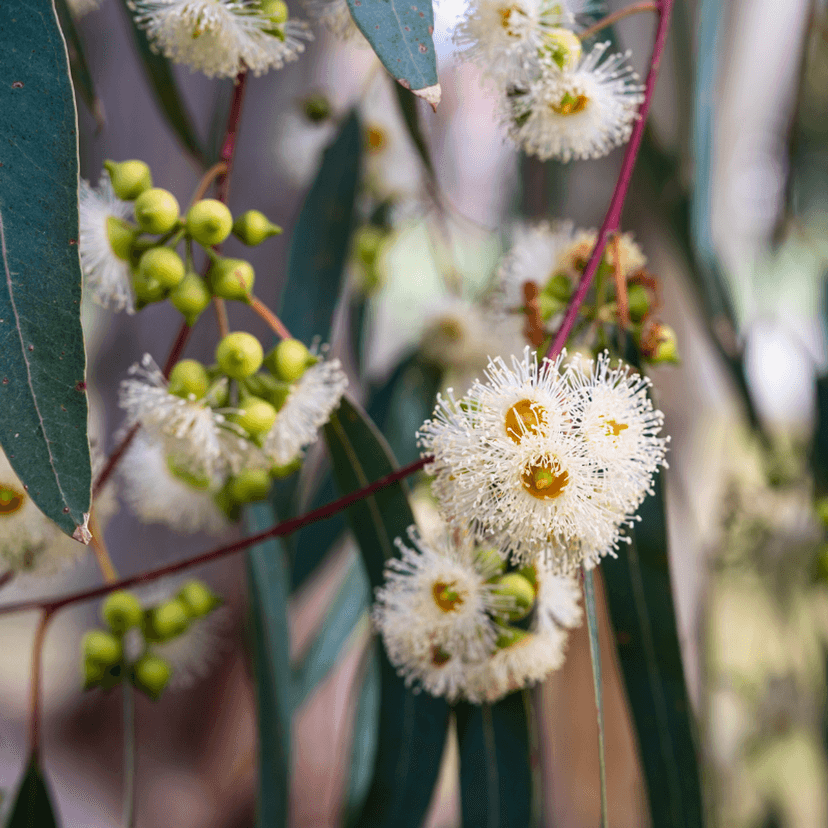
Forest red gum (E. tereticornis) and river red gum (E. camaldulensis) suit the plains at 0-500 m with about 750-1,000 mm of rain. Blue gum (E. globulus) is a hill species for 1,200-1,800 mm of rain and up to 2,500 m.
FAO notes that eucalypts use less water per unit of wood than many trees but more in total because they grow fast, and that competition for water and allelopathic effects on nearby plants are most marked where rainfall is below 400 mm. FAO advises avoiding such dry areas and managing plantings carefully at 400-1,200 mm; World Agroforestry advises not planting river red gum close to crops.
Plains plantations are cut after about 7 years and hill plantations after about 10; most eucalypts resprout from the stump.
Forest red gum is a large, fast-growing tree. Plant it well away from buildings, drains and vegetable beds.
Scatter eucalyptus seed thinly on the surface, keep it damp and shaded, and prick out at two to four leaves.
Usually they were buried too deep or the surface dried out. The seed is tiny, so sow it on the surface with only a light dusting of sand and keep it damp.
Not for plains species such as forest red gum or river red gum. Only some cold-climate, high-altitude eucalypts benefit from chilling.
It competes strongly for water, and FAO reports that this and its allelopathic effects are strongest in dry areas below 400 mm of rain. Keep it away from crops and vegetable beds.


