
Seed preparation
Marigold seeds are long and thin with a pale tip. Sow them dry, lying flat, and space them so each seedling has room.
Flower growing guide
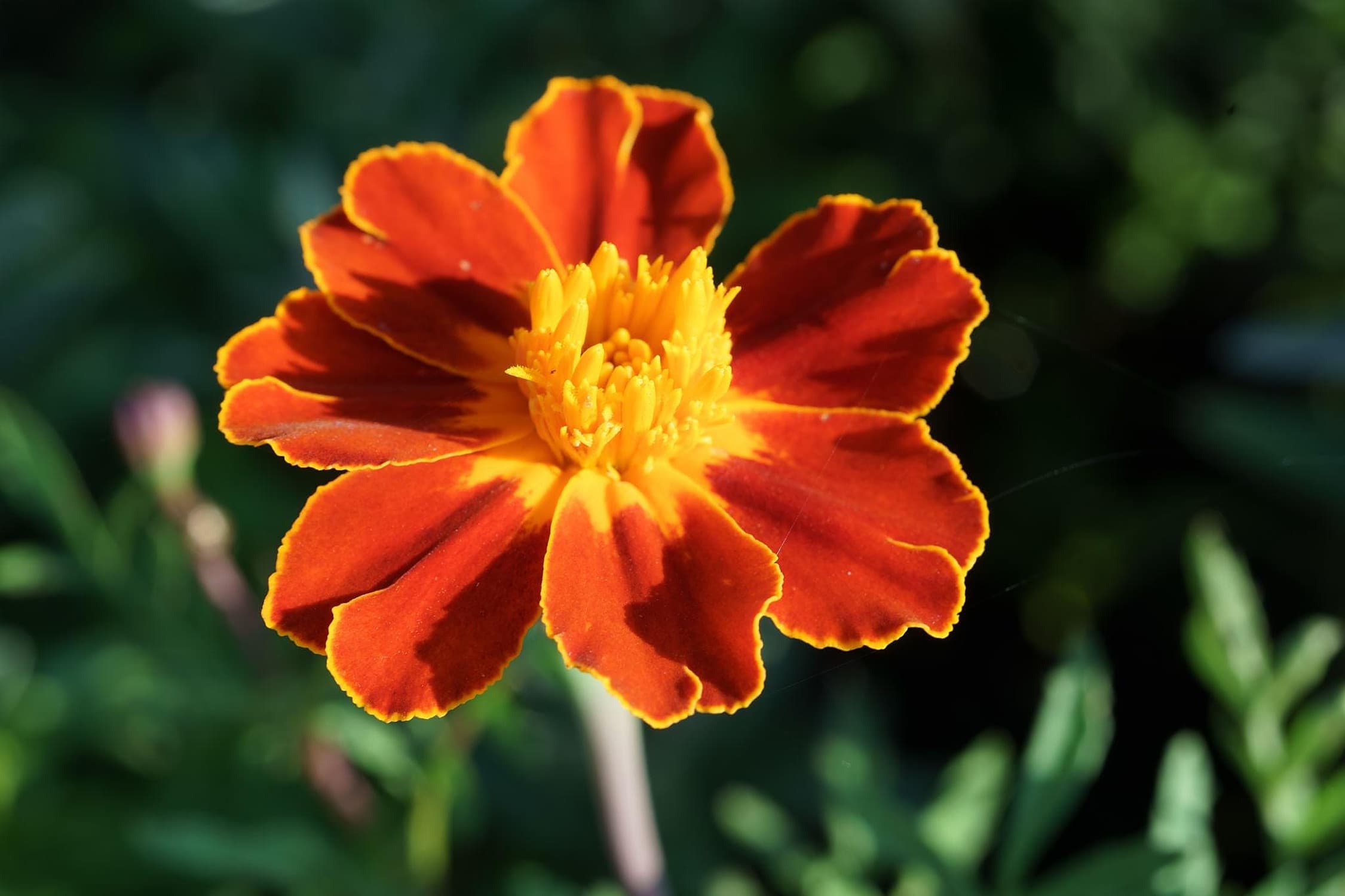
French marigolds are compact, quick and tolerant of heat, and the seed sprouts within days at 22-24 °C. This guide covers sowing, the three Indian growing seasons, and how to keep plants flowering and healthy.
Marigold seeds are long and thin with a pale tip. Sow them dry, lying flat, and space them so each seedling has room.
Not needed. The seed absorbs water quickly.
Not needed. French marigold is a warm-season annual with no cold requirement.
Not needed. Sow into moist compost and water gently.
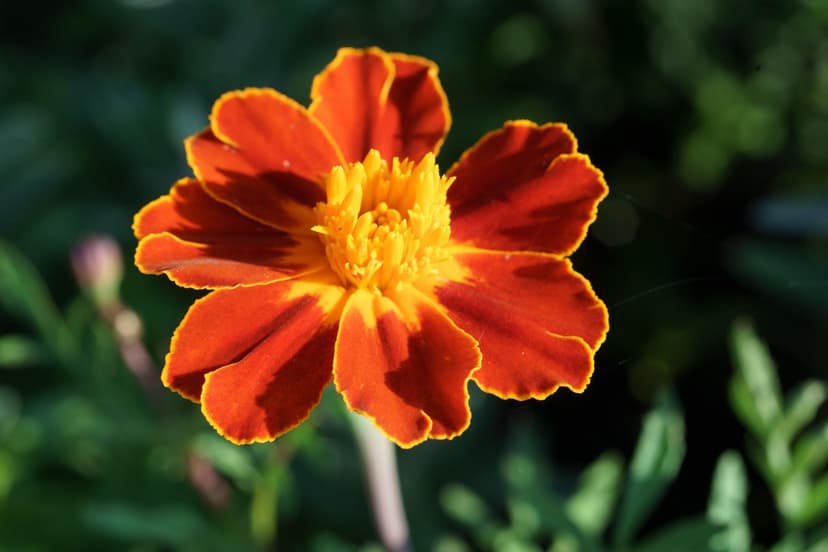
Professional growers germinate French marigold at 22-24 °C (72-76 °F), then lower it to 20-21 °C (68-70 °F) after about a week. Outdoors, sow once temperatures are above about 18 °C (65 °F).
Cover the seed with a thin layer of fine compost or vermiculite, just enough to keep it moist.
A fine, well-drained seed compost or a raised nursery bed about 15 cm high. Avoid wet, heavy mixes: damping off is a common nursery disease of marigolds.
Keep evenly moist but never waterlogged. Overwatering in the seedling stage invites damping off.
French marigold does not need light to germinate, so a light covering is fine. Move trays into good light as soon as seedlings appear to prevent stretching.
At 22-24 °C (72-76 °F) roots emerge in 2-3 days; in an Indian nursery bed seedlings usually appear in about 4-5 days.
In warm Indian conditions nursery seedlings are ready in 3-4 weeks, at about the 4-leaf stage and 10-12 cm (4-5 in) tall. Transplant in the evening and water straight away. In cooler climates, gardeners start seed indoors about 8 weeks before planting out after the last frost.
Pinch out the growing tips of young plants for a bushier habit. French marigolds grow about 15-30 cm (6-12 in) tall and need closer spacing than tall African marigolds.
Full sun, well-drained soil at about pH 6-7, and moderate, even moisture. Marigolds need little fertiliser; too much gives leaves rather than flowers.
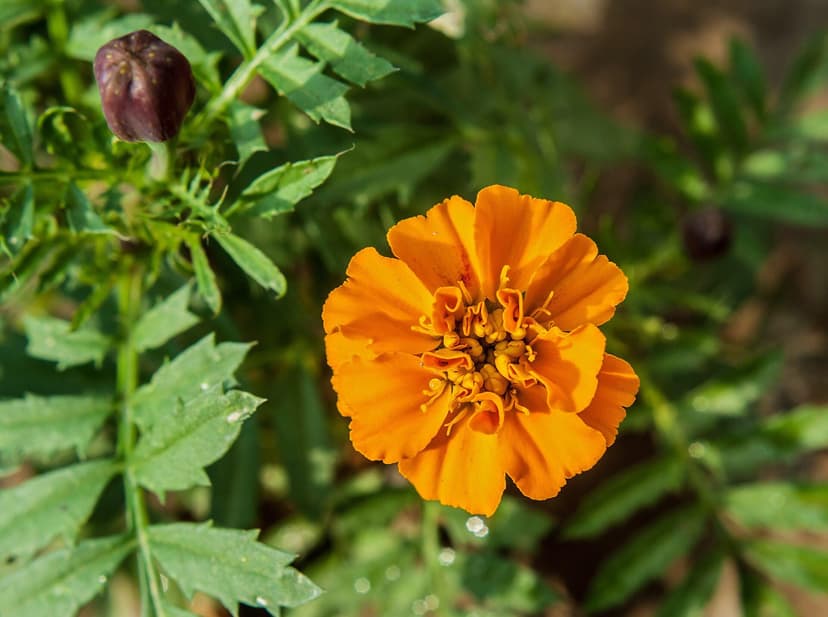
On the North Indian plains marigolds are grown in three seasons. Winter crop: nursery in mid-September, transplant by mid-October; this is the main season for French marigold. Summer crop: sow in January under polythene, transplant by about 25 February. Rainy-season crop: sow at the end of June, transplant in the first half of August. In the hills, sowing moves later the higher you go, into late spring at high elevations.
French marigolds flower from spring into autumn in temperate gardens if kept deadheaded; removing old blooms also reduces disease.
French marigold roots release alpha-terthienyl, which is toxic to root-knot nematodes. Grown as a dense cover in a bed and dug in, they can help reduce these pests before a vegetable crop.
French marigolds are compact, about 15-30 cm (6-12 in), with smaller single or double flowers, often bicoloured. African marigolds are much taller, about 0.9-1.2 m (3-4 ft), with large pompon flowers.
Sow French marigolds for compact, long-flowering edging, pots and companion planting.
On the North Indian plains there are three seasons. For winter flowers raise the nursery in mid-September and transplant by mid-October; French marigold flowers best in this winter crop. For summer, sow in January under polythene and transplant by late February. For the rainy season, sow at the end of June and transplant in the first half of August. In the hills, sow in spring or early summer depending on altitude.
No. Marigold seed germinates whether covered or not; a thin layer of compost or vermiculite keeps it moist. Give seedlings good light as soon as they appear.
Yes, against root-knot nematodes. Their roots release a compound toxic to these nematodes, so a dense planting dug into the soil can help clean a bed before vegetables.

