
Seed preparation
Basil seed is small and sprouts readily. Use fresh, clean seed-starting compost and sow thinly: crowded seedlings are more likely to rot at the base.
Herb growing guide
Basil is a fast, warmth-loving herb that sprouts in about a week at 20 °C. Sow it shallowly in warm conditions, keep it out of the cold and pinch it often for a long, leafy harvest.
Basil seed is small and sprouts readily. Use fresh, clean seed-starting compost and sow thinly: crowded seedlings are more likely to rot at the base.
Not needed. The seed coat does not block water uptake.
Not needed. Basil is a tropical-origin plant; cold treatment does not help and chilling slows it down.
Not needed. Wet basil seed forms a sticky gel coat that makes it hard to sow evenly, so sow it dry and water afterwards.
Keep the compost at about 20-21 °C (68-70 °F). Cooler compost gives slow, patchy emergence. In most of India basil can be sown through the warm part of the year; in the north avoid sowing into cold winter nights.
Cover with only a fine layer, about 0.6 cm (1/4 in), or press the seed onto the surface. The two methods are both used by reliable growers; a very light covering keeps the seed moist without burying it.
Fine, free-draining seed compost in trays or small pots. Outdoors, a fertile, well-drained bed with pH 6.0-7.5.
Keep evenly moist but not wet. Cover the tray with a clear lid or bag until seedlings appear, then remove it. Overwatering is the main cause of seedling collapse.
Give seedlings a warm, bright windowsill or full sun as soon as they emerge, or they stretch and fall over.
5-10 days at about 21 °C (70 °F). Some purple and ruffled types are slower.
Move seedlings to their own 7.5 cm (3 in) pots once they have two to three pairs of true leaves. Harden them off and plant out only when daytime highs are in the low 20s °C (70s °F) and nights stay above 10 °C (50 °F).
Space plants 15-30 cm (6-12 in) apart in the garden; large Genovese-type plants need more room. In pots, use a container at least 20 cm (8 in) wide and deep.
When young plants have three or four pairs of leaves, pinch out the growing tip above a leaf pair. This makes the plant branch and gives far more leaves.

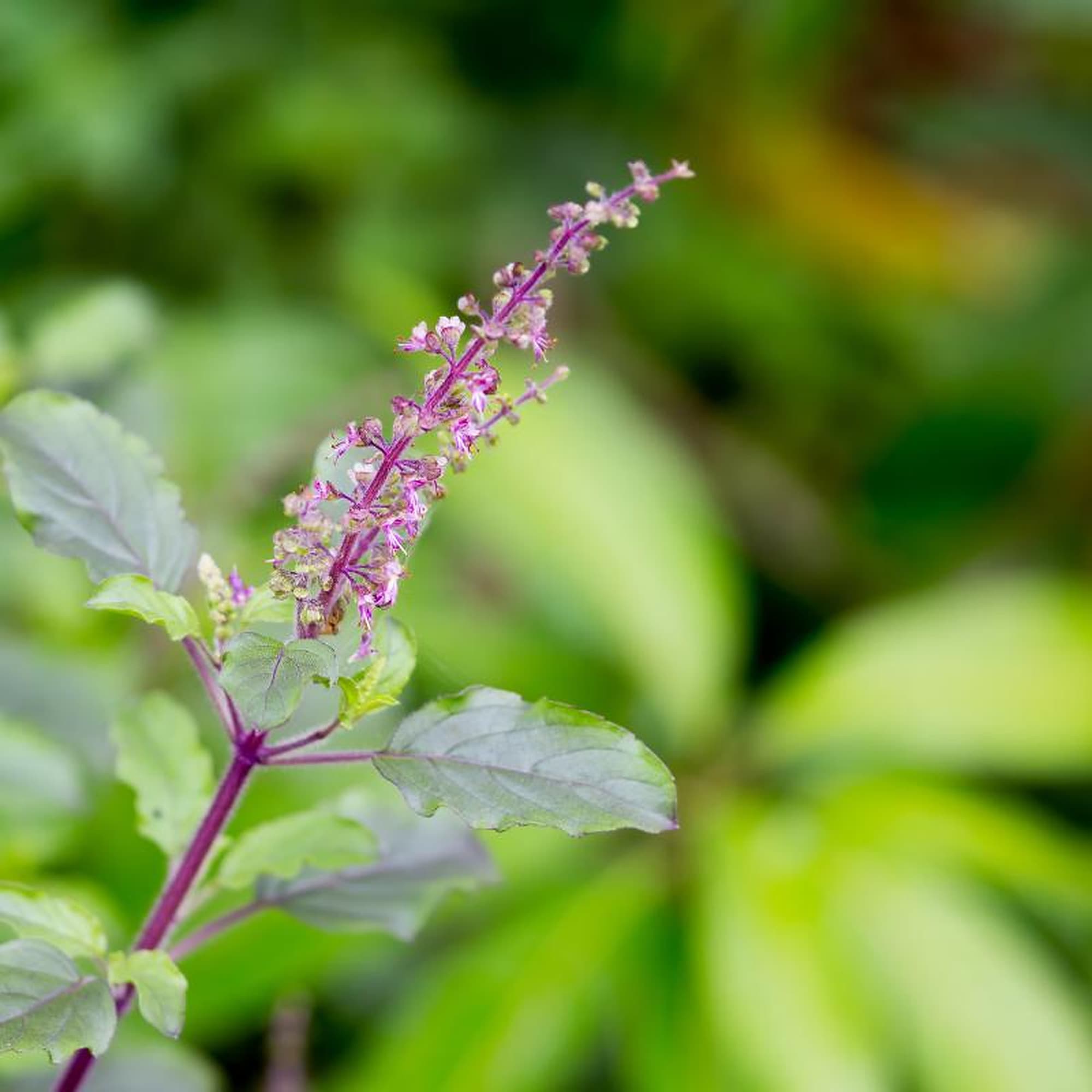
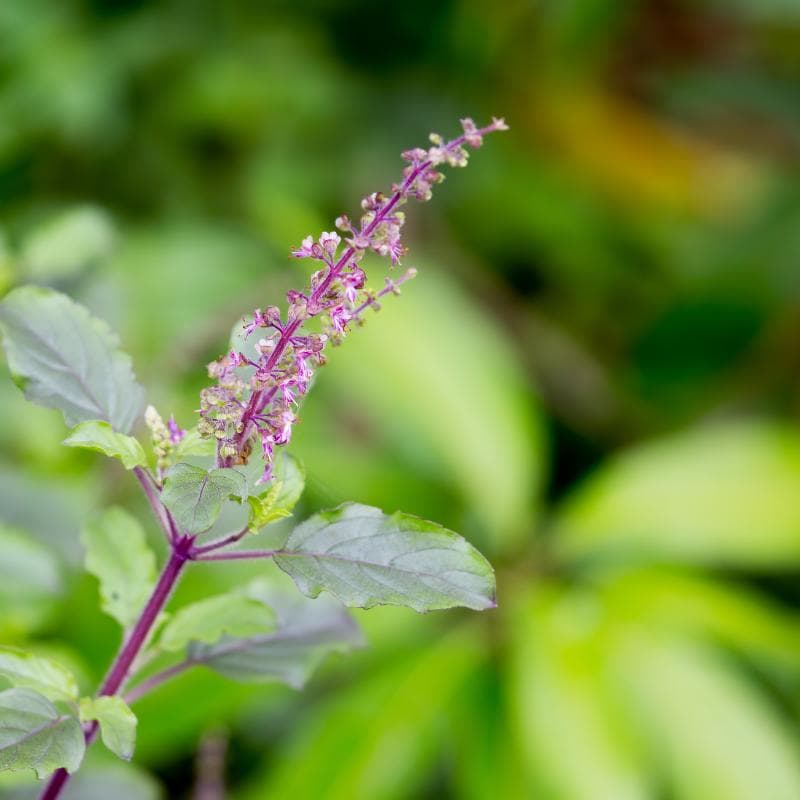
Basil varieties range from compact pot types about 30 cm (12 in) tall to large plants up to about 1 m (3 ft), with green, purple or red-flushed leaves. Purple types are as useful in the kitchen as they are ornamental.
Water at the base in the morning so the foliage dries by night. Basil dislikes wet roots overnight, and wet leaves favour mildew. Containers dry out faster than beds and need more frequent watering.
Garden plants in fertile soil usually need little feeding. In pots, use a balanced liquid feed at half strength every 3-4 weeks. Avoid tomato-type high-potash feeds, which push flowering.
Pick young leaves or cut stems just above a pair of leaves; new shoots follow within about a week. Leave enough foliage for the plant to keep growing.
Holy basil, Ocimum tenuiflorum, is sown the same way and also needs warmth, but it is a shrubbier, longer-lived plant that copes better with tropical heat. Grow it in full sun and pinch it in the same way.
Sow basil shallowly in warm compost and pinch it often for a steady supply of fresh leaves.
The usual reasons are cold compost or seed buried too deep. Keep the tray at about 20 °C (68 °F), cover the seed with no more than 0.6 cm (1/4 in) of compost and keep it evenly moist.
Yes, if you want leaves. Flowering makes plants woody and the leaves more bitter. Pinch off flower stems as soon as they appear; you can leave one plant to flower for bees.
Yes, on a bright, warm windowsill or under grow lights. Use a pot with drainage holes, water when the surface feels dry and feed lightly every few weeks.


