Free EMS courier delivery across India
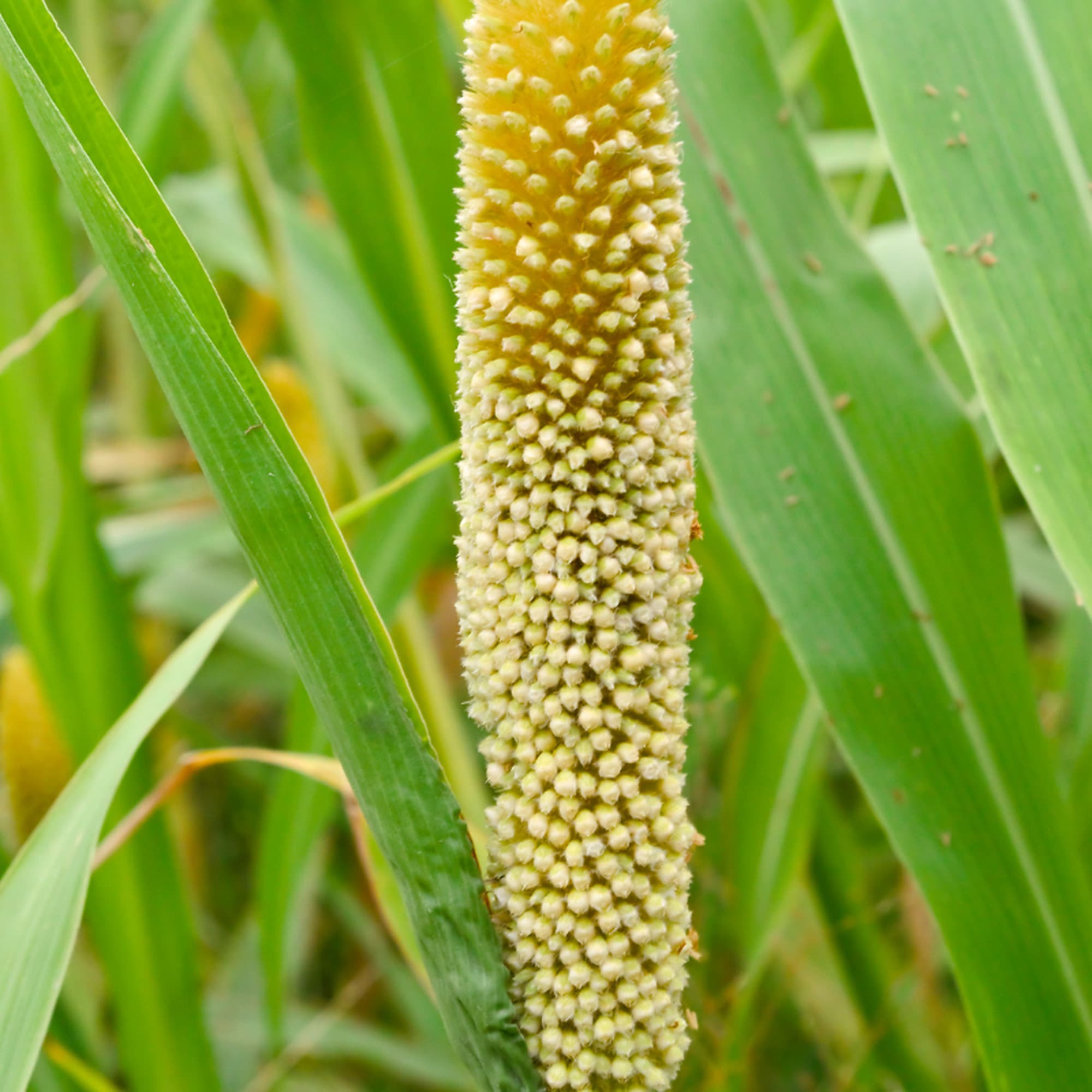
Pearl millet, Bajra Seeds plant

Forage grass growing guide

How to grow buffel grass from seedCenchrus ciliaris

Buffel grass is a drought-hardy, warm-season perennial forage grass for dry tropical and subtropical land. Sow its fluffy seed on or just under the surface at the start of the rains; in arid regions outside its native range it can become invasive.

25 °C
Germination temp.
1 cm
Sowing depth

At a glance

Germination temperature
About 10-40 °C (50-104 °F); best near 25 °C (77 °F) or with 25-30 °C days and 15-20 °C nights.
Sowing depth
On the surface to 1 cm (0.4 in).
Germination time
Seedlings follow warm rain; fresh seed is largely dormant.
Light
Surface sowing gives the best germination; grow in full sun.
Pre-treatment
Use seed stored dry for 6-18 months after harvest; fresh seed germinates poorly.
Transplant or direct sow
Direct sow; established plants can also be divided into splits.

Seed preparation

Seed preparation

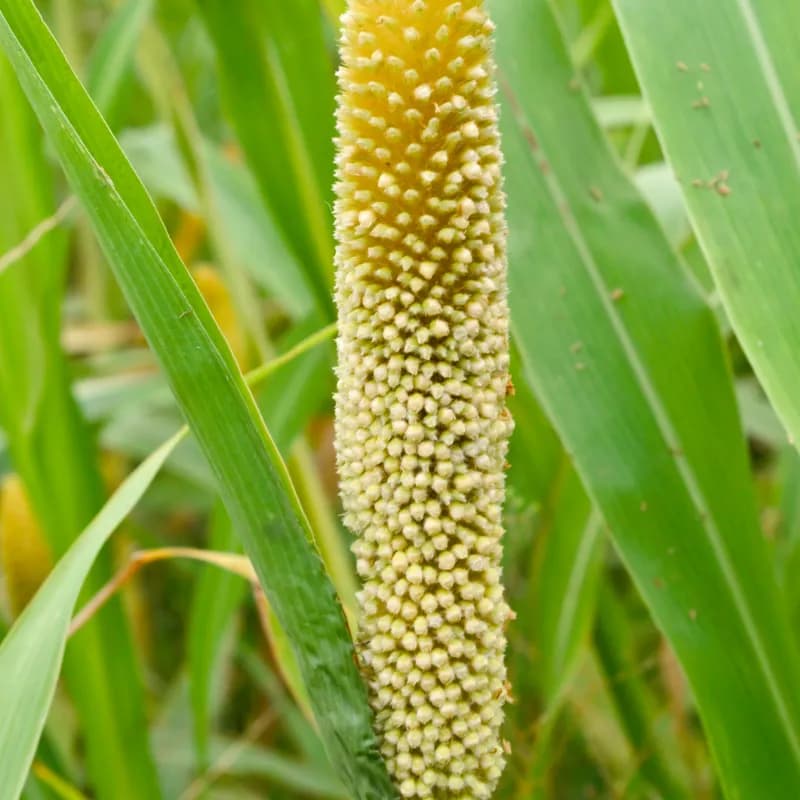
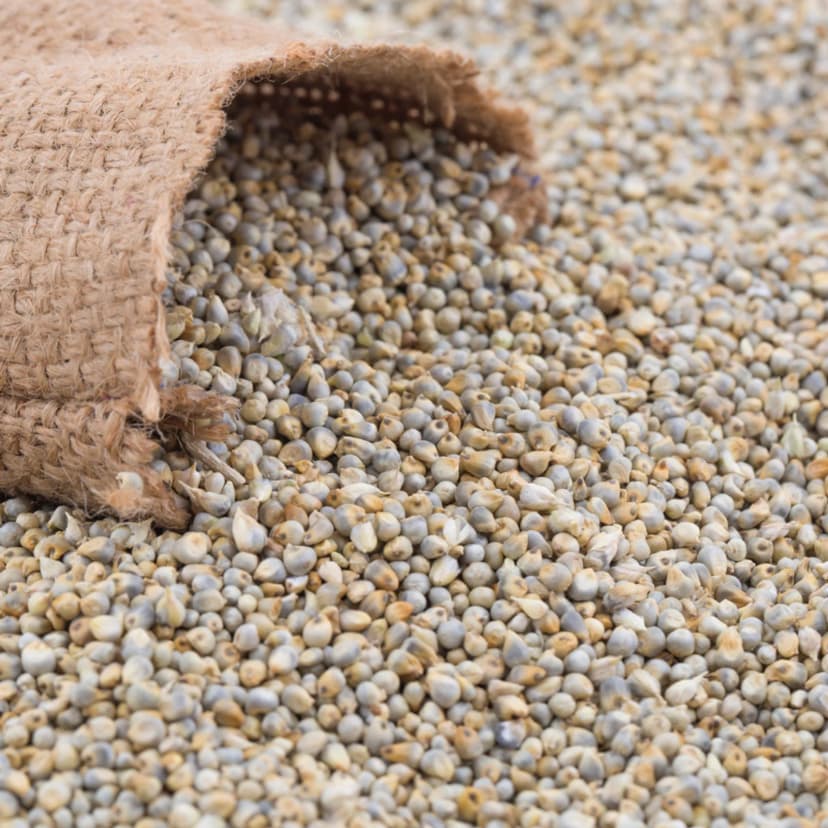
The seed unit is fluffy and bristly and sticks together. Mix it with dry sand, fertilizer or cracked grain so it can be spread evenly; pelleted seed flows best through planters. Seed lots commonly contain only 30-50% live seed, so do not judge a lot by bulk alone.
Scarification

Not usually needed. Removing the outer bristly coverings to free the grain (caryopsis) improves germination, but whole seed units are normally sown.

Stratification

Not needed. Dormancy in this warm-season grass is broken by after-ripening: dry storage for 6-18 months after harvest. Fluctuating temperature and moisture, weathering and leaching by rain also break it.

Soaking

Not needed. Sow into soil that will receive rain or irrigation soon after.

Pearl millet, Bajra Seeds

Germination conditions

Germination temperature

Seed germinates from about 10 °C to 40 °C (50-104 °F), best at 25 °C (77 °F) or with 25/15 °C and 30/20 °C day/night regimes. In the field it needs soil above about 10 °C and rain of more than about 6 mm. Sow at the start of the summer or monsoon rains.

Sowing depth

On the surface to 1 cm (0.4 in). Seed on bare soil germinated about 40% better than seed buried up to 2.4 cm; a light rolling after sowing improves soil contact.

Growing medium

Deep, well-drained sandy loams, loams, clay loams and red earths. Best pH is 7-8; it grows at pH 5.5 but is very sensitive to high aluminium and manganese. It is slow to establish on black cracking clays and difficult on hard-setting soils.

Moisture

The surface often dries too fast for seedlings, so sow just before reliable rain or keep small plots lightly watered. Plants tolerate about 5 days of flooding, but 20 days kills 15-70% of plants.

Light

Leave the seed at or near the surface in an open, sunny site.

Germination time

Seed can germinate whenever temperature and moisture allow, often after a single small rain. Most seeds that germinate do so in their first season; fresh seed may stay dormant until it has after-ripened.

Transplanting and first growth

  1. Transplanting

    Pastures are sown direct at 1-2 kg of seed per hectare, using the lower rate on sandy loams. For small areas, rooted splits from an existing clump can be planted at the start of the rains.

  2. First growth stage

    Control competing weeds while seedlings establish; buffel grass establishes readily once competition is removed. Do not graze until the stand is well rooted: usually 4-6 months after sowing, and up to 9-12 months in harsh conditions.

Pearl millet, Bajra Seeds

Common problems

ProblemPoor establishment
Cause
Fresh dormant seed, seed buried too deep, a dry surface or a hard-setting clay.
What to do
Use after-ripened seed, sow on the surface just before the rains and choose a lighter, well-drained soil.
ProblemSeed bridges in the planter
Cause
Fluffy, bristly seed units.
What to do
Mix with fertilizer or cracked grain, or use pelleted seed.
ProblemStand declines after a few years
Cause
Nitrogen gets tied up in the root mass ('pasture rundown').
What to do
Include a forage legume or cultivate lightly every 3-5 years; nitrogen fertilizer is usually uneconomic.
ProblemHealth problems in horses or hungry sheep
Cause
Oxalate in the grass can cause 'big head' in horses and oxalate poisoning in young or hungry sheep.
What to do
Avoid grazing horses on pure buffel grass and introduce hungry sheep gradually; mature cattle are rarely affected.
ProblemGrass spreading into natural land
Cause
Buffel grass is invasive in arid and semi-arid areas such as the Sonoran Desert of Arizona, South Texas, Hawaii and parts of Australia, where it fuels fires and crowds out native plants.
What to do
Do not plant it near natural desert or bushland, and check local rules; it is declared a weed in some areas.

Practical growing tips

Match the climate

Buffel grass suits 300-750 mm of annual rainfall, most of it in summer, and does best where winter minimums stay above 5 °C. Frost kills the tops, but plants usually regrow in warm weather.

Cut or graze regularly

Quality falls quickly with age. Cut or graze at least every 8 weeks, and cut at about 7 cm (3 in) to keep the stand leafy.

Choose the right cultivar

Cultivars differ in height, rhizomes and blight resistance; taller rhizomatous types such as 'Biloela' suit heavier soils, while 'Gayndah' is a finer, shorter tufted type.

Feed seed crops

Pasture rarely needs fertilizer, but a seed crop needs nitrogen, usually 100-200 kg N per hectare.

Buffel grass seeds from Deodar

Sow buffel grass on the surface at the start of the rains for hardy dryland pasture.

Frequently asked questions

Why did fresh buffel grass seed not germinate?

Freshly harvested seed is mostly dormant. Seed stored dry for 6-18 months after harvest germinates much better.

How deep should I sow buffel grass?

On the surface or no deeper than 1 cm. Seed left on bare soil germinates better than buried seed, as long as rain follows soon.

Is buffel grass invasive?

It can be. In arid parts of the United States and Australia it has spread from pastures into natural areas and increases fire risk, so keep it away from native desert or bushland and follow local rules.