
Seed preparation
Shell the pods just before sowing and handle kernels gently: a kernel with a damaged or rubbed-off seed coat is likely dead. Whole pods can be sown too, but shelled seed germinates faster.
Legume growing guide
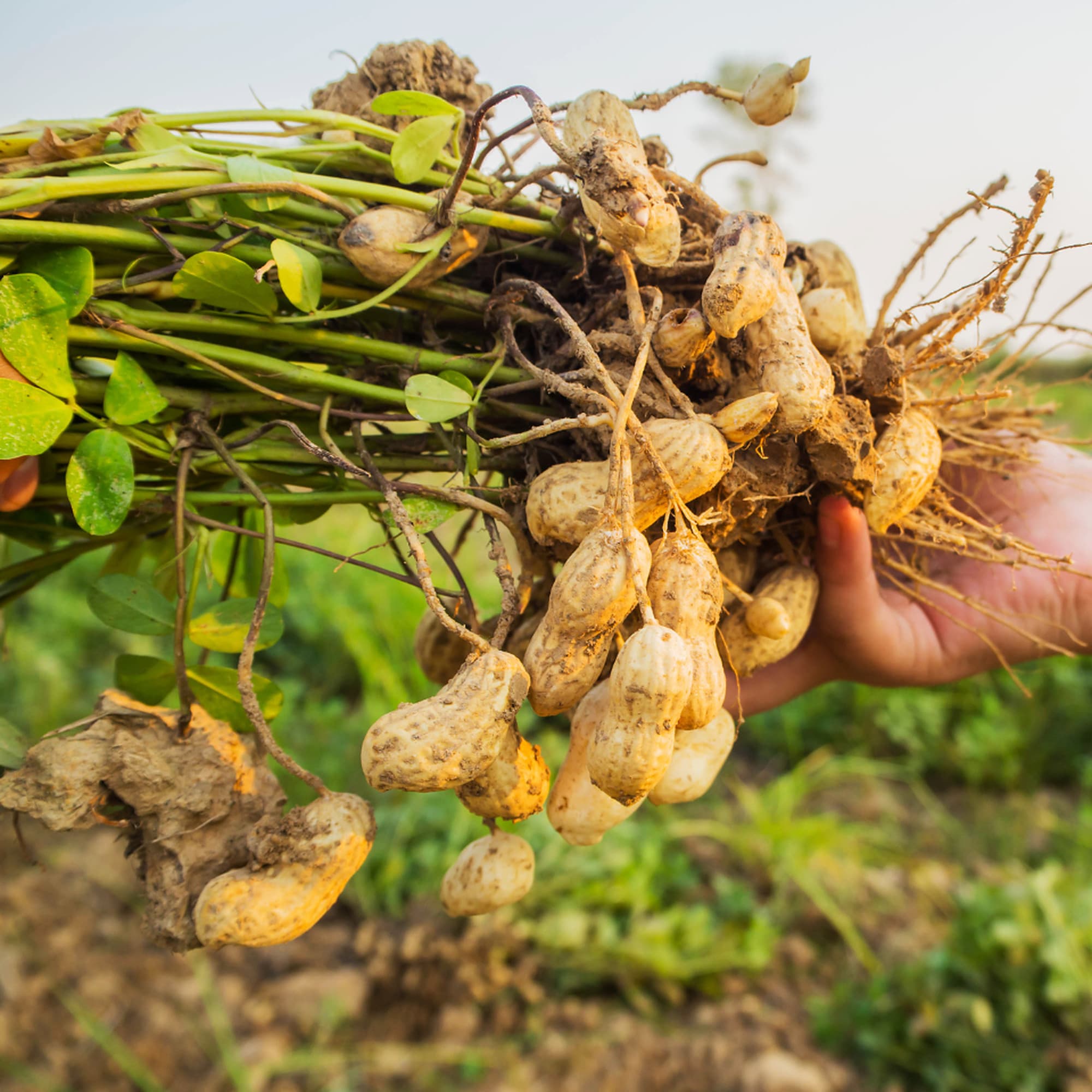
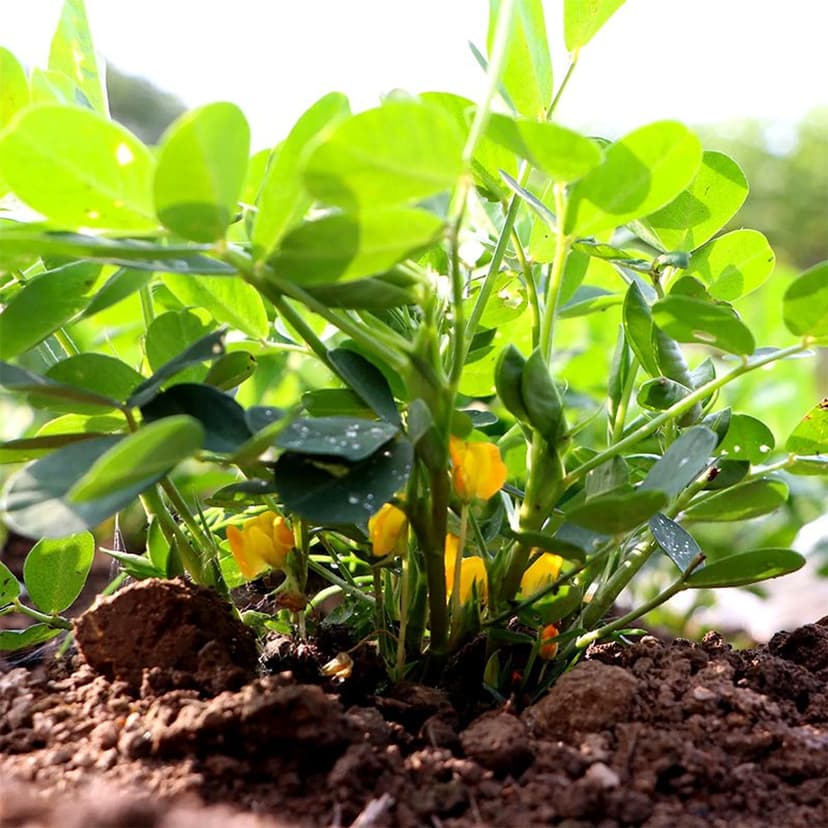
Peanuts are a warm-season legume that flowers above ground and pushes its pods into the soil. Sow shelled kernels directly into warm, loose, well-drained soil, add calcium at pegging and dig when the inside of the shells darkens.
Shell the pods just before sowing and handle kernels gently: a kernel with a damaged or rubbed-off seed coat is likely dead. Whole pods can be sown too, but shelled seed germinates faster.
Not needed. The thin red or pink seed skin must stay intact.
Not needed. Note that freshly harvested Virginia-type seed can stay dormant for 100-120 days, while Spanish types have little dormancy, so use seed from a previous harvest.
Not needed. Instead, coat seed with a peanut-specific Rhizobium inoculant just before sowing, especially where peanuts have not grown before. TNAU also treats seed with Trichoderma viride (4 g per kg) against soil-borne disease, applied before the Rhizobium.
Peanut seed germinates best at 20-35 °C (68-95 °F). In temperate climates sow around the last frost once soil is above 18 °C (65 °F). In Tamil Nadu, TNAU's main seasons are June-August for rainfed crops and December-January or April-May under irrigation.
TNAU dibbles seed 4 cm (1.5 in) deep. Clemson advises 4-5 cm (1.5-2 in) in clay and 5-7.5 cm (2-3 in) in light sandy soil.
A loose, light, well-drained loam or sandy loam that pegs can penetrate. Keep soil slightly acid (Clemson: pH 5.8-6.2) and make sure calcium is adequate.
Sow into moist soil. TNAU gives a light irrigation 4-5 days after sowing if a crust forms, then waters again around day 20.
Seed germinates in the dark under soil; seedlings need full sun from emergence.
Emergence begins 6-14 days after sowing; dry or cool soil can delay it by up to 3 weeks and thin the stand.
Do not transplant; sow where the crop will grow. TNAU spaces plants 10 cm (4 in) apart in rows 30 cm (12 in) apart, or 15 x 15 cm (6 x 6 in) where bud necrosis virus is common. Home gardeners can also sow 4 seeds per mound with mounds 45 cm (18 in) apart.
Virginia types start flowering about 28-40 days after emergence. After pollination a stalk (peg) grows down into the soil within 8-12 days and forms a pod. Weed and earth up around day 40-45, working in gypsum (TNAU uses 400 kg/ha, about 40 g/m²), then do not disturb the soil.
Early Spanish types take about 90-130 days, Valencia and early Virginia types 120-130 days and Runner types 125-165 days. Valencia suits shorter frost-free seasons.
Flowering, pegging and pod filling need steady moisture; stop watering 10-14 days before harvest.
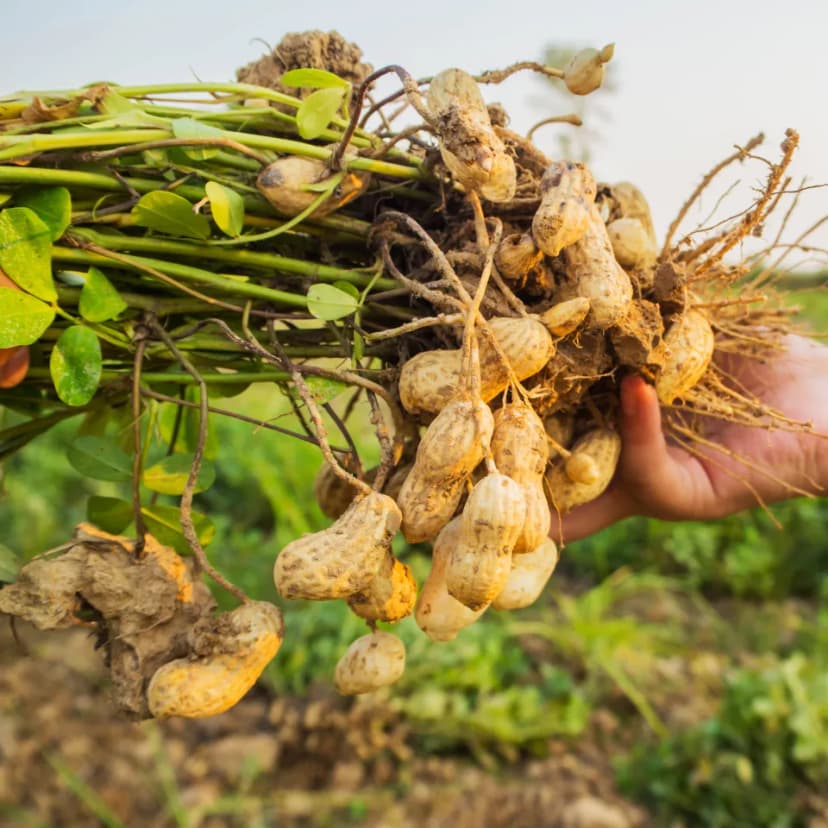
Pull a few plants and open pods: harvest when the inside of the shell is brownish black and most seed coats are pink to copper-red. If soil is dry, water before digging.
Shake off soil, dry plants roots-up in the sun for about a week, then cure the pods in a cool, dry, airy place for 2-3 weeks before storing in breathable bags.
Sow peanut seeds 4 cm deep in warm soil for a homegrown groundnut harvest in about four months.
Yes, usually. Shelled kernels germinate faster than whole pods, but shell them gently: a kernel with a damaged seed skin rarely grows.
It is not recommended; peanuts are grown from seed sown in place. In short seasons choose an early Valencia type and use row cover.
With the monsoon (June-August) for rainfed crops, or in December-January or April-May with irrigation, following TNAU's Tamil Nadu seasons. Check your state's recommended season.
Most often a lack of calcium where the pods form. Apply gypsum beside the plants at pegging, around 40-45 days after sowing.
