Free EMS courier delivery across India
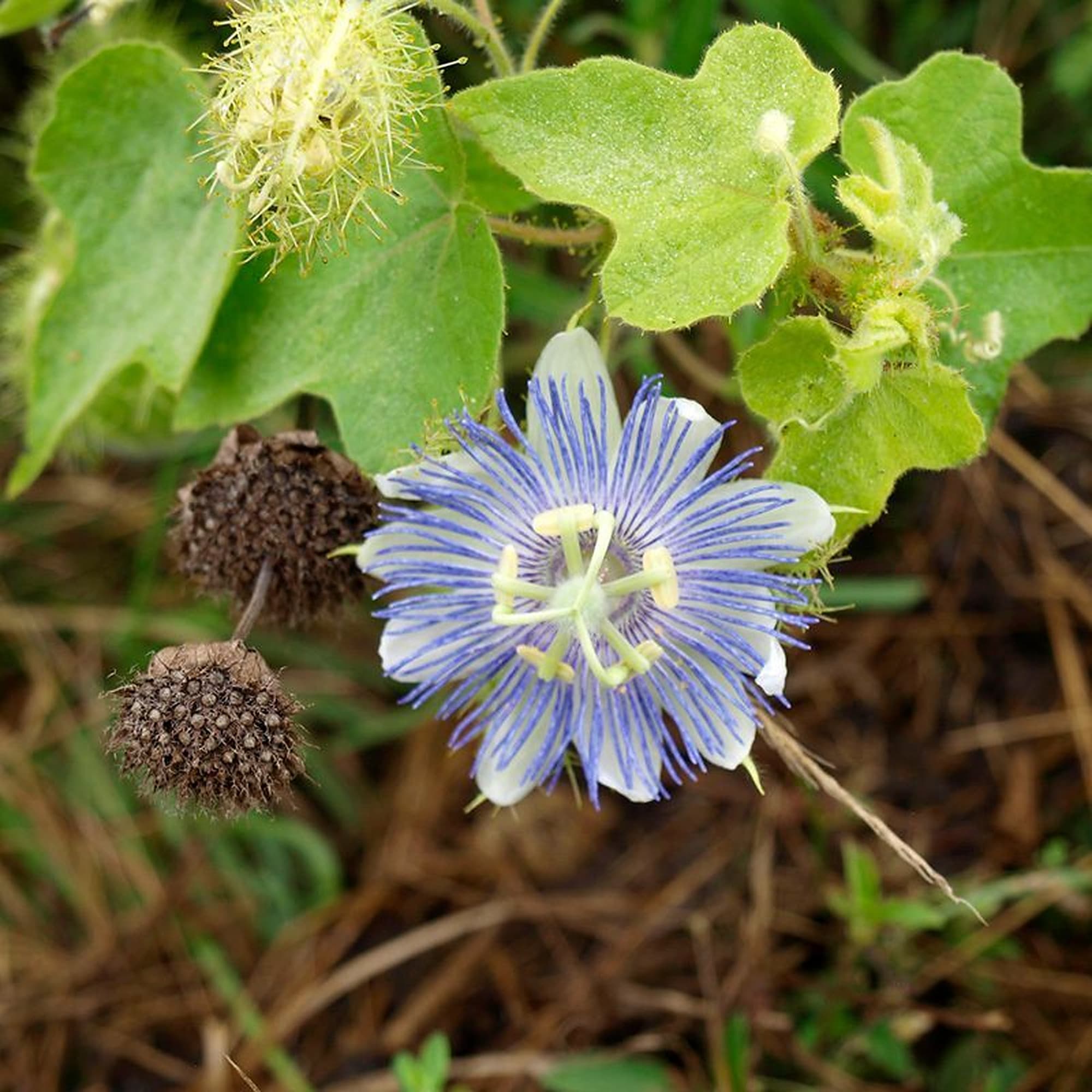
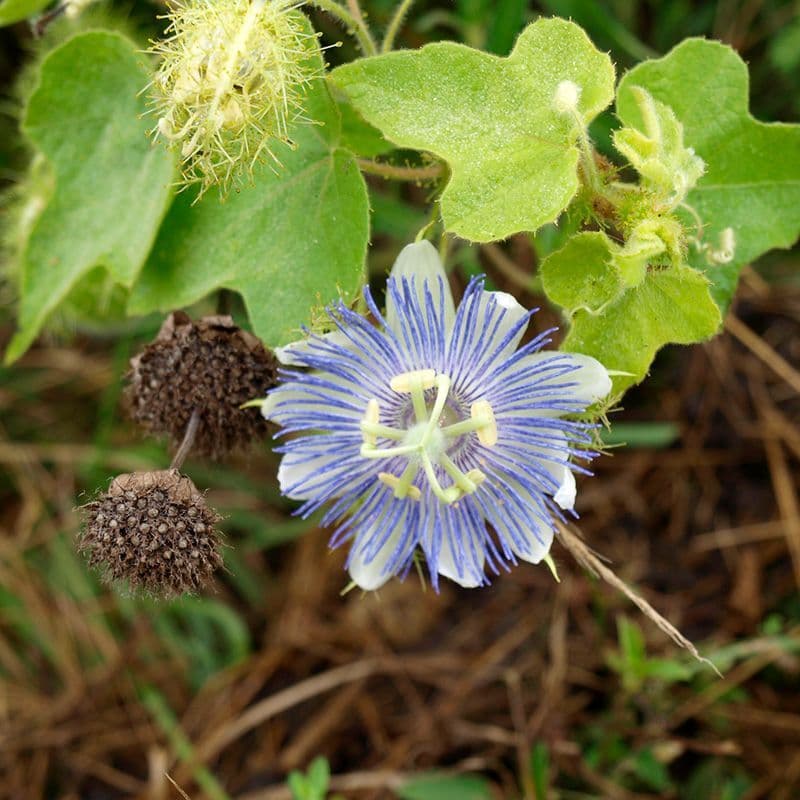
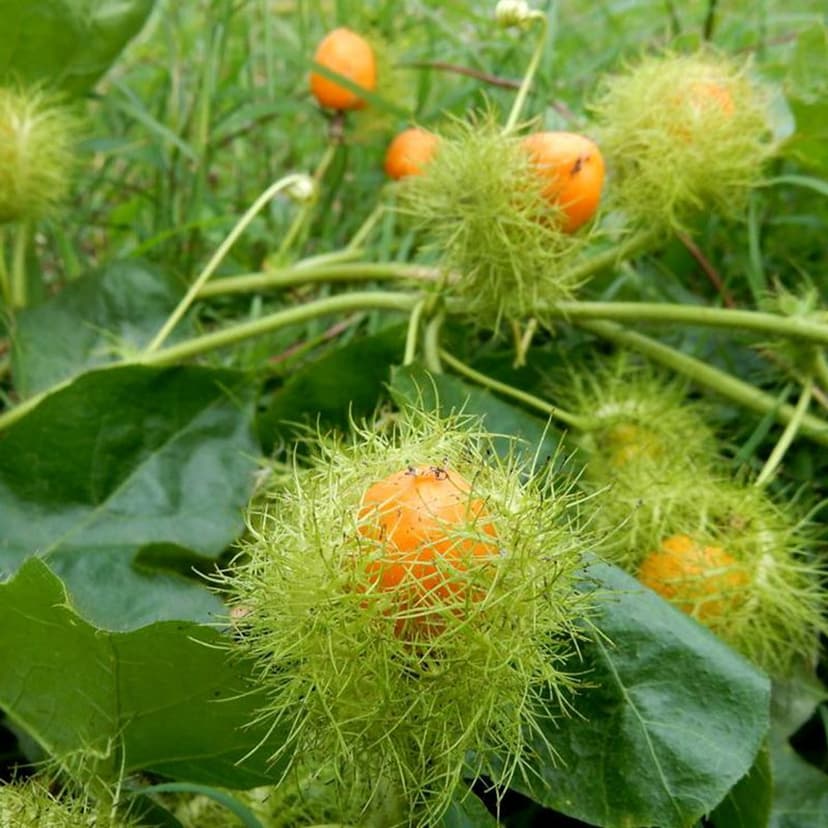
Stinking Passionflower Seeds (Passiflora foetida) plant

Fruit climber growing guide

How to grow passion fruit from seedPassiflora edulis

Passion fruit is a vigorous tropical climber grown in purple and yellow forms. Fresh seed, treated to break the hard coat, germinates in two to three weeks in warmth, and a sunny trellis gives fruit within one to two years.

25-30 °C
Germination temp.
10-20 days
Germination
1-1.5 cm
Sowing depth

At a glance

Germination temperature
25-30 °C (77-86 °F).
Sowing depth
1-1.5 cm (about 1/2 in), pointed end down.
Germination time
10-20 days for fresh, treated seed; purple seed can be slower and erratic.
Light
Seed is covered; indirect light after emergence, full sun once planted out.
Pre-treatment
Clean off the pulp by fermenting, scarify lightly, soak 24 hours.
Transplant or direct sow
Sow in pots or bags; plant out at 25-40 cm (10-16 in), 6-8 weeks after sowing.

Seed preparation

Seed preparation

Use seed from fully ripe fruit and sow it fresh; seed stored for a long time germinates more slowly and less well, and KAU advises seed less than a year old. To remove the jelly-like coating, leave pulp and seeds in a covered glass jar for 5-7 days, stirring daily, then rinse and air-dry for 24 hours.
Scarification

Helpful. Rub the seeds between two sheets of 100-150 grit sandpaper for 3-5 minutes with moderate pressure, until light scratches show along the edges.

Stratification

Not needed. Passion fruit is a tropical plant with no cold requirement.

Soaking

Soak scarified seed in clean water for 24 hours before sowing.

Stinking Passionflower Seeds (Passiflora foetida)

Germination conditions

Germination temperature

25-30 °C (77-86 °F). Germination slows sharply in cool weather, so in winter use a warm spot or a heat mat.

Sowing depth

About 1 cm (1/3 in), up to 1.5 cm, with the pointed tip down because the root emerges there.

Growing medium

A free-draining seed-starting mix in pots, trays or nursery bags.

Moisture

Keep evenly moist but never saturated; waterlogged mix rots the seed.

Light

No light is needed before emergence. Give bright, indirect light once seedlings appear.

Germination time

Usually 10-20 days for fresh, scarified seed. Some seed, especially of the purple form, keeps coming up over several weeks, so do not discard the tray too soon.

Transplanting and first growth

  1. Potting on

    Move seedlings at the three-leaf stage into individual nursery bags or pots.

  2. Planting out

    Plant out when seedlings are 25-40 cm (10-16 in) tall, about 6-8 weeks after sowing, on a cool, overcast day or in the early morning or evening. Set seedlings at the depth they grew in the bag. KAU spaces plants 3-4.5 m (10-15 ft) apart in rows 4.5-6 m (15-20 ft) apart.

  3. First growth stage

    Train the main shoot up a sturdy trellis about 1.5 m (5 ft) high or taller, with horizontal wires about 60 cm (2 ft) apart. Mulch around the base to keep the soil moist and suppress weeds.

Stinking Passionflower Seeds (Passiflora foetida)

Common problems

ProblemSeeds do not germinate
Cause
Old seed, pulp left on the seed, or cold.
What to do
Sow fresh seed after fermenting, scarifying and soaking, and keep it at 25-30 °C (77-86 °F).
ProblemFlowers but no fruit
Cause
Poor pollination. Yellow passion fruit needs pollen from another vine; heavy rain, high humidity and extreme heat also reduce fruit set.
What to do
Grow at least two seedlings, encourage carpenter bees and honey bees, or move pollen onto the stigmas with a soft brush.
ProblemLush leaves, few flowers
Cause
Too much nitrogen, or a vine still under a year old.
What to do
Use a balanced feed with less nitrogen and give young vines time.
ProblemVine wilts and dies
Cause
Fusarium wilt, or Phytophthora root and crown rot in poorly drained, wet soil. Purple vines are also very prone to root-knot nematodes.
What to do
Plant in well-drained soil on a fresh site; in problem soils use yellow-type or resistant rootstocks.
ProblemSmall, thick-skinned fruit and mottled leaves
Cause
Passion fruit woodiness virus, spread by aphids and pruning tools but not by seed.
What to do
Remove infected vines and disinfect tools.

Practical growing tips

Choose the form for your climate

Yellow passion fruit (P. edulis f. flavicarpa) is more vigorous and productive and resists woodiness virus and Fusarium wilt. Purple passion fruit is mostly self-fertile. KAU gives 18-35 °C (64-95 °F) as the workable range, with best growth at 23-25 °C (73-77 °F) and elevations of 100-1,000 m.

Water and feed steadily

Drip irrigation keeps the soil evenly moist and reduces disease. Feed little and often, with farmyard manure plus nitrogen, phosphorus and potassium, banded 20-30 cm from the stem.

Prune to keep the vine productive

Prune in late winter or after the main crop: remove dead, weak and trailing wood and shorten strong canes by about a third, leaving a spur at the base. Trials disagree on how much pruning raises yield, so prune lightly.

Harvest and expect a short vine life

Vines start bearing in one to two years and fruit ripens 70-80 days after pollination. Collect fallen, fully coloured fruit. Commercial vines usually crop well for 3-5 years, so raise replacement seedlings in time.

Passion fruit seeds from Deodar

Sow fresh passion fruit seed warm and give the vine a sunny trellis.

Frequently asked questions

How long does passion fruit take from seed to fruit?

Usually one to two years. Young vines can take up to a year to start flowering, and fruit ripens 70-80 days after pollination.

Do I need two passion fruit plants?

For yellow passion fruit, yes: it is largely self-incompatible and needs pollen from a different vine. Purple types are mostly self-fertile but still crop better with insect or hand pollination.

Will plants from seed be like the parent fruit?

Not exactly. Seedlings vary, which can bring new traits; for an identical copy of a chosen vine, growers use cuttings or grafts.