 Shop at deodar-seeds.com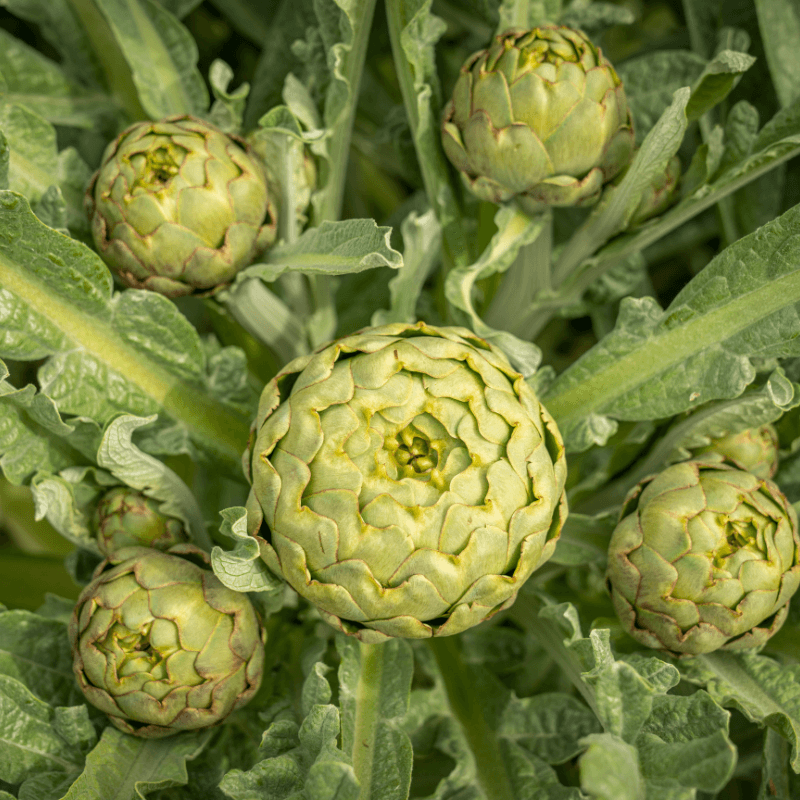
About this seed
The deciding factor is cold, not care
Green Globe forms buds only after a cold period. The Connecticut Agricultural Experiment Station states that Green Globe and Green Globe Improved need at least 500 hours below 10 °C to vernalize, and Oregon State University reports that about 1300 hours below 10 °C fully vernalized Green Globe. Without that cold, plants stay leafy and do not flower. Where winters give fewer cold hours, a seed-grown Green Globe is likely to give leaves and no buds in its first year.
How cold is supplied from seed
Connecticut starts seed indoors in early February and refrigerates it for four weeks at 2–4 °C, then moves it indoors in early March and transplants in early to mid May. Oregon State advises testing a two- to four-week exposure of transplants to about 4 °C before field planting. Seed germinates best at 16–20 °C in laboratory tests.
Planting out and picking
Set transplants 60 cm apart in rows 120 cm apart (Connecticut); Oregon State gives 60–90 cm in rows 90–120 cm for annual plantings. About 90 to 100 days pass from transplanting to flowering. Pick the bud when its lower bracts have just begun to separate. Oregon State notes that with vernalized, direct-seeded plants only about half flower in the first autumn.
Winter limits
Oregon State expects severe loss of crowns below −9 °C even with mulch and advises avoiding winter temperatures below −4 °C. In Connecticut, artichokes rarely survive winter outdoors and are grown as annuals; where they do overwinter, plants from root stock crop for four to five years.
Seed-grown plants vary
Growers usually propagate artichokes from crown divisions or side shoots because that keeps the crop true to type. Seed-grown plants differ in how much cold they need and in bud shape: some Green Globe buds are thorny. Each packet holds 30 seeds; no yield or bud size is promised.
Also known as: Globe artichoke, French artichoke, Hathi chak, Alcachofa, Artichaut, Artischocke, Carciofo, Alcachofra, Enginar and Cynara scolymus.