 Shop at deodar-seeds.com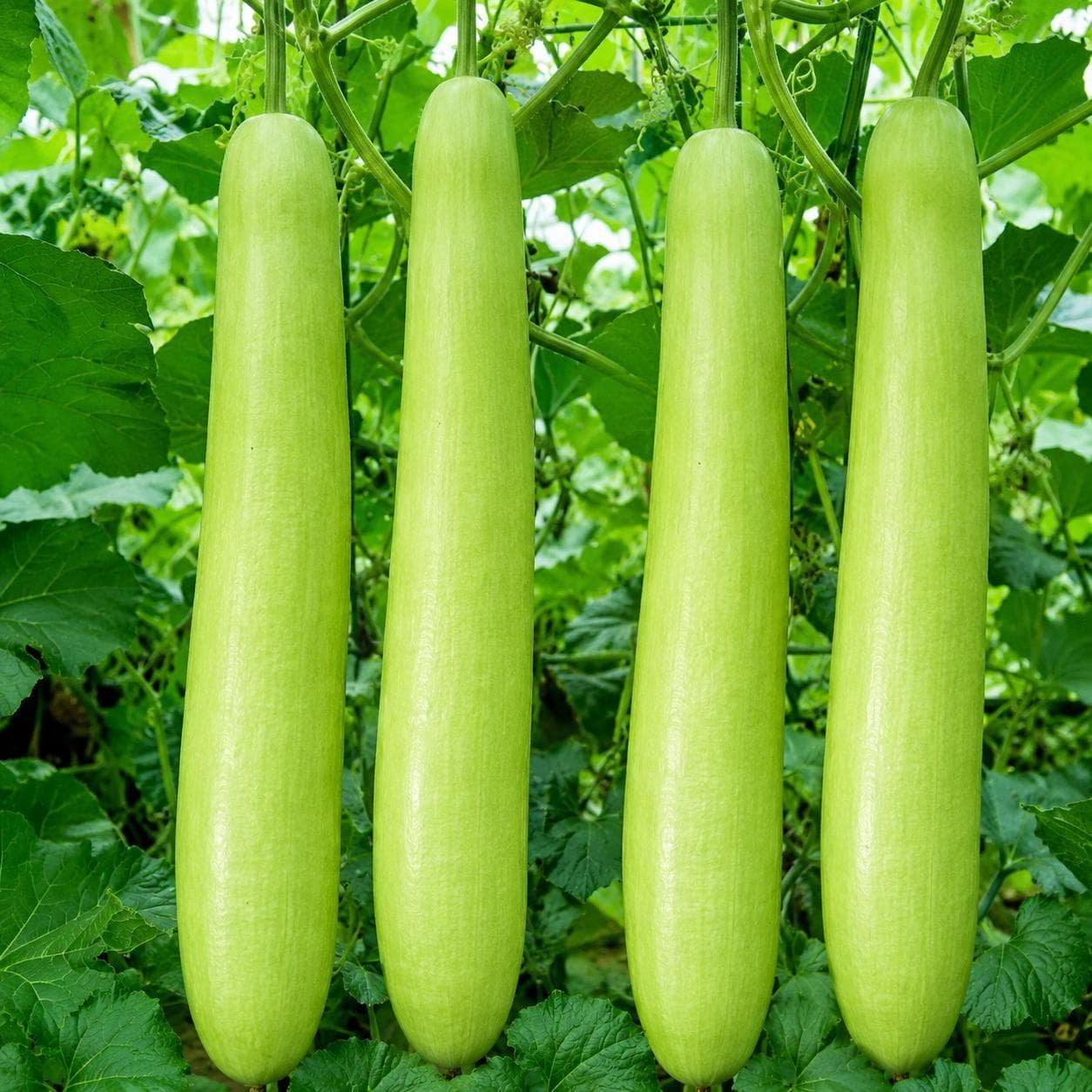


About this seed
Durgesh Gutka is a long, light-green bottle gourd grown for eating young: the lauki or dudhi of Indian kitchens, not the hard-shelled gourd dried for birdhouses. Three things decide whether these 20 seeds turn into fruit: warm soil, evening pollination and picking on time.
Also known as: lauki, ghiya, dudhi, opo squash, long melon, calabash, white-flowered gourd, sorakaya, suraikkai.
What's in the pack
| Item | Detail |
|---|---|
| Seeds per pack | 20 |
| Price | US$3.90 |
| Species | Lagenaria siceraria |
| Fruit type | Edible long gourd, harvested young (not a craft or birdhouse type) |
| Fruit (variety description) | Cylindrical, smooth, light green, 40–50 cm or longer; white flesh |
| First harvest (variety description) | About 50–60 days from sowing in warm conditions |
| Germination temperature | 25–30 °C (77–86 °F), approximate |
| Sowing depth | About 2.5 cm (1 inch), approximate |
| Seed storage | Orthodox seed: store dry in a sealed container somewhere cool. No tested shelf-life figure for this lot |
| Germination rate | Not lab-tested for this lot, so we do not quote a percentage |
| Hybrid or open-pollinated | Not confirmed |
| Dispatch | 1–2 weeks from India, worldwide |
Will it grow where you are?
Bottle gourd is killed by frost and stalls in cold soil. Do not sow outdoors until the soil holds at least 15 °C (60 °F); seed germinates best at 25–30 °C.
- Southern US, subtropics and tropics: sow straight into the ground once the soil is warm. In the US that roughly means zones 8–10.
- Northern US and Canada: start seeds indoors 3–4 weeks before your last frost date and plant out after it. Black plastic mulch warms the soil and stretches a short season.
- UK and other cool-summer climates: plan on a greenhouse or polytunnel unless your soil reliably holds 15 °C by early summer.
- India: growers usually sow in February–March or June–July in the north, and June–July or January–February in the south.
Germinating the seeds
- Soak the seeds in warm water for about 12 hours, no longer than 24.
- Sow 2.5 cm (1 inch) deep. Indoors, use one seed per pot: bottle gourd dislikes root disturbance, so choose pots you can plant out without tearing the roots.
- Keep the pots at 25–30 °C; a heat mat helps. Seedlings usually appear in 7–14 days.
- Transplant at 2–3 true leaves, after about a week of hardening off outdoors.
No seedlings after two weeks? Check temperature before blaming the seed. In cold, wet mix the seeds rot rather than sprout. If soaked seeds have not swelled at all, file a small nick in the edge of the coat and sow again.
Why vines flower but don't fruit
Bottle gourd flowers are white and open at dusk, staying open only until early morning. They depend on insects active at dusk and dawn, so where those pollinators are scarce a vine can flower heavily and set little fruit.
Male and female flowers grow on the same plant, and males usually appear first, on long stalks. A female flower sits on a short stalk with a miniature gourd behind the petals. If that miniature gourd yellows and drops, it was not pollinated.
To hand-pollinate, go out in the evening as the flowers open. Pick a fresh male flower, peel back its petals and brush the pollen onto the centre of the female flower.
Growing long, straight fruit
Train the vine up a strong trellis, arch or fence so the fruit hangs. Long gourds lying on the ground curve, develop flat pale patches and rot more easily. Lagenaria vines can run 6–9 m, so give them room to climb. Space plants 60–90 cm apart on a trellis, or 2.4–3 m apart on the ground.
Grow in full sun in rich, well-drained soil with steady water. The pests to watch for are cucumber beetles and aphids, plus powdery and downy mildew. Trellising and wide spacing keep air moving through the leaves, which slows mildew.
Harvest: pick young
Pick while the fruit is light green and your fingernail presses easily into the skin. Do not wait for maximum length; past this stage the flesh turns hard and seedy. Regular picking keeps the vine producing. Fresh fruit keeps for 1–2 weeks at 10–13 °C.
Taste a small raw piece of every fruit before cooking. If it is bitter, discard the whole fruit and never juice it. The Indian Council of Medical Research has documented serious poisonings from bitter bottle gourd juice.
Saving your own seed
Bottle gourd crosses with any other bottle gourd nearby, but not with squash or pumpkins, which belong to a different genus. Keep other bottle gourds about 800 m (half a mile) away, or hand-pollinate and bag the female flowers. Leave the seed fruit on the vine until it is completely dry and the seeds rattle. We have not confirmed whether Durgesh Gutka is a hybrid, so saved seed may not come true.
FAQ
Is this the same as opo squash or calabash?
Yes, all are Lagenaria siceraria. The names cover many fruit shapes; Durgesh Gutka is a long, cylindrical type for eating, not for drying.
How many plants will 20 seeds give me?
Most home gardens need only two to four vines, each wanting several metres of trellis. Sow a few extra in case some fail, then keep the rest dry for later sowings or next season.
Can I grow it in a pot?
Yes, but use a large container at least 35–40 cm (14–16 inches) deep, with drainage and a trellis beside it.