 Shop at deodar-seeds.com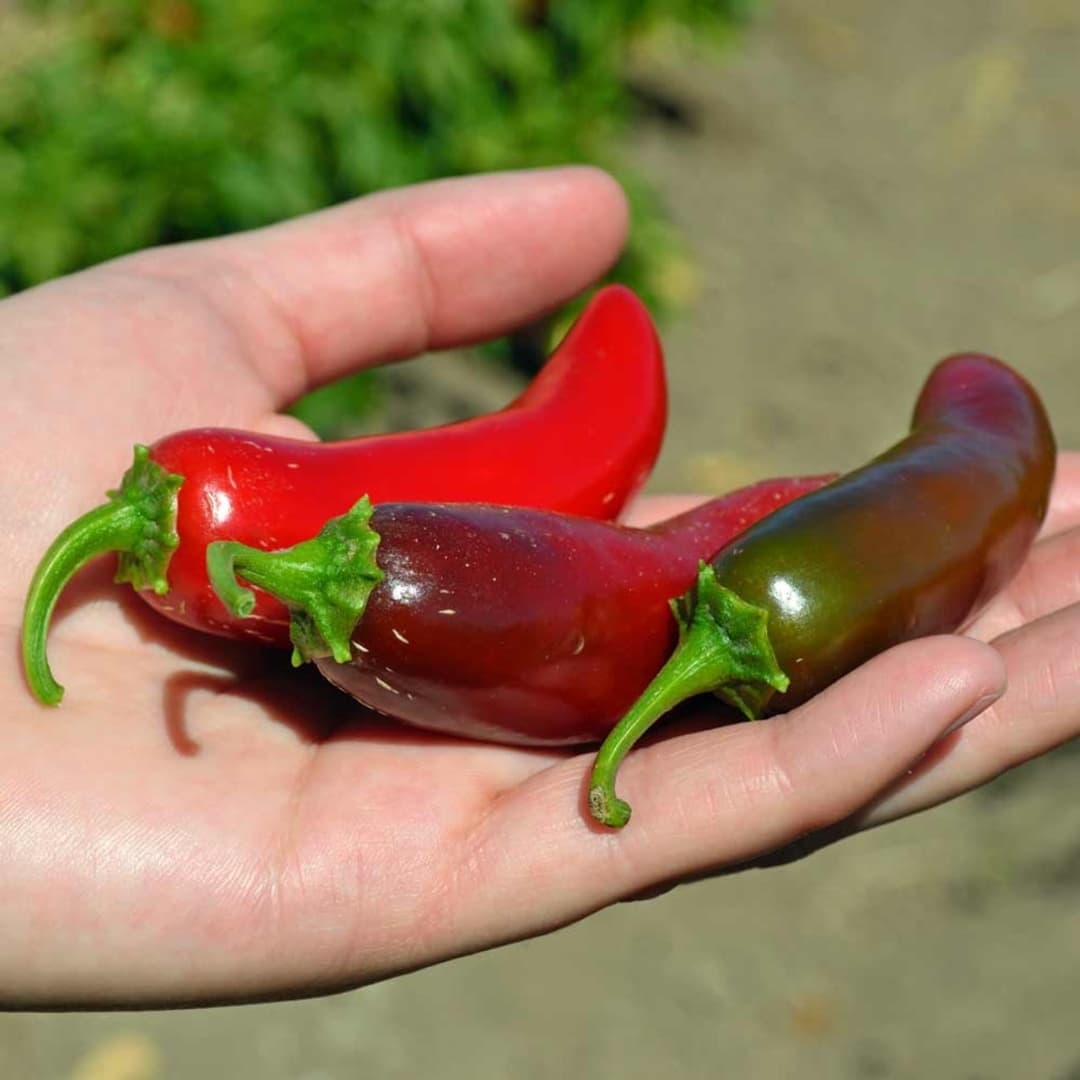
About this seed
This is the standard jalapeño (Capsicum annuum, family Solanaceae): thick-fleshed 7–10 cm fruit at 2,500–8,000 Scoville heat units, the pepper that becomes chipotle when smoked and dried. The packet holds 10 seeds.
Also known as: Chili pepper, Mirchi (Hindi), Milagai (Tamil), Mulaku (Malayalam), Chile (Spanish), Piment (French), Peperoncino (Italian), Pimenta (Portuguese), Chili (German), Prik (Thai).
Fruit and plant
- Thick-fleshed fruit 7–10 cm long
- Green at first, maturing to deep red; both stages are used
- Compact, bushy plants 60–90 cm tall
- Used fresh, grilled, stuffed and pickled
Sow into soil at 18–35 °C
Start the seed indoors 6–8 weeks before the last frost. Seedlings appear in about 8–9 days when the soil is 25–35 °C; 18–35 °C is the soil range that suits pepper germination, so keep the tray inside it until the first leaves show. Cover the seed with about 6 mm of seed-starting mix.
These figures are typical for the species (emergence was measured with seed about 13 mm deep); they are not a test of this packet.
Planting out
Move plants outside once the weather stays warm, 40–50 cm apart, in full sun and well-drained soil. Water moderately; overwatering invites root rot.
When to expect fruit
Peppers ripen about 70–80 days after transplanting, counted from the day the plant goes outside.
What you get: 10 seeds per packet. Pepper seed usually stays usable for about 2 years when kept cool, dark and dry, so you can sow part of the packet and keep the rest. That is a general figure for the species; we do not state a germination percentage for this packet.
FAQ
Green or red: when should I pick?
Either. Green jalapeños are the familiar crisp stage; left on the plant they turn deep red and taste different.
How do I make chipotle?
Chipotle is simply a jalapeño that has been smoked and dried, so the same plants give fresh peppers and chipotle.