About this seed
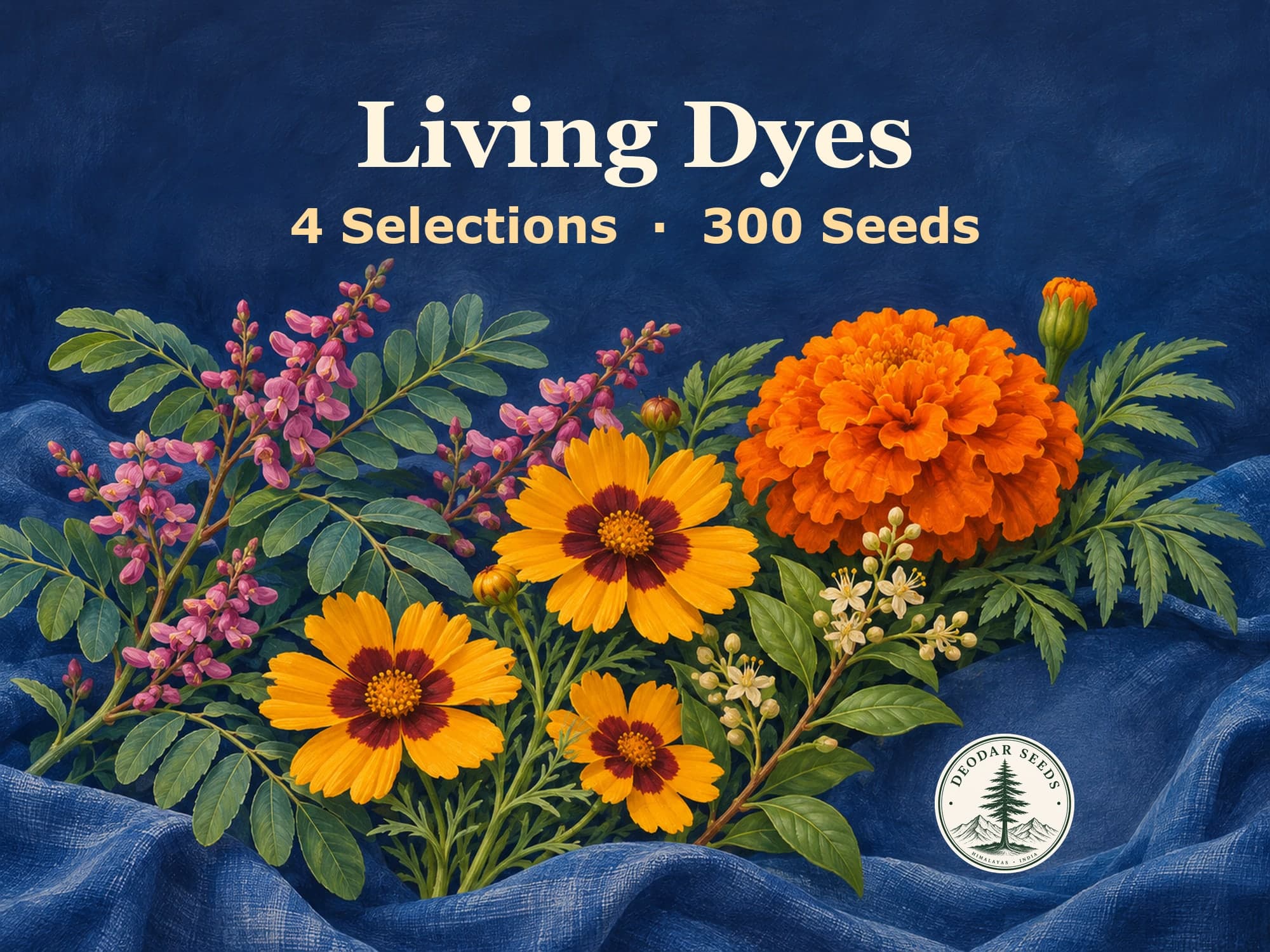
Living Dyes — 4 Seed Selections
A palette can begin with a seed rather than a box of paints. Grow a small garden of colour and watch leaves and flowers inspire your own textile experiments, one season and one shade at a time.
A seed collection for gardeners drawn to natural colour, textile craft and the quiet pleasure of making something from the plants they have grown. Golden flowers and contrasting foliage make this a garden to enjoy before any dye experiment begins.
What is included
300 seeds across 4 individually labelled seed selections. This is a collection of seeds for sowing, not live plants.
| Selection | Botanical name | Seeds |
|---|---|---|
| True indigo | Indigofera tinctoria | 50 |
| Dyer’s coreopsis | Coreopsis tinctoria | 100 |
| Orange marigold | Tagetes erecta | 100 |
| Henna | Lawsonia inermis | 50 |
The idea behind the collection
True indigo and henna introduce leaf-based dye traditions; coreopsis and orange marigold bring flower colour to the collection. These are four different plants, not a premixed meadow blend. Grow and label each selection separately so that harvests remain identifiable.
Sowing and growing
Keep the selections separate. Use clean containers and a suitable seed-sowing medium, label every sowing and water gently. Choose sowing dates for your local climate: the plants in this collection do not all need the same temperature, space or growing season.
- True indigo: Start in a warm, bright, protected place using free-draining seed compost. Keep the sowing medium moist, not waterlogged. Move established plants into a sunny position only when conditions are reliably warm; protect from frost.
- Dyer’s coreopsis: Sow shallowly in trays or a prepared seedbed in the growing season. Thin or transplant seedlings to give them space, then grow in sunshine and well-drained soil. Avoid allowing a newly sown surface to dry out.
- Orange marigold: Start under warm protection or direct sow once frost risk has passed and the ground is warm. Harden off indoor-raised seedlings gradually. Choose a sunny site and water establishing plants at the soil rather than repeatedly wetting flowers.
- Henna: Treat this as a warmth-loving shrub, not a quick annual flower. Start in protected warmth and keep seedlings in bright conditions. In frost-prone climates grow in a container that can be moved under protection; allow time for the plant to establish.
Your growing project
Keep a colour journal: photograph each plant, record the harvested part and compare small textile samples. Natural dye results depend on the plant material, water, fibre and process. Indigo needs a specific extraction and dye-vat process; a simple herbal infusion does not produce the same result.
Important notes
This is an adult gardening and textile-interest collection, not a food, tea, medicine, cosmetic or ready-to-use dye kit. Do not eat the seeds or apply homemade preparations to skin. Dye-processing chemicals and hot liquids require appropriate equipment and precautions. No mordants, dye-vat ingredients or craft tools are included.
Germination, growth, flowering and harvest depend on conditions and care. Seed quantity is not a guarantee of the number of plants produced. Pots, soil, tools and display accessories are not included.
About the images
The cover is a botanical illustration of the collection. Gallery images are plant references, not a photograph of the delivered seed packets. Illustrations and reference photographs do not guarantee the exact appearance of every seed-grown plant.