

About this seed
Local names
Vidunderblomst, Gewöhnliche Wunderblume, Floranarabu, Fu mwarabu, mirakelblom, mirakelblomst, Marvel of Peru, Four o'clock flower, Night beauty, Pretty-by-night, Garden jalap, False jalap.
Common names of Mirabilis jalapa
All 47 names, languages and regions
Local names
| Denmark | |
|---|---|
| Danish | Vidunderblomst |
| Germany | |
| German | Gewöhnliche Wunderblume |
| Mayotte | |
| Floranarabu, Fu mwarabu | |
| Norway | |
| Norwegian Nynorsk | mirakelblom |
| Norwegian | mirakelblomst |
| United States | |
| English | Marvel of Peru |
| Other places | |
| Urdu | Gul abbas |
| Spanish | Dondiego de noche, Aretito |
| French | Belle-de-nuit |
| German | Wunderblume |
| Italian | Bella di notte |
| Portuguese | Maravilha, Belas-noites |
| Turkish | Akşam sefası |
| Latin | Nochnaya krasavitsa |
| English | Beauty of the Night, Four o'clock, common four o'clock, false jalap, four o'clock flower, four-o'clocks, Nachtschone, morning rose |
| Indonesian | Bunga Pukul Empat |
| Polish | Dziwaczek Jalapa |
| Catalan | Flor de nit |
| Basque | Gau-lore |
| Maltese | Hummejr |
| Finnish | Ihmekukka |
| Dutch | Nachtschone |
| Romanian | Noptiță |
| Croatian | Noćna dama |
| Lithuanian | Vakarinė dyvinutė |
| Afrikaans | Vieruurtjies |
| Greek | deilino |
| Hungarian | nagy csodatölcsér |
| Four o'clock flower, Marvel of Peru, Night beauty, Pretty-by-night, Garden jalap, False jalap, Marvel of Peru (EN); Mexiko-Wunderblume (DE); Don Diego de noche (ES), dila-dila, garden four-o'clock, matapexe, oshiroi-bana, zi mo li, 분꽃 (bunkkot) | |
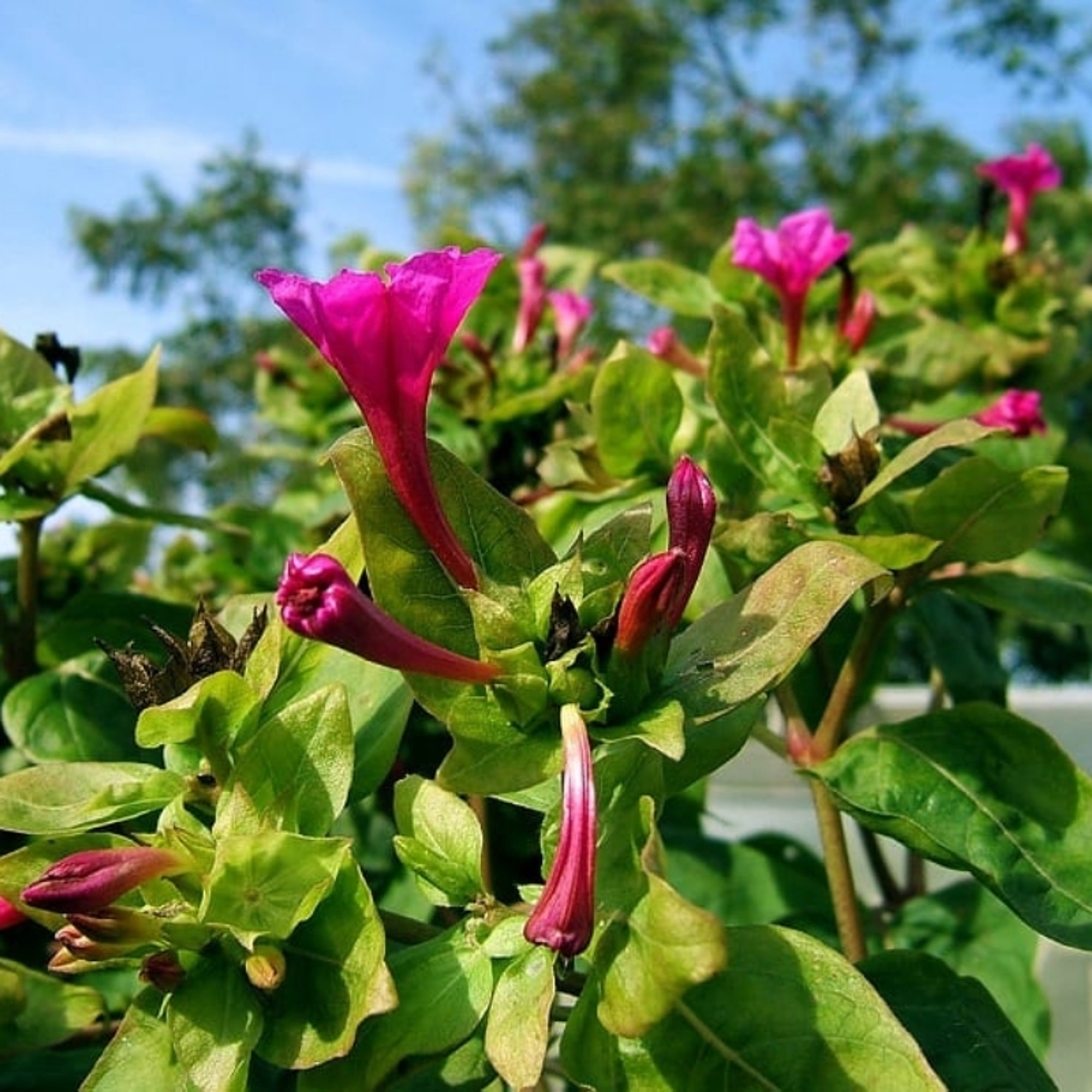
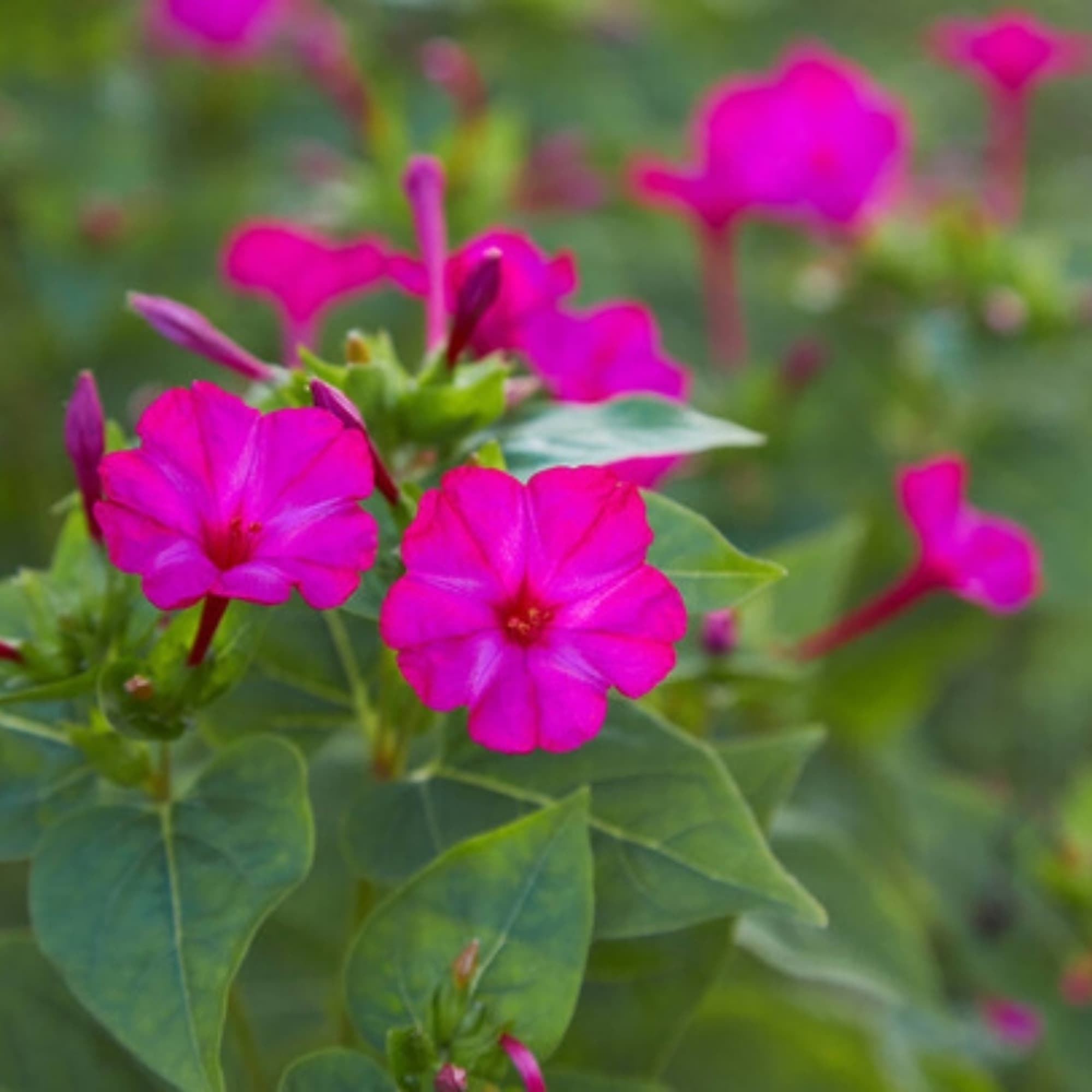
Four o'clock flower (Mirabilis jalapa) opens fragrant, trumpet-shaped flowers in the late afternoon and closes them the next morning, in pink, red, yellow, white or mixed colours. Its seeds and roots are poisonous if eaten.
Also known as: Four o'clock flower, Marvel of Peru, Night beauty, Pretty-by-night, Garden jalap, False jalap, Gul abbas (Urdu), Dondiego de noche (Spanish), Belle-de-nuit (French), Wunderblume (German), Bella di notte (Italian), Maravilha (Portuguese), Akşam sefası (Turkish), Nochnaya krasavitsa.
Size and flowers
The plant is bushy and grows 0.5–1 m tall and wide (RHS). Flowers open at dusk and give off a strong sweet scent overnight, and long-tongued moths pollinate them. Different colours can grow on one plant, and single flowers may show sectors or flecks. Each fruit holds one seed, black and wrinkled when ripe, and the plant self-seeds readily.
Sowing
- Temperature: laboratory tests use alternating 20/30 °C or constant 20 °C, an approximate species value. The RHS sows in early spring at 13–18 °C.
- Soak the firm seeds in water overnight before sowing.
- Sow in clean, free-draining seed compost, cover lightly, keep evenly moist and warm.
- Pot seedlings individually, then plant out after frost risk has passed.
- Site: full sun or partial shade, in fertile, well-drained soil.
Safety
The seeds and roots are toxic if eaten. Wear gloves when handling the plant, and keep it and its seed away from children and pets.
FAQ
Will it come back next year?
Often, in mild climates. The tuberous roots survive light frost and regrow in spring, and the RHS rates the plant H3, hardy in coastal and relatively mild parts of the UK. In colder areas it dies back at the first frosts and is usually grown as an annual.
Will every plant have the same flower colour?
No. Colours vary between plants and even on one plant, and we do not state which colours this lot will give.
Is it a herb or spice?
No. It is an ornamental, even though this listing sits in the herb category, and we make no culinary claim.