
About this seed
Local names
Chinese sumac, Nutgall tree, Yanfumu, Nurude, Bulknamu, Chinese gall, Chinese sumac, True rhus, Chinese gall, nutgall, Gallen-Sumach, Sumac de Chine, hiina sumahh, sumach hálkový.
Common names of Rhus chinensis
All 42 names, languages and regions
Local names
| Chinese | Yanfumu, 五倍子 (wǔbèizi), 五倍子苗 (Wǔ bèi zi miáo), 地耳草(田基黄) (dì ěr cǎo tián jī huáng), 滨盐肤木(盐肤木) (Bīn yán fū mù), 盐肤叶 (Yán fū yè), 盐肤子 (Yán fū zi), 盐肤木 (yánfūmù), 盐肤木根 (Yán fū mù gēn), 盐肤木根皮 (Yán fū mù gēn pí), 盐肤木皮 (Yán fū mù pí), 盐肤木花 (Yán fū mù huā), 盐芙木 (Yán fú mù), 盐酸树 (yánsuānshù) |
|---|---|
| Japanese | Nurude, ヌルデ (Nurude) |
| Korean | Bulknamu, 붉나무 (Bulnamu) |
| English | Chinese gall, Chinese sumac, Nutgall tree, nutgall |
| German | Gallen-Sumach |
| French | Sumac de Chine |
| Estonian | hiina sumahh |
| Slovak | sumach hálkový |
| Polish | sumak chiński |
| Czech | škumpa čínská |
| Assamese | নগা টেঙা (Naga Tenga) |
| Simplified Chinese | 盐麸木 (yánfúmù), 倍子柴 (bèizichái), 肤杨树 (fūyángshù), 红盐果 (hóngyánguǒ), 红叶桃 (hóngyètáo), 角倍 (jiǎobèi), 木五倍子 (mùwǔbèizi), 山梧桐 (shānwútóng), 酸酱头 (suānjiàngtóu), 土椿树 (tǔchūnshù), 乌酸桃 (wūsuāntáo), 乌桃叶 (wūtáoyè) |
| Chinese sumac, Nutgall tree, Chinese sumac, True rhus, Chinese gall, 붉나무 (Bulnamu) | |
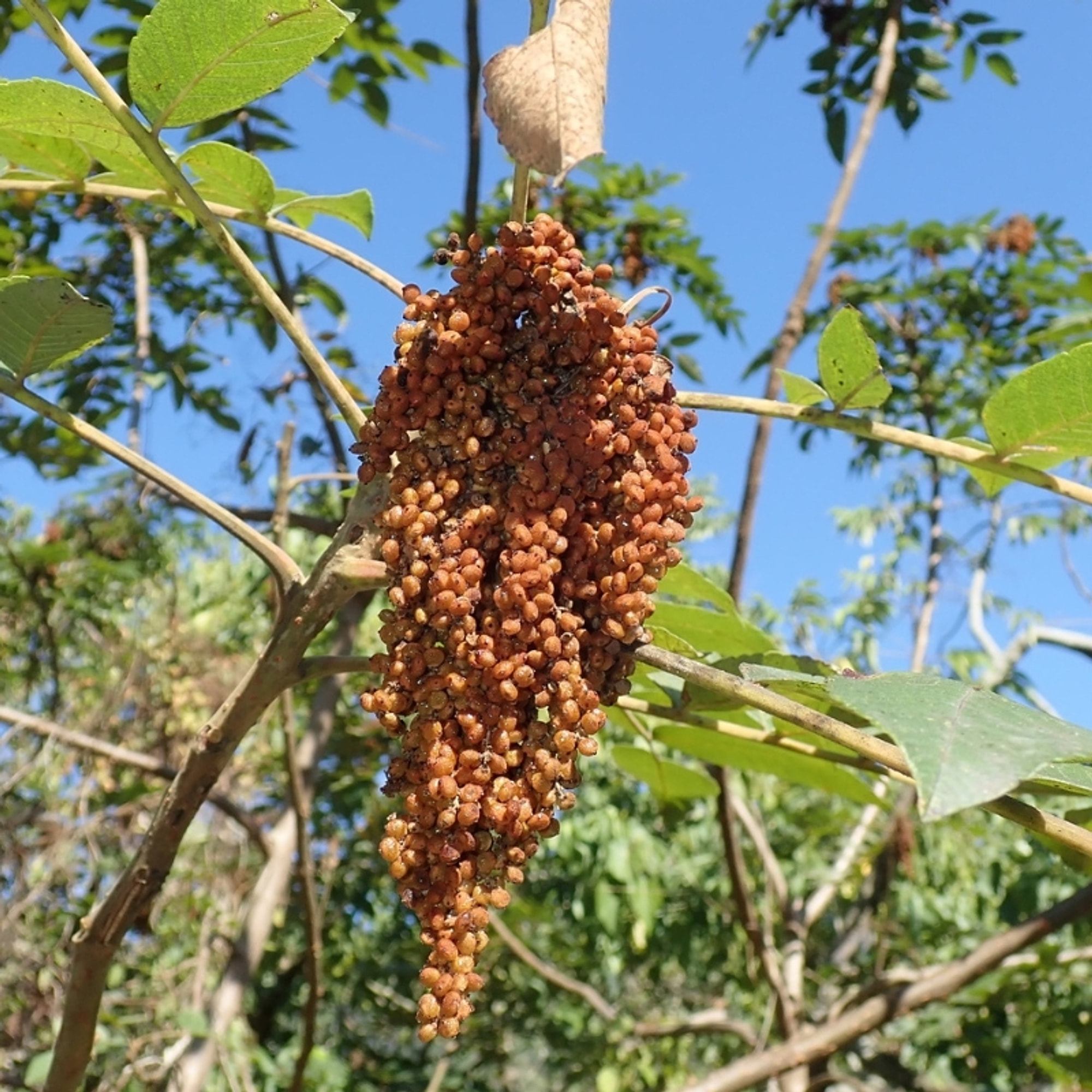
Chinese sumac (Rhus chinensis) seed needs two treatments before it will sprout: a 24-hour hot-water soak, then 90 days of cold stratification. After that it germinates in 4–8 weeks at 18–22 °C.
Also known as: Chinese sumac, Nutgall tree, Yanfumu (Chinese), Nurude (Japanese), Bulknamu (Korean). Family Anacardiaceae.
Pretreatment and sowing
- Scarify: soak the seed in hot water for 24 hours.
- Cold-stratify for 90 days.
- Sow in moist soil at 18–22 °C.
- Expect germination in 4–8 weeks.
Skipping either step is the most likely reason for no germination, so plan about four months from soaking to seedlings.
What the plant becomes
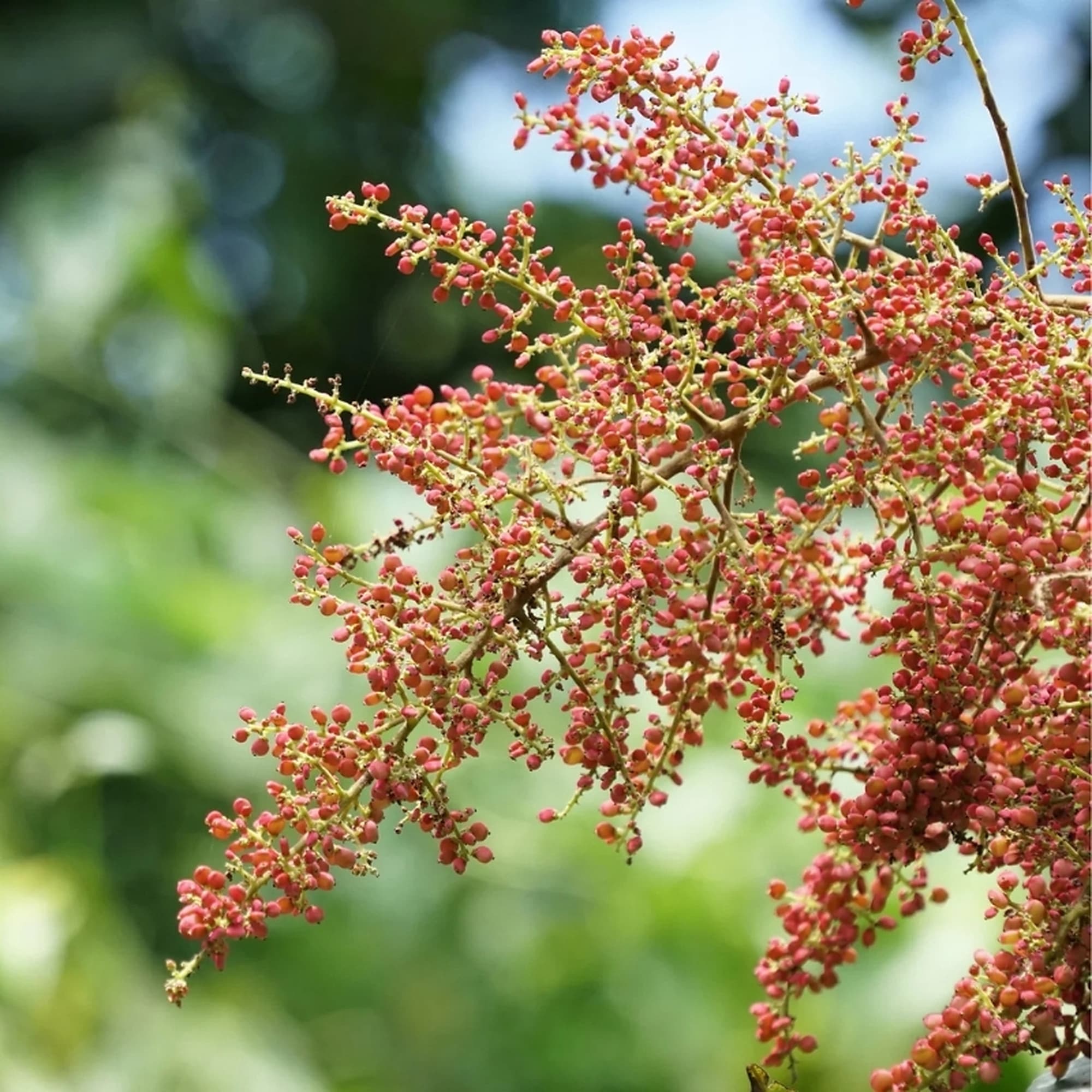
A deciduous shrub or small tree 4–6 m tall with compound leaves that turn red and orange in autumn. Small yellow-green flowers appear in summer, followed by clusters of red fruits in autumn that draw birds. The tree is known for its galls (nutgalls), which are high in tannins and have been used in leather tanning and natural dyeing.
Where it grows
Cold-hardy in USDA zones 6–11. It prefers full sun and adapts to dry, rocky or poor soils if they drain well. Water moderately; established plants tolerate drought.
We do not state a germination percentage for this lot.
FAQ
Can I sow the seed straight away?
Not with good results. Soak in hot water for 24 hours first, then give 90 days of cold stratification.
How cold-hardy is it?
It is listed for USDA zones 6–11.