 Shop at deodar-seeds.com
About this seed
Which plant is this?
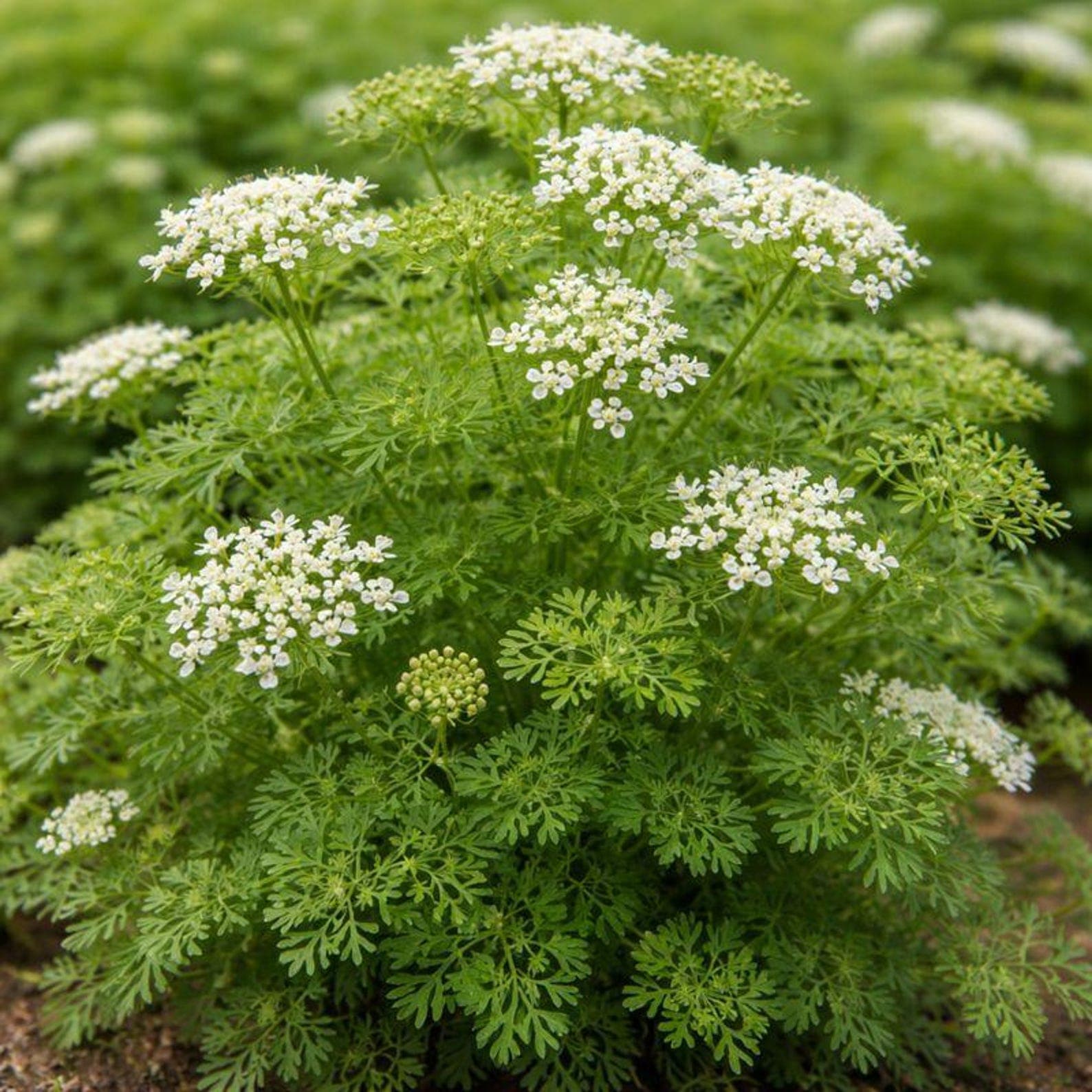
This seed grows Trachyspermum ammi, an annual herb in the carrot family (Apiaceae). The "seed" is a single-seeded, greyish-brown, ridged fruit that resembles cumin or caraway seed. Carum copticum is an older name for the same species, and "carom" is one of its English names.
Is it the same as the "ajwain" leaf plant?
No. Indian borage (Plectranthus amboinicus) is a different plant: a perennial in the mint family (Lamiaceae) with fragrant, fuzzy leaves, and it is frost tender. It is not grown from ajwain seed.
Soil and climate
Ajwain wants a cool, dry climate and well-drained soil. Growth is best at 15–27 °C and 60–70% relative humidity. Well-drained sandy loam suits it best, and fertile clay loam works if drainage is adequate; avoid gravelly and acidic soil (best pH 6.5–8.5).
Sowing depth, water and spacing
Sow about 1 cm deep. Give a light watering straight after sowing and another about 4–5 days later to help germination. A spacing of 30 × 20 cm is recommended.
What goes wrong
Root rot (Rhizoctonia solani) is the serious disease of ajwain and can cut yield drastically, and continuous moist, cloudy weather favours pests and diseases. Powdery mildew usually appears late in the season and is of minor importance.
How long until harvest?
Plan on a long season: ajwain takes about 130–180 days from sowing to maturity, depending on variety and season.
Sowing ajwain in India
In the northern plains the rabi sowing window is September–October (first week of October for an early crop, November–December for a late one); in Andhra Pradesh, Karnataka and Tamil Nadu it is mid-August for early rainfed crops and September–October for the main season. In a three-year Gujarat trial, sowing on 20 October gave the highest seed yield, and every later date yielded less.
At Ajmer, Rajasthan, mid-October sowings took 183–198 days to harvest, which came between mid-April and the first week of May. In a Telangana trial flowering began about 90 days after sowing.
Also known as
Ajwain, ajowan, ajawa, carom, Bishop's weed, omum (Hindi, for the fruit) and ajouan (French).