
Seed preparation
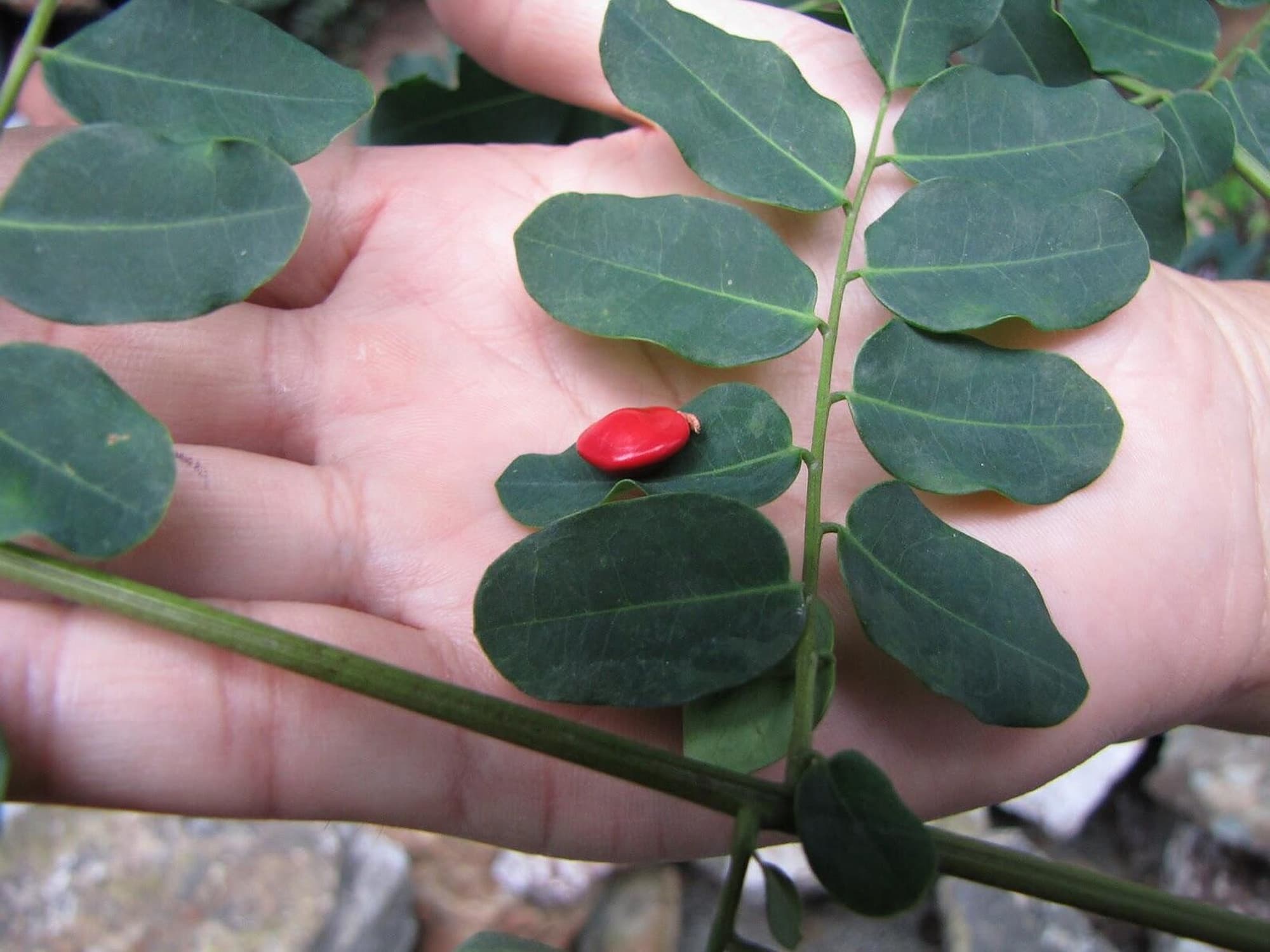
The red seeds are 7.5-9 mm across with an extremely hard coat. Handle them as poisonous: they must not be eaten raw, so keep them away from children and pets and wash your hands after handling.
Tree growing guide
Red bead tree, or coral bean, is a fast-growing tropical shade tree with glossy scarlet seeds. The seeds have a very hard coat and must be nicked or dipped in boiling water before sowing; raw seeds are poisonous.
The red seeds are 7.5-9 mm across with an extremely hard coat. Handle them as poisonous: they must not be eaten raw, so keep them away from children and pets and wash your hands after handling.
Essential. Nick or file a small spot on the seed coat away from the scar where it was attached to the pod, until the pale inner layer shows, or put the seeds in boiling water for 1 minute and then let them cool. Mechanically scarified seed reached 100% germination within 1-4 days in trials.
Not needed. Dormancy is caused only by the hard, waterproof seed coat, not by a cold requirement.
After nicking or the hot-water dip, soak the seeds in room-temperature water until they swell, usually overnight. Re-nick any seeds that stay hard and small.

Keep the seed warm. Red bead tree comes from the lowland humid tropics (mostly below 300-400 m), so sow in the warm, rainy season in India and the tropics, or indoors in warmth elsewhere.
Sow the swollen seed shallowly and cover it with a thin layer of mix, roughly its own thickness. Germination is epigeal: the seed leaves rise above the soil.
A free-draining seed mix or nursery bed; neutral to slightly acidic soil suits it. Deep pots or tall bags allow the taproot to grow straight.
Keep evenly moist but never waterlogged; swollen seed rots in wet, airless mix.
No light is needed under the cover. Move seedlings into bright light as soon as they emerge.
About 7-10 days for treated seed. Untreated seed germinates erratically, over months.
Seedlings reach 8-15 cm (3-6 in) in about three months and 20-30 cm (8-12 in) two to three months later. Plant them out at that size at the start of the rains; nursery stock transplants well. Seed can also be sown directly in the field after treatment.
Growth is slow in the first year and fast afterwards; in American Samoa young trees grew 2.0-2.3 m (6.5-7.5 ft) a year. Keep weeds and grass away from young trees and water in long dry spells.
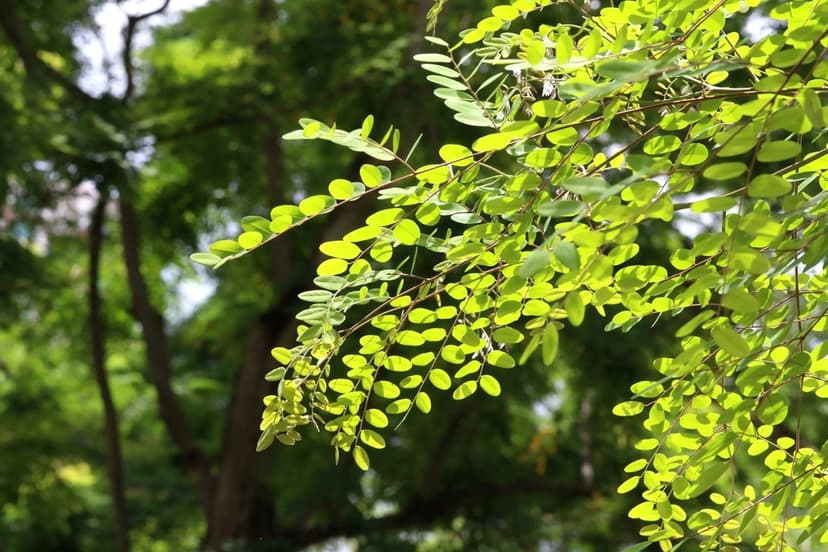
It thrives in the humid tropics with high rainfall and grows on deep, well-drained or shallow rocky soils. It is not a tree for cold or frosty climates.
This is a spreading tree 6-15 m (20-50 ft) tall, used for shade, timber and firewood, not a hedge shrub.
The seed keeps well: about 3 years in a sealed container at room temperature and 15% germination even after 8 years in open storage.
The tree is invasive in American Samoa, the Cayman Islands, the Seychelles and other islands. Check local weed lists before planting outside its native range.
Nick or hot-water treat the seeds, then sow in warmth for a fast tropical shade tree.
The seed coat is extremely hard and lets no water in. Nick each seed or dip it in boiling water for 1 minute, soak it until it swells, then sow.
Yes, raw seeds are poisonous. Keep seeds away from children and pets and wash your hands after handling them.
No. The name 'red sandalwood' is also used for Pterocarpus santalinus (red sanders), a different tree. Adenanthera pavonina is the red bead tree or coral bean.

