
Seed preparation
Snapdragon seed is dust-fine. Tip it into a folded piece of paper and tap it out thinly over the tray, or mix it with a little dry fine sand for even spreading.
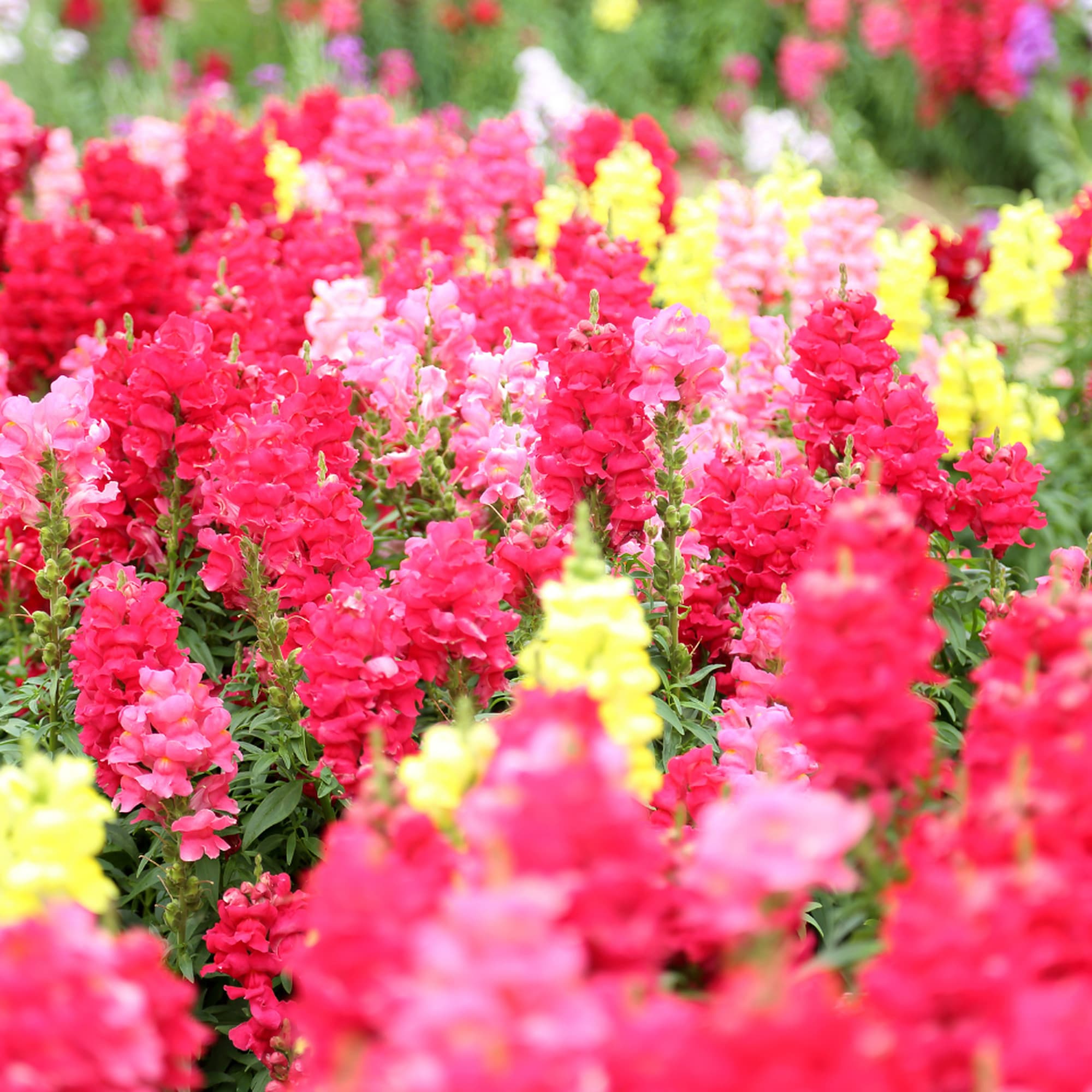
Flower growing guide
Snapdragons are cool-season flowers grown for bedding and long cut spikes. The tiny seed needs light and warmth to germinate, so sow it on the surface in trays and plant out young seedlings for the cool months.
Snapdragon seed is dust-fine. Tip it into a folded piece of paper and tap it out thinly over the tray, or mix it with a little dry fine sand for even spreading.
Not needed. The seed absorbs water readily.
Not needed. Seed germinates at room temperature without any cold treatment.
Not needed. Soaked seed clumps and cannot be spread thinly; water the tray from below instead.
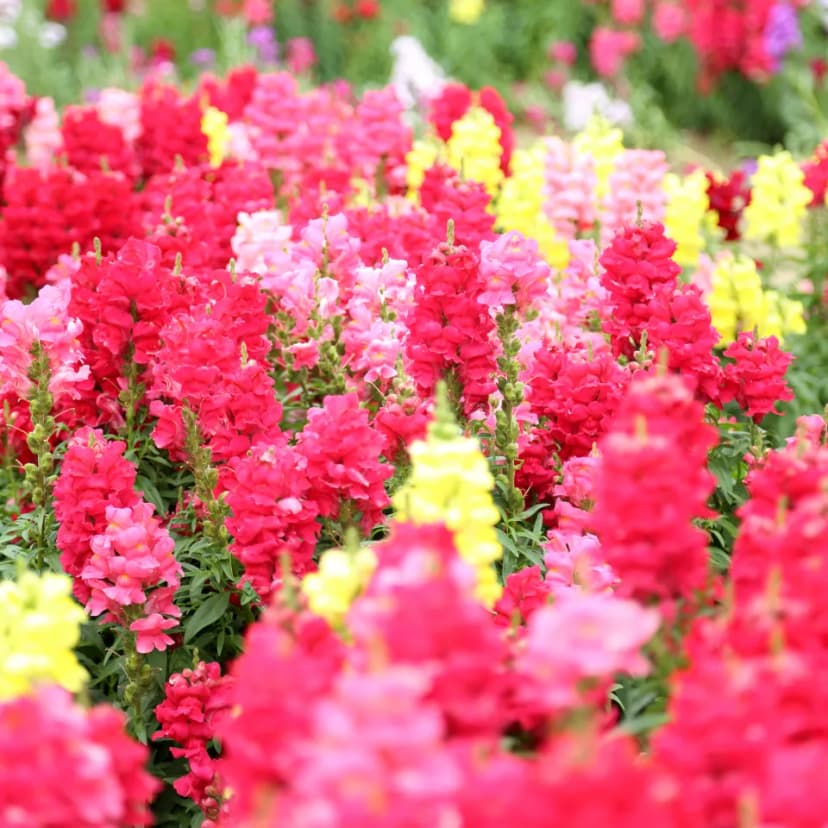
Keep the tray at 21-24 °C (70-75 °F). After germination slightly cooler, bright conditions give sturdier seedlings.
Press the seed lightly onto the moist surface and leave it uncovered. A very thin sprinkle of fine vermiculite is acceptable: it holds moisture and stops algae without blocking the light.
Fine, sterile, free-draining seed compost in a tray or cell tray.
Water from below or mist gently so the seed is not washed into the compost and buried. Keep the surface moist but not soggy.
Light is required. Place the tray in bright, indirect light or under lights from the day of sowing; a clear cover keeps humidity in.
Usually 7-14 days at 21-24 °C (70-75 °F); in Punjab autumn nurseries seedlings often appear in 6-7 days.
When the first true leaves appear, about 3-4 weeks after sowing, prick the seedlings out into cells or small pots. In frost climates sow 8-10 weeks before the last frost; harden off and plant out 10-30 cm (4-12 in) apart, closer for single-stem cut flowers, wider for bushy bedding plants. On the Indian plains plant out 7-8 cm tall seedlings in October-November, about 30-40 cm apart.
For bushier plants with more, shorter spikes, pinch seedlings at 7.5-10 cm (3-4 in) tall back to 4-5 cm (1.5-2 in). For the longest single cut stems, do not pinch.
Grow on in full sun or light shade in fertile, well-drained soil. Tall cut-flower varieties benefit from support netting or stakes before the spikes lengthen.
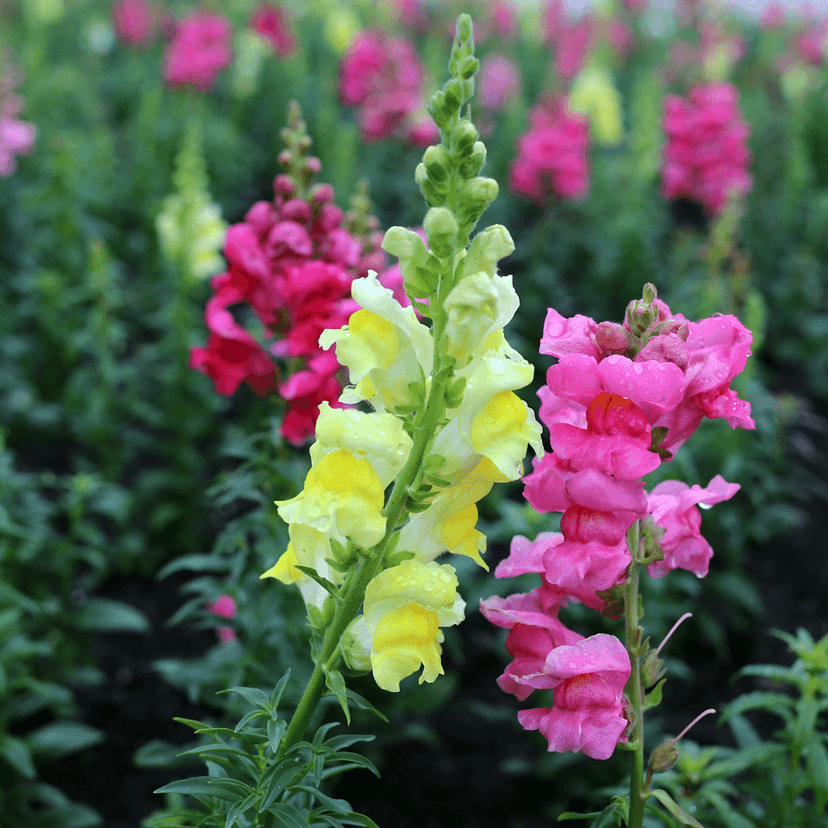
Snapdragons flower best in cool, bright weather and are grown in India as a winter flower. Punjab Agricultural University advises sowing in September-October and transplanting in October-November, with flowering at its peak in April. In a Himachal Pradesh mid-hill trial, planting in mid-September gave the tallest plants, the earliest flowers and the longest flowering of six dates from September to December. The plants dislike rain and wet roots.
Dwarf bedding types suit edges and pots; tall cut-flower types give stems of about 30-150 cm (12-60 in). Cut-flower varieties are grouped by the season they flower in, so pick a group that matches your sowing time.
Cut spikes when the lower third to half of the florets are open. Cutting and deadheading faded spikes encourages side shoots to flower.
Keep the soil evenly moist and water at soil level in the morning. Wet leaves and crowded plants are the main cause of rust and mildew.
Sow snapdragons on the surface in good light for colourful spikes through the cool season.
Grow them as a winter flower. On the North Indian plains sow in trays or a nursery bed in September-October and transplant in October-November; flowering peaks around April in Punjab. In a mid-hill trial in Himachal Pradesh, mid-September planting gave the best growth and flowering.
No. Snapdragon seed needs light to germinate. Press it onto the moist surface and, at most, dust it with fine vermiculite.
That is usually antirrhinum rust. Remove infected leaves early, keep the foliage dry and grow rust-resistant varieties where available.
