
Seed preparation
Take pips from fully ripe apples, rinse off any pulp and avoid heating or fermenting the fruit. Apple seed stores well: dried below about 11% moisture and kept sealed at 2-10 °C (36-50 °F) it stays viable for over two years.
Fruit growing guide
Apple pips germinate well after two to three months of moist chilling. Each seedling is a new, genetically different tree, so most growers use seedlings as rootstocks and graft a named variety onto them.
Take pips from fully ripe apples, rinse off any pulp and avoid heating or fermenting the fruit. Apple seed stores well: dried below about 11% moisture and kept sealed at 2-10 °C (36-50 °F) it stays viable for over two years.
Not needed. The seed coat is thin and takes up water; dormancy is broken by cold, not by nicking.
Required. Mix the seeds with damp sand, peat or coir in a bag and keep them in the fridge at 2-5 °C (36-41 °F) for 2-3 months; USDA gives about 30 days as the bare minimum and 60 days for cultivated apple. Indian hill nurseries start this in December.
Not needed. A few hours in water before the cold treatment is enough to moisten dried seed.
Chilled apple seed is among the first to germinate in spring and the seedlings tolerate spring frost. Seed-testing labs use alternating 30 °C day and 20 °C night (86/68 °F); an ordinary spring windowsill or cold frame works well.
1.25-2.5 cm (1/2-1 in) in loose, friable soil. Autumn-sown untreated seed is covered with about 2.5 cm (1 in) of sand and chills naturally over winter.
Free-draining seed compost in deep pots, or a fine nursery bed. On soils that crust after watering, a thin mulch of sawdust or fine compost helps the seedlings break through.
Keep the medium evenly moist during chilling and after sowing; never let it become waterlogged.
Germination happens under cover; move pots to full light as soon as seedlings appear.
Well-chilled seed sprouts within a few weeks of sowing in spring; some seeds may sprout in the fridge, so check the bag often and sow them at once.
Pot on or space seedlings in a nursery bed after the first true leaves. A good seedling is about pencil-thick and 38 cm (15 in) tall by the end of the first season; 23 cm (9 in) is the minimum size for grafting.
In Himachal Pradesh one-year-old seedlings are whip-and-tongue or cleft grafted in February-March, T-budded in May-June or chip-budded in mid-June and mid-September.
Plant dormant trees from late autumn to early spring; in the Indian hills from late December to mid-March into 1 x 1 x 1 m pits prepared a month ahead. Trees on seedling rootstocks need about 6-7 m (20-23 ft) spacing.
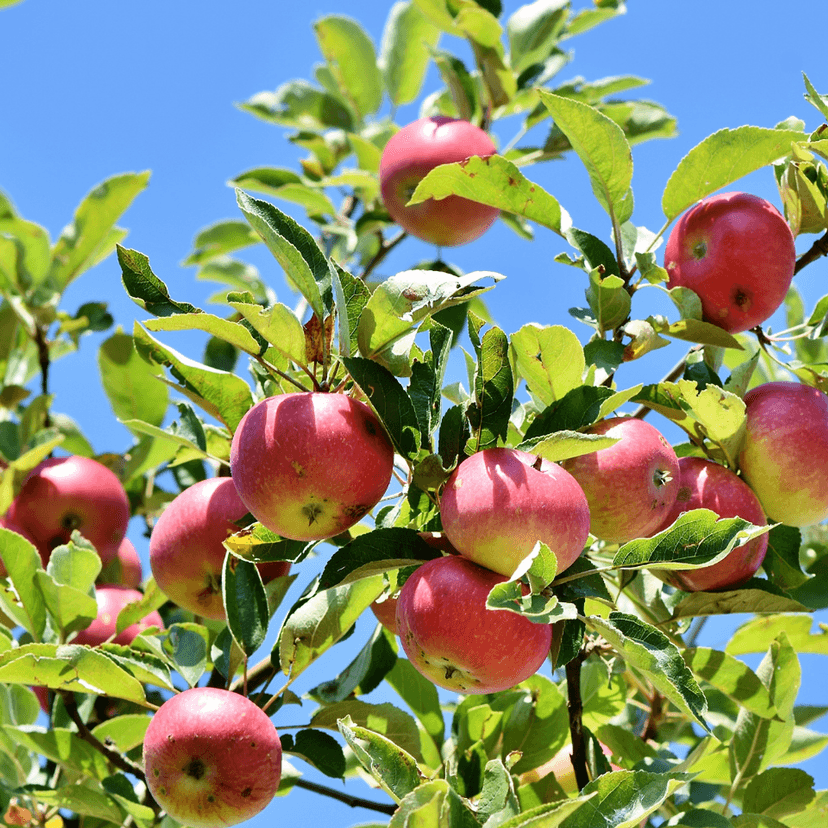
Every apple seed is genetically different, so fruit from a seedling can be good, poor or anything between. For a known variety graft onto the seedling; India uses seedlings of crab apple or commercial cultivars as rootstocks.
Commercial apple grows at about 1,500-2,700 m in Jammu and Kashmir, Himachal Pradesh and Uttarakhand. Hot plains are not suitable for standard varieties; low-chill cultivars such as Michal and Schlomit exist for milder areas.
Apples need a different, compatible variety flowering nearby; a crab apple can be the pollinator.
Fertile, well-drained soil with pH 6-7 in full sun. Prune free-standing trees in winter and trained forms in late summer.
Trees on dwarfing rootstocks bear in about 3-4 years; on seedling roots, often 8 years or more.
Chill apple seed for two to three months and raise your own seedlings and rootstocks.
 Himalayan apple mix SeedsMalus domesticafrom
 Apple red delicious SeedsMalus domesticafrom
 Pink apple Gala SeedsMalus domesticafrom
 Plum, Pear, Apple & Apricot Seed Projects — 4 Seed SelectionsPrunus domestica; Pyrus communis; Malus domestica; Prunus armeniacafrom
No. Every apple seed is genetically different, so the fruit will differ from the parent. Graft a named variety onto the seedling if you want known fruit.
About 2-3 months in a damp medium at 2-5 °C. Thirty days is the bare minimum.
Standard apples need the cold of the hills, about 1,500-2,700 m. Low-chill cultivars such as Michal and Schlomit are the option for milder areas.
Often 8 years or more. Grafting onto a dwarfing rootstock brings bearing forward to about 3-4 years.