
Seed preparation
Take seed from ripe fruit, wash off all pulp and let it dry in the shade. Cherimoya seed stays viable for 6-12 months if kept cool and dry, but fresh seed is best for all annonas.

Fruit tree growing guide
Sugar apple, custard apple and cherimoya all grow readily from fresh seed in warm conditions. Sow in deep pots at about 30 °C, be patient with the slow, uneven sugar apple and custard apple seed, and plant out into well-drained soil that never floods.
Take seed from ripe fruit, wash off all pulp and let it dry in the shade. Cherimoya seed stays viable for 6-12 months if kept cool and dry, but fresh seed is best for all annonas.
Not needed for cherimoya; studies found that nicking the coat does not improve its germination. Sugar apple and custard apple seed has a hard coat and germinates slowly, but soaking is a safer first step than cutting it.
Not needed. Annonas are tropical and subtropical; cold treatment does not help, while warmth does.
Optional for cherimoya. For sugar apple and custard apple soak seed for 24 hours in clean water before sowing. In a West Bengal trial, seed soaked 24 hours in 50% coconut water reached about 69% germination in 31 days on average, against 30% and 49 days for seed soaked in plain water.
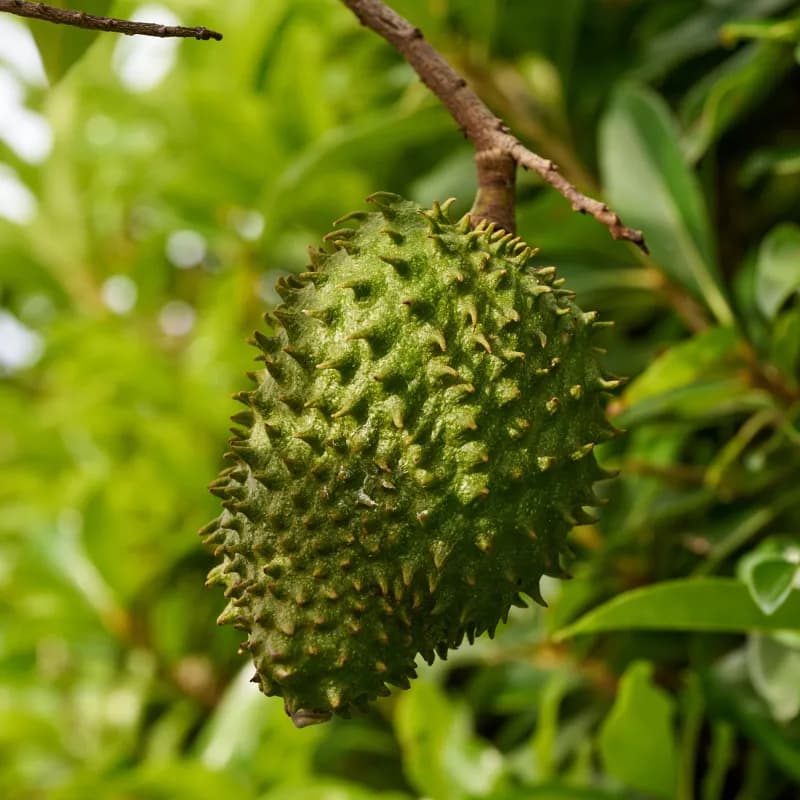
Keep the pots at 28-32 °C (82-90 °F). In a cherimoya study 30 °C (86 °F) gave about 71% germination, while 25 °C (77 °F), 40 °C (104 °F) and room temperature gave a third or less. At 15-20 °C (59-68 °F) germination can be delayed by three to four months, so sow in the warm season or use a heated propagator.
Sow about 2 cm (0.8 in) deep in pots. Nursery polybags in India are often sown at up to 5 cm (2 in).
A free-draining mix such as two parts sand to one part potting soil, or garden soil, sand and well-rotted compost. Use deep pots or polybags, because the seedling makes a long taproot.
Keep evenly moist but not wet. Cold, waterlogged mix causes rot during the long germination period.
No light is needed until the shoot appears. Then give bright light, shading young seedlings from harsh midday sun.
Cherimoya usually emerges in 2-4 weeks at 30 °C. Sugar apple and custard apple emerge over several weeks to two months; do not discard pots too early.
Move seedlings at 10-15 cm (4-6 in) tall into larger bags or nursery beds, keeping the root ball intact. Seedlings meant for grafting are usually grafted 12-18 months later.
Plant at the start of the rainy or warm season into a sunny spot with well-drained soil. Sugar apple tolerates sandy and limestone soils; avoid low ground that floods.
Water in dry spells and feed young trees with small, frequent doses of balanced fertilizer. Protect from frost: young sugar apple trees are severely damaged or killed at 0 to -1 °C (32-30 °F).
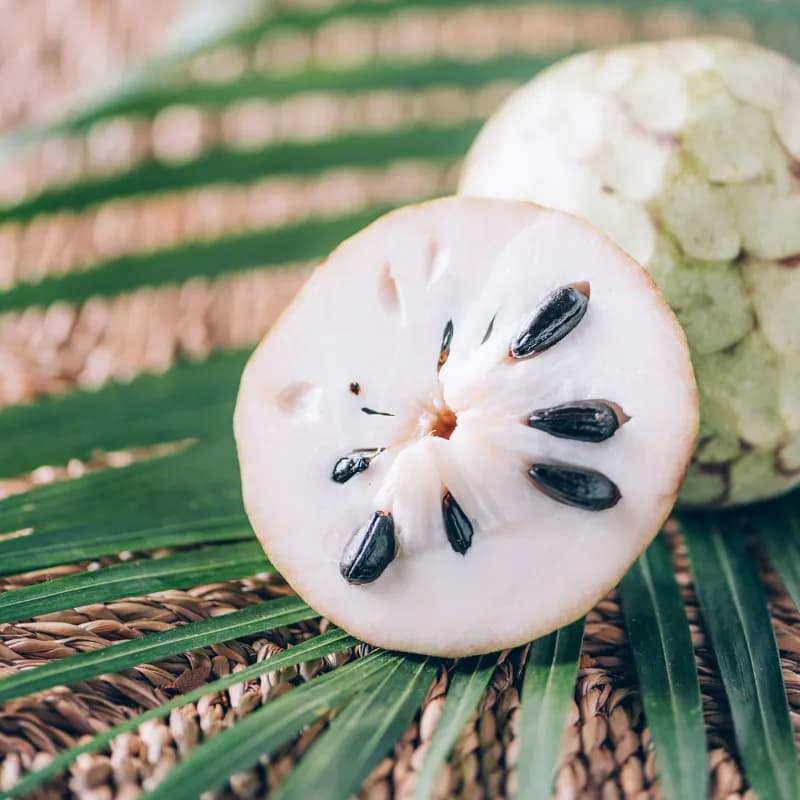
Sugar apple suits warm tropical and subtropical lowlands, growing best at 23-34 °C (73-94 °F), and drops most of its leaves in the cool or dry season. Cherimoya needs cool tropical uplands, roughly above 1,000 m, and does poorly in hot lowlands.
Water from flowering through harvest in dry weather, then reduce watering when leaves start to fall. Deep, infrequent watering is better than daily sprinkling.
Remove about a third of the previous year's growth in early spring, before new growth starts, to keep trees about 2.5-3.5 m (8-12 ft) tall and easy to hand-pollinate and harvest.
Green sugar apples are ready when the skin turns yellowish green and the area between the bumps turns pale yellow; red types turn bright pink there. Ripe fruit keeps only two to four days, and cherimoya ripens 4-5 months after pollination.
Sow sugar apple, custard apple or cherimoya seed in warm, well-drained pots and raise your own fruit trees or rootstocks.
The seed has a hard coat and germinates unevenly, often taking several weeks. Soak it for 24 hours and keep the pots near 30 °C.
Sugar apple seedlings vary little, so seed-grown trees are common. Cherimoya and selected varieties are usually grafted to keep their fruit quality.
It does poorly in hot lowlands. Cherimoya prefers cool tropical uplands, roughly above 1,000 m; sugar apple is the better choice for the plains.


