
Seed preparation
Use clean, plump seed. In India seed is collected from local (desi) trees in January-February and sown soon after, in February in hot arid areas or April in the north-east.
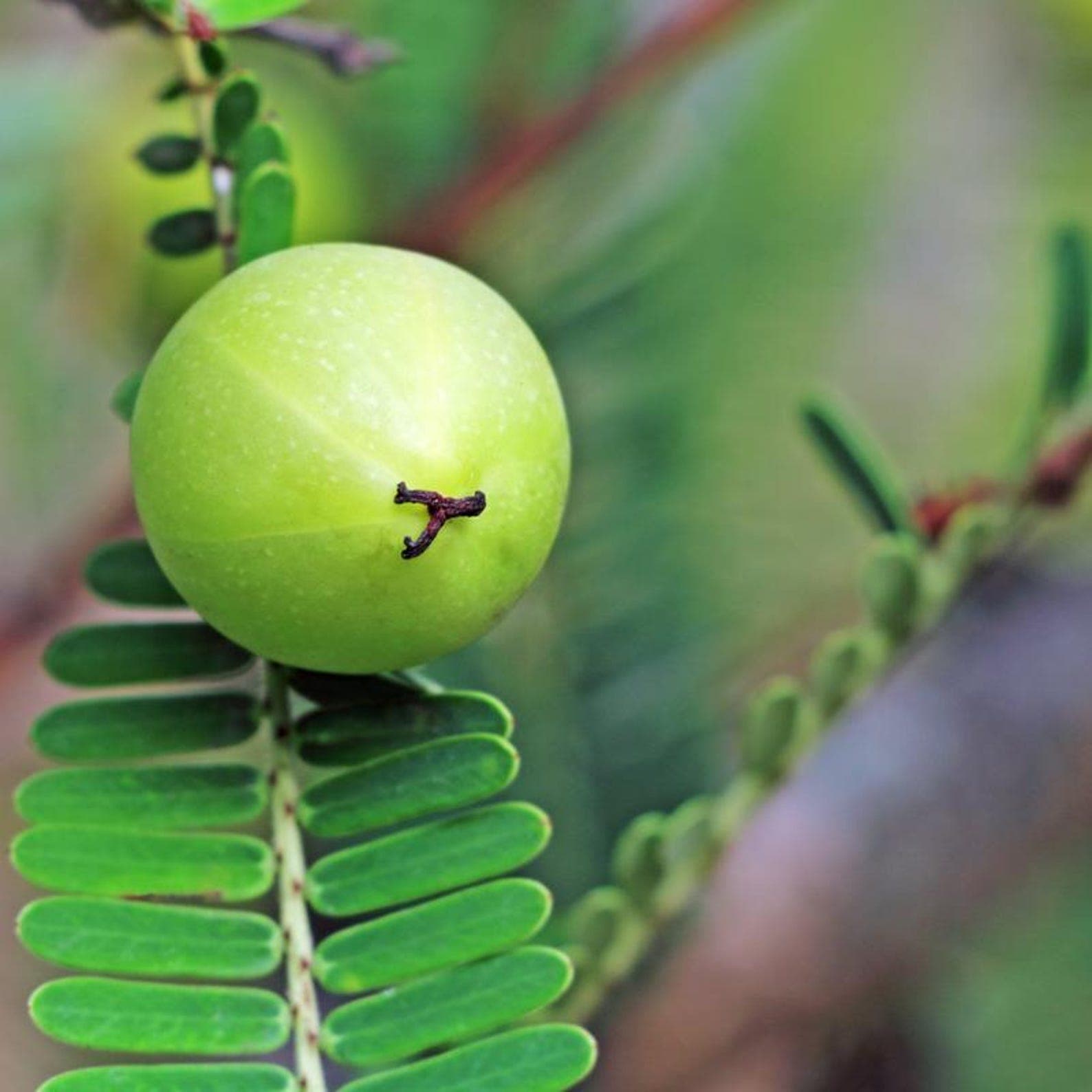
Fruit growing guide
Amla seed germinates in about two weeks in warm conditions and needs no cold treatment. Seedlings vary and fruit late, so they are usually grown as rootstocks and patch-budded with a named variety.
Use clean, plump seed. In India seed is collected from local (desi) trees in January-February and sown soon after, in February in hot arid areas or April in the north-east.
Not needed. The small seeds take up water readily.
Not needed. Amla is a subtropical tree and its seed needs warmth, not cold.
Optional. A 24-hour soak in water shortened germination slightly (about 12 days against 14 days without soaking). Nurseries sometimes soak seed in gibberellic acid (GA3, 500 ppm for 24 hours), which brought germination down to about 8 days.
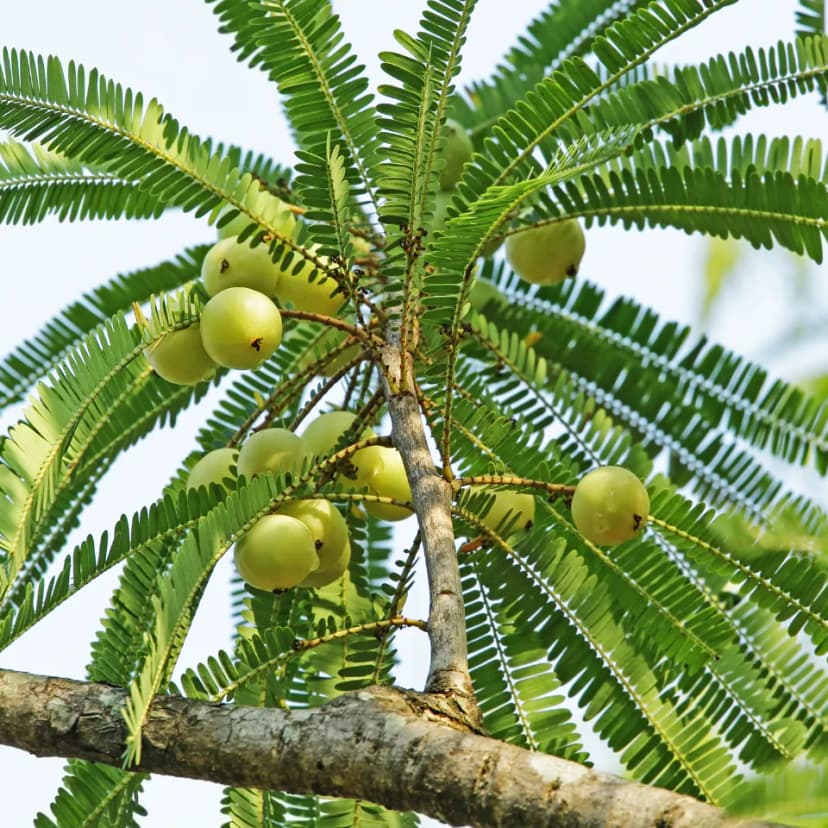
Warm. In an Andhra Pradesh trial seed came up fastest in a polyhouse held at about 28 °C (82 °F); a shade net was nearly as good. Sow at the end of the cool season so seedlings grow into the warm months.
Sow shallowly and cover the small seed with a thin layer of fine soil or sand, then water gently so it is not washed out.
Sandy field soil mixed with well-rotted farmyard manure (1 part soil to 2 parts manure) in polybags of about 25 x 15 cm gave the best germination, up to about 92%, and the tallest rootstocks in a trial at Bikaner. Small 15 x 10 cm bags gave weaker plants.
Water the bags well before sowing, irrigate lightly afterwards and mulch with dry grass to keep the surface moist.
Warm, bright conditions under a polyhouse or shade net; move seedlings into full sun as they harden.
About 12-14 days for untreated or water-soaked seed; in the Bikaner trial 72-92% of seed had come up 20 days after sowing.
Keep seedlings in their bags and water every fortnight in hot weather. Rootstocks 6 months to 1 year old are used for budding.
Patch budding gives the best results, with over 90% success on rootstocks raised in perforated polybags. Bud from mid-May to mid-August; at Bikaner, NA-7 budded in mid-June was ready to plant out in August.
Plant in July-August or February into pits 1-1.25 m (3-4 ft) wide and deep, dug two months before and filled with well-rotted manure plus neem cake or bone meal. Water every fortnight in summer until established; no irrigation is needed in the rainy season.

Seed-grown amla is not true to type and takes 6-8 years to bear; budded trees bear from the third year. Use your seedlings as rootstocks for varieties such as Banarasi, Chakaiya, Francis, NA-7, Kanchan, Krishna or BSR-1.
Amla suits a dry subtropical climate and grows up to about 1,800 m. It tolerates saline and sodic soils up to about pH 9.5, but heavy soils and a high water table are unsuitable.
Give 15-20 kg of farmyard manure per tree each year; mature trees receive NPK in two split doses, in September and in April-May after fruit set.
Pick fruit when it is fully developed and its colour changes at maturity.
Sow amla seed warm in rich polybags and raise strong rootstocks for budding.
No cold or scarification is needed. A 24-hour soak in water is enough; keep the seed warm and moist after sowing.
Seedlings are not true to type and take 6-8 years to bear. Patch-budding a named variety onto the seedling gives known fruit from about the third year.
At the end of the cool season: February in hot, dry regions such as Rajasthan, or April in the north-east, so seedlings are ready for budding from mid-May to August.
