Free EMS courier delivery across India
Banana Seeds plant

Fruit plant growing guide

How to grow seeded wild banana from seedMusa balbisiana and wild Musa acuminata

Banana seeds come from wild, seeded bananas such as Musa balbisiana, not from the seedless bananas sold as fruit. The hard seeds germinate slowly and erratically, and daily swings between hot and cooler temperatures are the key to getting them to sprout.

≈ 35 °C
Germination temp.
≈ 8 weeks
Germination
1 cm
Sowing depth

At a glance

Germination temperature
Alternating: about 35 °C (95 °F) for around 6 hours a day, 20-25 °C (68-77 °F) the rest. Constant 25 °C gives almost nothing.
Sowing depth
Cover with a thin layer of mix, about the seed's own thickness (seeds are under 1 cm).
Germination time
Slow and erratic: on average about 8 weeks, spread over up to six months.
Light
Not required for germination; seedlings need bright light.
Pre-treatment
Clean off all pulp. Three months of warm, dry storage at about 25 °C raised germination in trials.
Transplant or direct sow
Sow in pots or trays; plant out young plants in warm weather.

Seed preparation

Seed preparation

Wash all fruit pulp off the seeds. Seed that has been dried hard and frozen loses much of its viability, so sow fresh seed when you can. In trials with wild Musa acuminata, holding cleaned seed for three months at about 25 °C (77 °F) and moderate humidity before sowing raised germination from about 14% to 41%.
Scarification

Not needed. Sanding the seed coat did not speed water uptake in tests, and wild banana seed takes up water within about five days in moist mix. Do not crack the seed: the seedling has to push out a small plug at one end.

Stratification

Not needed. Banana seed has no cold requirement; what it needs is a daily warm-cool temperature swing.

Soaking

Not needed. The seed absorbs water from moist sowing mix within about five days; no soak replaces the daily temperature swing.

Banana Seeds

Germination conditions

Germination temperature

Alternating temperatures are almost essential. In a study on wild Musa acuminata, constant 25 °C (77 °F) gave about 1% germination, 30/20 °C about 14% and 35/20 °C about 26%. The best results came when the warm phase reached about 35 °C (95 °F) for a short period, around 6 hours a day. In practice, a heat mat on a timer, or a pot in a sunny, sheltered spot outdoors in tropical India, gives this daily swing.

Sowing depth

Cover the seed with a thin layer of mix, about its own thickness; seeds are under 1 cm (0.4 in) across. Light is not needed, so covering does no harm.

Growing medium

A free-draining seed mix, such as compost with plenty of sand, perlite or coir. Avoid heavy, waterlogged mix during the long wait.

Moisture

Keep the mix evenly moist but never sodden for months. A clear cover keeps moisture even, but air it regularly to avoid mould.

Light

Seed germinates in the dark as well as in light. Move seedlings into bright light as soon as they appear.

Germination time

Expect seedlings sporadically: mean time was about 56 days at 35/20 °C, and trials ran for six months. Do not throw a pot away early.

Transplanting and first growth

  1. Seedling stage

    After germination the seed's food store is used up within about two weeks; by three to four weeks the seedling has side roots and depends on them. Pot seedlings singly at this stage.

  2. Planting out

    Plant out in warm weather into deep, well-drained soil rich in organic matter, pH 5.5-7.0. Dig a hole 3-4 times as wide as the root ball and plant at the same level as the surrounding soil. On wet sites plant on a raised mound.

  3. First growth stage

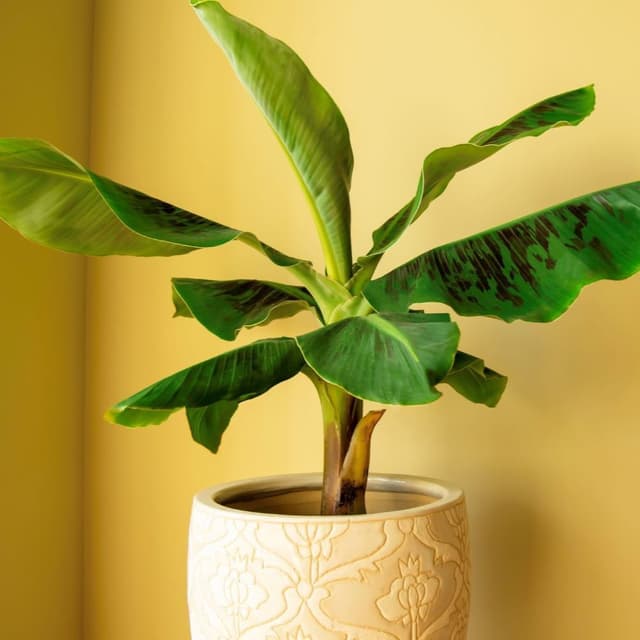
    Shoots grow best at 26-28 °C (78-82 °F). Give a sheltered spot, because wind shreds the leaves, and keep the soil moist but never waterlogged.

Banana Seeds

Common problems

ProblemNo germination after weeks
Cause
Constant temperature, or old dried seed.
What to do
Give a daily swing up to about 35 °C (95 °F) and wait up to six months; use fresh, clean seed.
ProblemSeeds rot in the pot
Cause
Pulp left on the seed or soggy mix.
What to do
Clean the seed thoroughly and use a free-draining mix that is moist but not wet.
ProblemYellow, stunted young plants
Cause
Continuously wet or waterlogged soil.
What to do
Improve drainage or plant on a raised mound.
ProblemLeaves damaged in winter
Cause
Chilling below 15.5 °C (60 °F) or frost.
What to do
In cool climates grow in a large pot and bring it into a bright, warm place before nights turn cold.
ProblemPlants collapse or tunnels in the stem base
Cause
Panama disease (Fusarium wilt) or banana weevil.
What to do
Plant in clean soil away from infected bananas and remove old stems after fruiting.

Practical growing tips

Know what you are growing

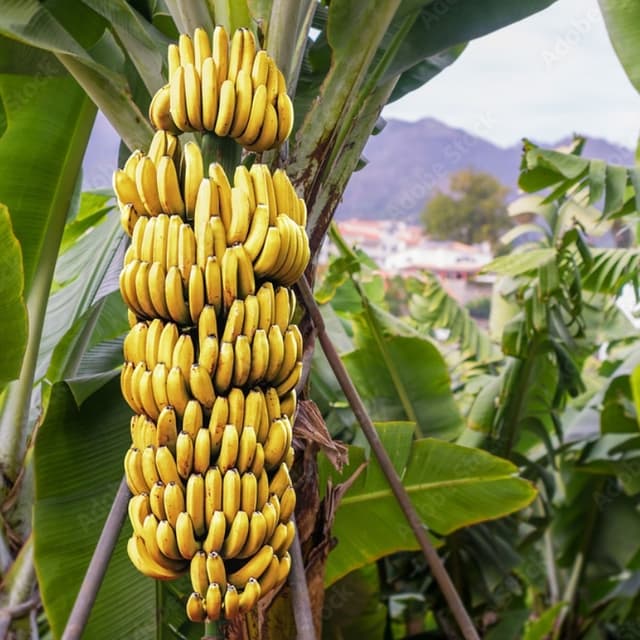
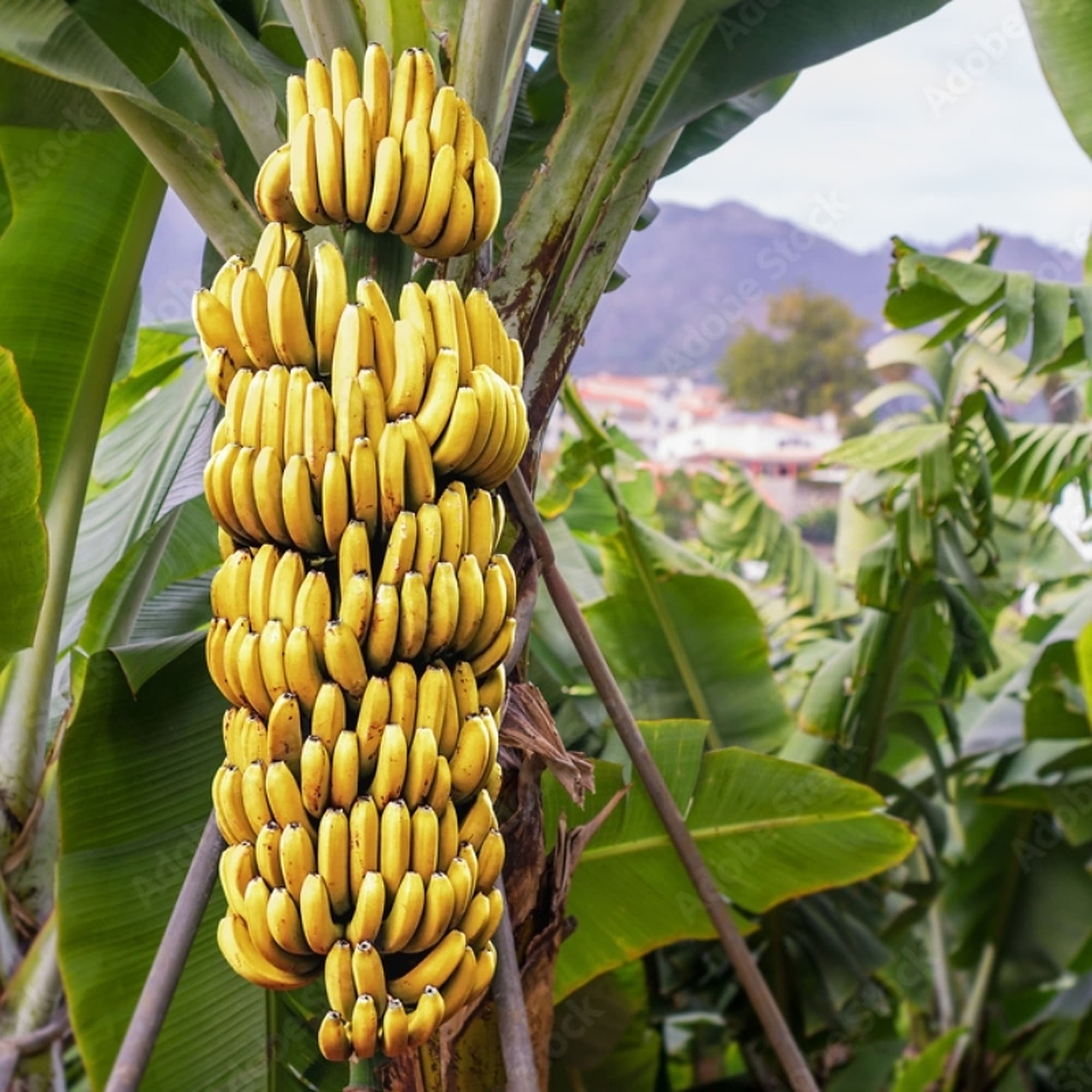
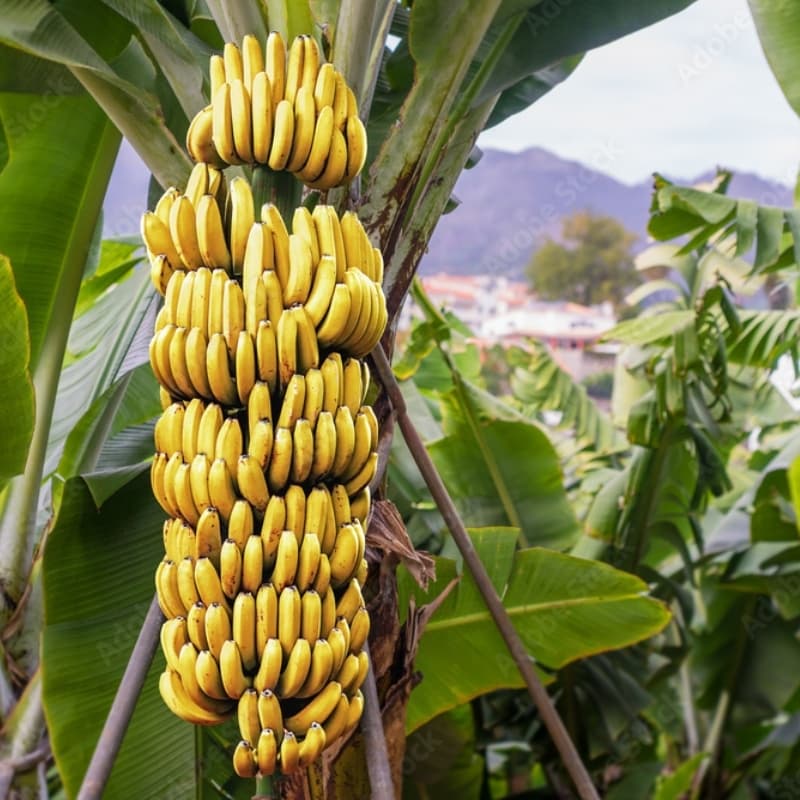
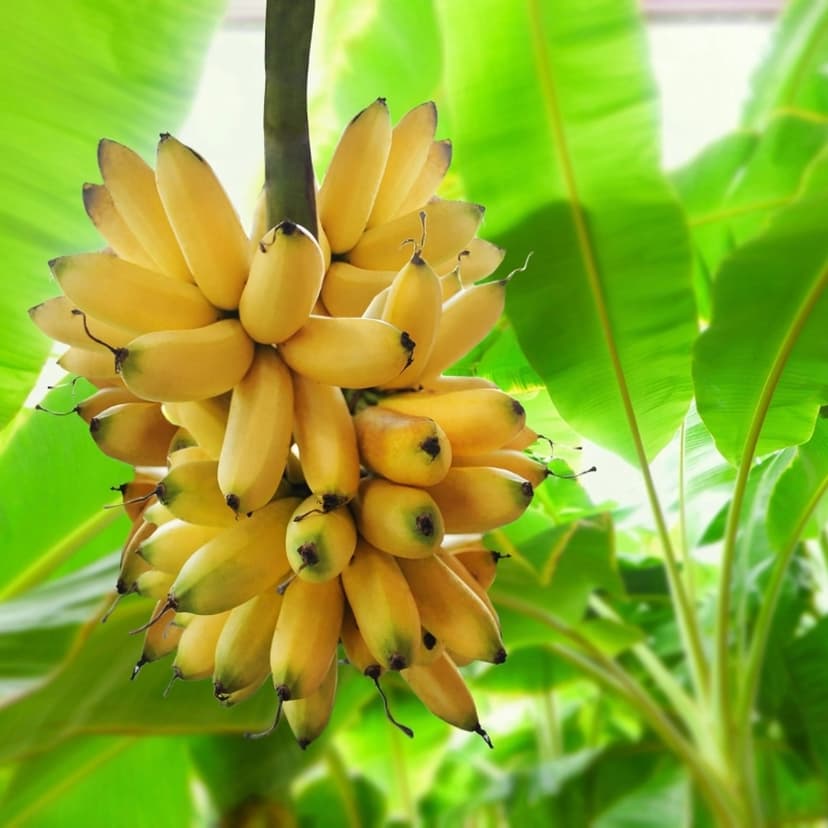
Wild seeded bananas such as Musa balbisiana are large plants. Their fruit is packed with hard seeds and is not like the seedless supermarket banana.

Water and feed generously

In the growing season bananas use about 25-38 mm (1-1.5 in) of water a week. On poor sandy soils feed about every two months with a high-potash fertiliser.

Manage suckers

Each stem fruits only once. Keep about three stems at different stages and cut out the rest at ground level, removing the growing bud.

Expect a long wait for fruit

Even plants from suckers take 10-15 months to flower and a further 80-180 days to ripen fruit, so plan for at least that long from seed.

Banana seeds from Deodar

Give wild banana seed a daily hot-and-cool swing and patience, and it will reward you with a striking tropical plant.

Frequently asked questions

Can I grow a banana from the seeds of a supermarket banana?

No. Most edible bananas are seedless and rarely produce viable seed. Banana seed comes from wild, seeded species such as Musa balbisiana.

Why are my banana seeds taking so long?

Wild banana seed germinates slowly and erratically. In trials the average was about eight weeks, with some seeds taking up to six months, and a daily swing to about 35 °C was needed.

Will a banana grown from seed give edible fruit?

A seed-grown wild banana gives fruit full of hard seeds, not seedless dessert bananas. Grow it as an ornamental and leaf plant.