
Seed preparation
Use the freshest seed you can. In a Polish breeding study, seeds stored for one year germinated at about 45%, but four-year-old seeds managed only about 14%.
Fruit growing guide
Raspberry seed is strongly dormant and germinates slowly and sparsely, even after months of cold. Sow plenty of fresh seed, expect new plants that differ from the parent, and be patient.
Use the freshest seed you can. In a Polish breeding study, seeds stored for one year germinated at about 45%, but four-year-old seeds managed only about 14%.
The hard seed coat is part of the problem. Seed research has found that neither acid scarification nor stratification worked well on its own; the best results came from combining them. Breeders use concentrated sulphuric acid for this, which is not a home method. Without it, expect a low germination rate and sow generously.
Mix the seed with damp sand or seed compost in a bag or pot and keep it at about 2-5 °C (36-41 °F). USDA NRCS gives one month at 3 °C for stored seed; other sources use 90-120 days. The simplest option is to sow in early autumn and leave the pot outdoors in a cold frame over winter.
Not a substitute for cold treatment. Water the stratification mix well, then keep it just moist.
Germination follows the cold period as temperatures rise. In an Italian study, seeds whose coat had been cut germinated at 24 °C (75 °F) within 4-30 days, but whole seeds barely germinated, which shows that the seed coat holds them back.
Press the seed onto the surface and cover it thinly with fine compost or grit, roughly the seed's own thickness.
A free-draining, peat-free seed compost. Raspberries prefer slightly acidic conditions (pH 6-6.7) later on.
Keep the pot evenly moist through the whole cold period and afterwards.
Keep the pot in good light once it comes out of the cold, so seedlings do not stretch.
Germination can start after about a month, but it often continues for months. Even after acid scarification plus three months of cold, an Italian trial averaged only about 25% (5-53% depending on the cross). Keep pots for at least a full season before giving up.
When seedlings are large enough to handle, move them into individual pots and grow them on in a cold frame or a sheltered spot.
Plant the young plants out in late spring of the following year, in a sunny, sheltered place in fertile, well-drained soil. Space them 40-60 cm apart along a row with wire supports.
Treat each seedling as a new variety: watch how it grows and keep only plants with good vigour and fruit. Multiply the best ones from suckers, which copy the parent exactly.
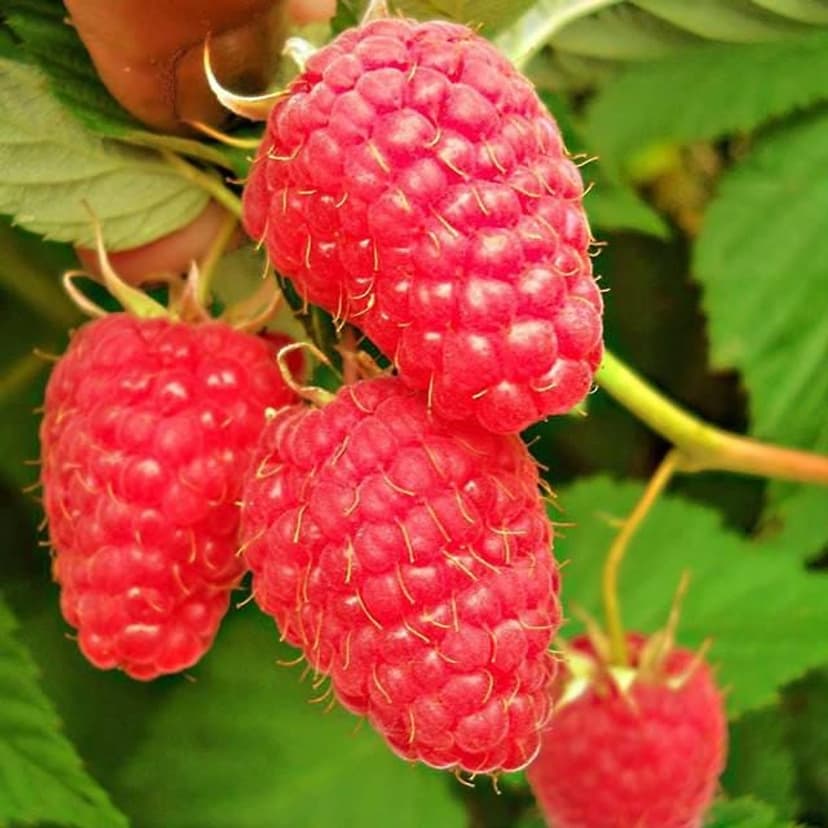
Raspberries are a cool-climate fruit. In India, they suit hill regions far better than hot plains.
Summer-fruiting raspberries need posts and three wires about 60 cm apart. Autumn types manage with lower posts and parallel wires.
After planting, mulch with 5-7.5 cm of organic matter, kept away from the canes.
Summer types fruit on last year's canes, so remove fruited canes after harvest. Autumn types fruit on this year's canes, so cut everything down in late winter.
Give raspberry seed a cold winter and plenty of patience. Every seedling is a new plant.
Raspberry seed is strongly dormant. Even with professional acid treatment and three months of cold, germination is often below 30%. Give a full cold period, use fresh seed and wait a whole season.
Not exactly. Every seedling is a new combination, which is why breeders raise seedlings to find new varieties. Multiply a good seedling from its suckers.
Expect at least a year longer than with bought canes. Seedlings are planted out in their second spring, and the canes then follow the normal summer or autumn fruiting habit.

