
Seed preparation
Seeds are tiny, about 1-2 mm. Sow the freshest seed you have: most kochia seed germinates or dies within its first year, so old packets give poor results. Until sowing, keep seed in a cool, dry place.
Ornamental annual growing guide
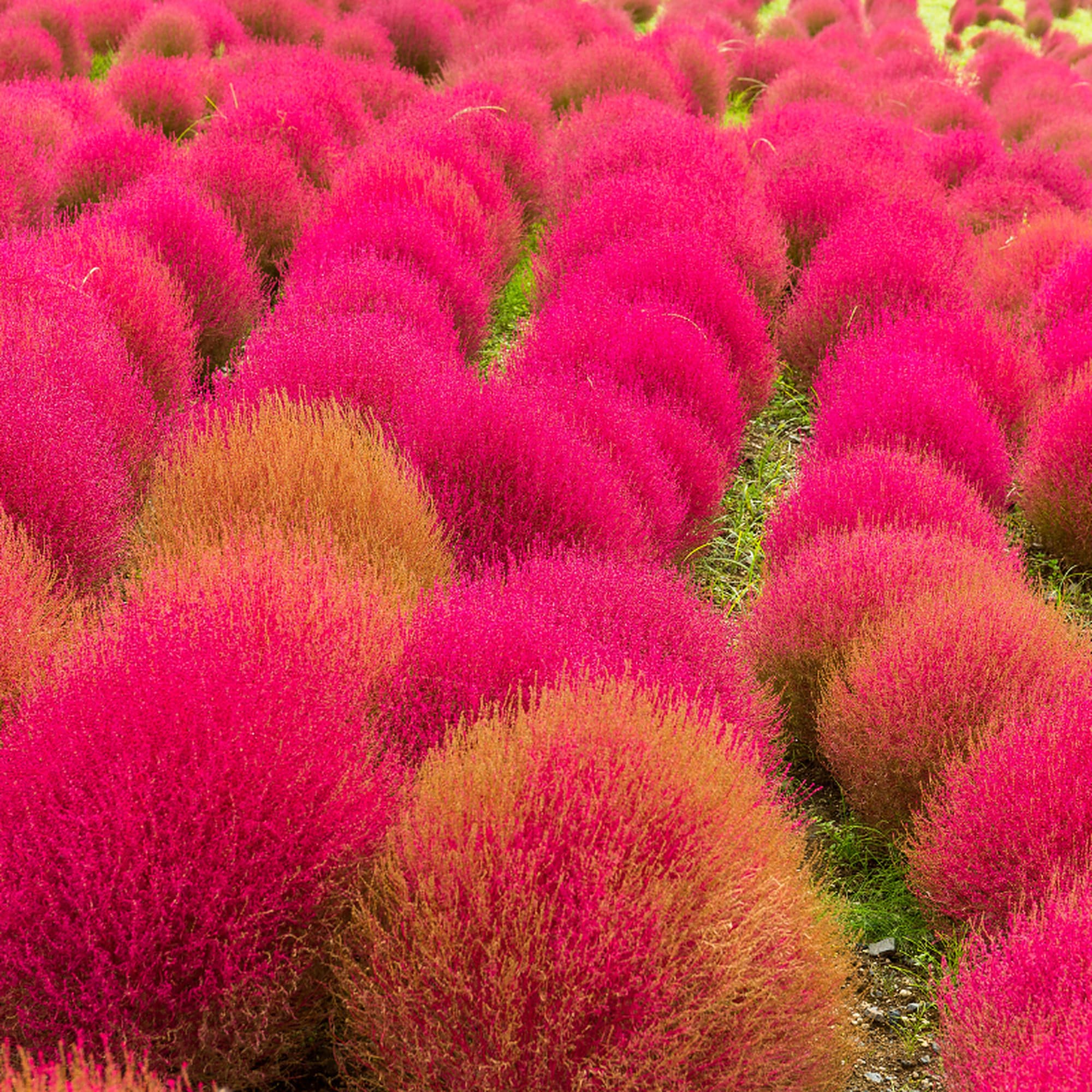
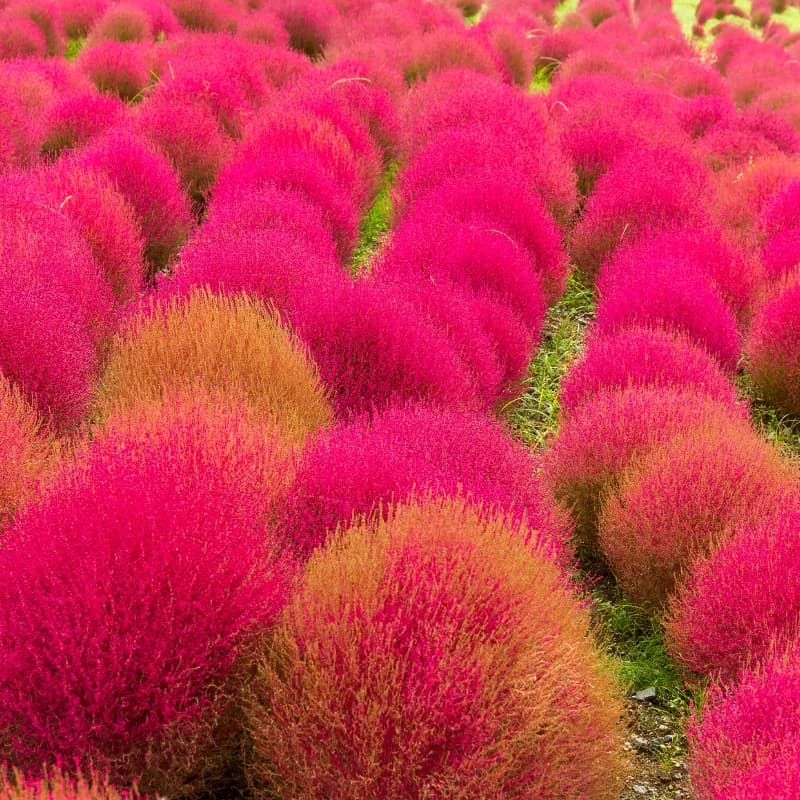
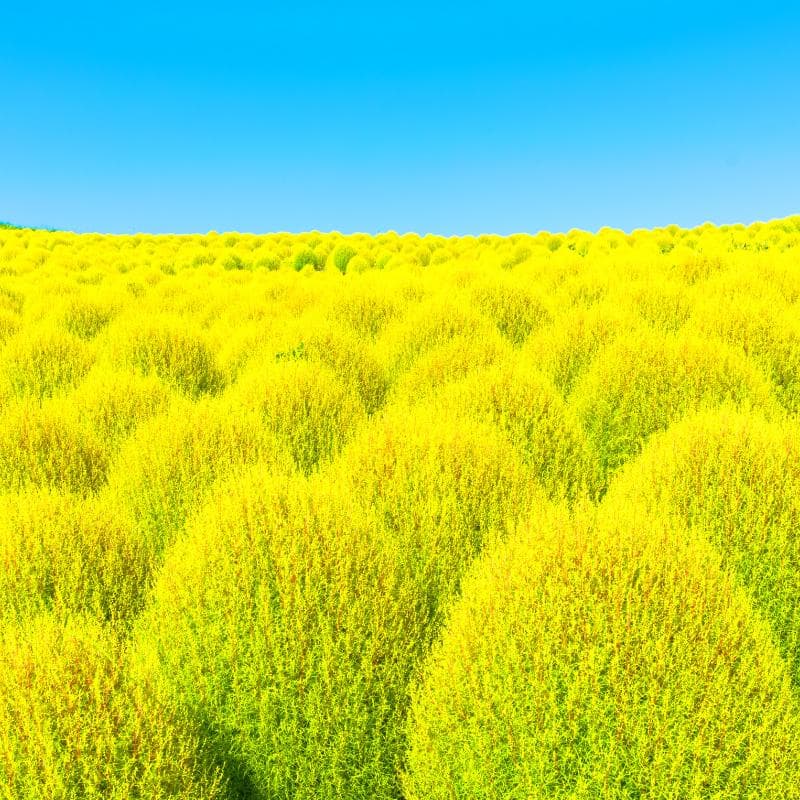
Summer cypress, or burning bush, is a fast annual that forms a dense, soft green globe and turns reddish purple in autumn. Its tiny seed germinates quickly near the surface but stays viable only a short time, so sow fresh seed shallowly in warm soil.
Seeds are tiny, about 1-2 mm. Sow the freshest seed you have: most kochia seed germinates or dies within its first year, so old packets give poor results. Until sowing, keep seed in a cool, dry place.
Not needed. The seed coat does not block water uptake.
Not needed. Fresh seed germinates without a cold period, and alternating temperatures do not improve germination.
Not needed. Soaked tiny seed is hard to sow evenly and gains nothing, because germination is already fast.
Seed germinates well anywhere from 4 to 35 °C (39-95 °F), fastest between 15 and 26 °C (59-79 °F). Very hot conditions near 40 °C (104 °F) stop germination, so in the Indian plains avoid sowing into baking summer soil and sow in milder weather instead.
Scatter seed on the surface and press it in, or cover it with a dusting of fine compost or vermiculite. Seedlings emerge best from the top 1 cm (0.4 in) and very few from below 2 cm (0.8 in).
Any free-draining seed compost in trays. Outdoors, choose a sunny, well-drained bed; loam, sand, chalk or clay all suit, at acid, neutral or alkaline pH.
Keep the surface just moist until seedlings appear, watering gently or from below so the seed is not washed deeper.
Light is not essential for germination, but keep trays in a bright place as soon as seedlings show to stop them stretching.
In tests seed germinated within about 24 hours at 15-26 °C (59-79 °F); in trays expect seedlings within a few days. In cool spring soil outdoors it can take about a week.
Move seedlings into individual pots or cells at the 2-3 true-leaf stage. Grow them on in bright light at normal room temperature.
Harden off and plant out after the last frost, or sow direct when the soil has warmed to about 15 °C (59 °F). RHS lists a spread of up to 0.5 m (20 in): space plants about that far apart for separate globes, closer for a low, continuous summer hedge.
Plants grow quickly to 1-1.5 m (3-5 ft) in good sites; compact selections stay much lower. Keep young plants weeded and watered until established; after that they tolerate dry spells well.
Kochia is a listed noxious weed in Arizona, Ohio, Oregon and Washington, an invasive plant in Connecticut and prohibited in parts of Australia. Dry plants break off and roll as tumbleweeds, spreading seed widely. Grow it only where it is permitted and remove plants before seed is shed.
Full sun and good drainage give the densest shape and the best autumn colour. Water only in long dry spells once plants are established.
Planted in a row, summer cypress makes a quick seasonal hedge or border edging. It needs no pruning, but a light summer trim keeps a formal outline.
Kochia eaten in large amounts over several weeks can be toxic to livestock, so do not plant it where cattle, sheep or horses graze.
Sow fresh kochia seed on the surface in warm conditions for a fast, colourful summer globe.
Usually the seed was old or sown too deep. Kochia seed is short-lived and emerges best from the top centimetre, so sow fresh seed on the surface.
No. It is an annual (sometimes biennial) and dies at the end of the season. Seedlings that appear next year come from dropped seed, which is why you should remove plants before the seed ripens.
The light green foliage turns bright reddish purple in late summer and autumn, best in full sun.
