
Seed preparation
Tulsi seed is very small. Mix it with dry fine sand, one part seed to four parts sand, so it spreads evenly. Use well-ripened seed: seed harvested before it is mature germinates weakly.
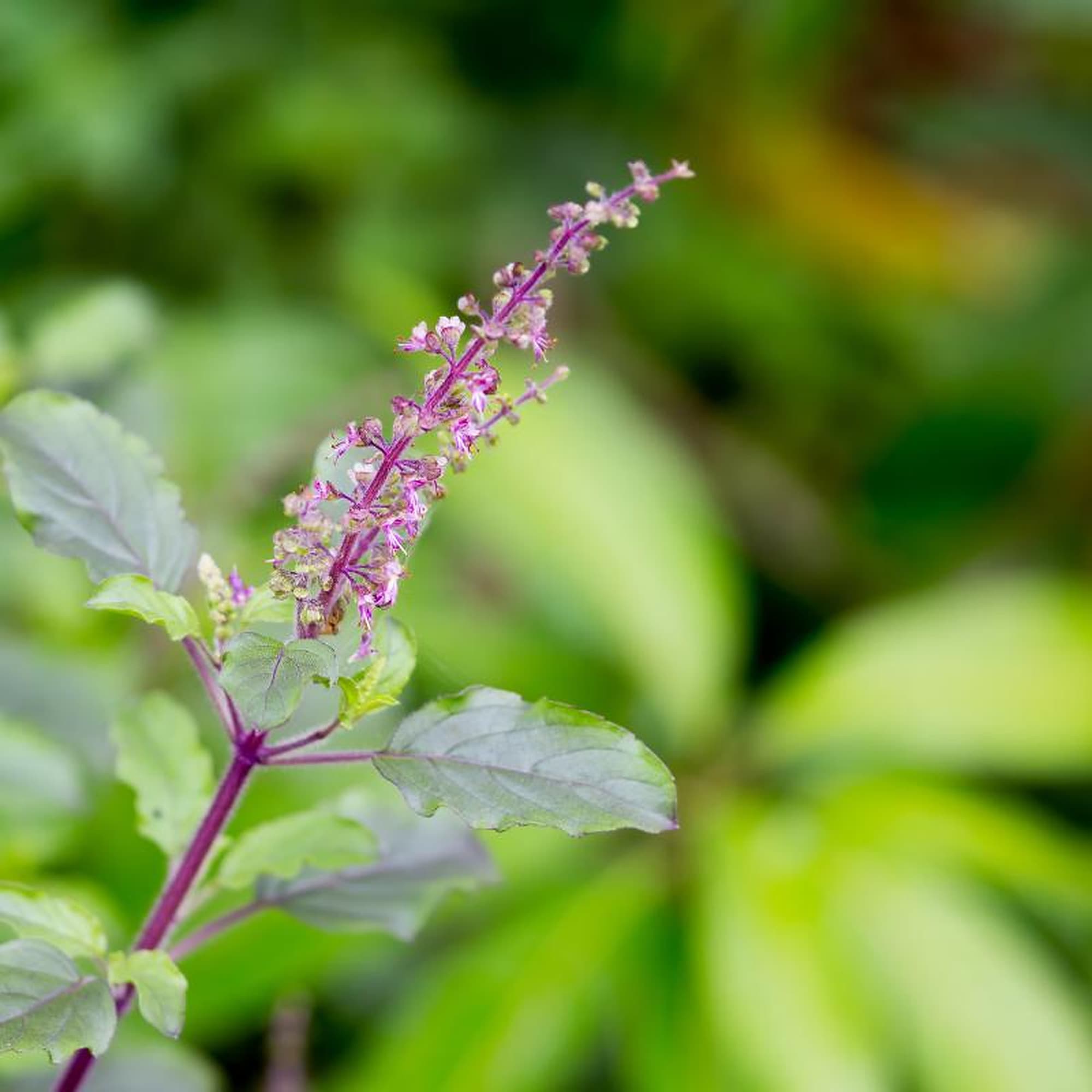
Herb growing guide
Tulsi, or holy basil, is widely grown in India in gardens, courtyards and fields. It needs real warmth to germinate: sow the tiny seed shallow at about 25-30 °C and it comes up in one to two weeks.
Tulsi seed is very small. Mix it with dry fine sand, one part seed to four parts sand, so it spreads evenly. Use well-ripened seed: seed harvested before it is mature germinates weakly.
Not needed. The seed coat absorbs water readily.
Not needed. Tulsi is a tropical plant; cold does not help and can harm the seed.
Not needed. Like other Ocimum seeds, tulsi seed forms a sticky gel when wet, which makes soaked seed hard to sow evenly.
In a CSIR-CIMAP study the optimum was 30 ± 5 °C: one variety germinated best at 30 °C (86 °F, 88%), another at 25 °C (77 °F, 72%). At 40 °C (104 °F) seeds still sprouted, but about 80% of seedlings were abnormal. In most of India sow from late spring into summer; in cooler climates use a heated propagator and wait until nights stay warm before planting out.
Scatter the seed-sand mix on a fine, level surface and cover with only a thin dusting of soil or sand, then firm lightly.
A fine, crumbly nursery bed or seed tray. TNAU makes nursery beds about 4.5 × 1.0 m and 20 cm high, dug 30 cm deep with well-rotted manure, in partial shade with water nearby.
Keep the surface evenly moist with a fine rose or mist. Heavy watering washes the tiny seed together and encourages seedling rot.
No darkness is needed; germination tests were run under 16 hours of light a day. Partial shade over the nursery bed keeps the surface from drying out.
About 5-6 days in a warm laboratory; about 8-12 days in a nursery bed.
TNAU sows the nursery about two months before the monsoon so that seedlings are planted out as the rains begin. In frost climates, plant out only after the last frost when nights are warm.
Move seedlings about six weeks after sowing, at the 4-5 leaf stage. In the field TNAU uses rows 40 cm (16 in) apart; in a garden a single plant fills a large pot.
Water twice a week for the first month, then about weekly depending on rain. Weed one month after planting and again a month later.

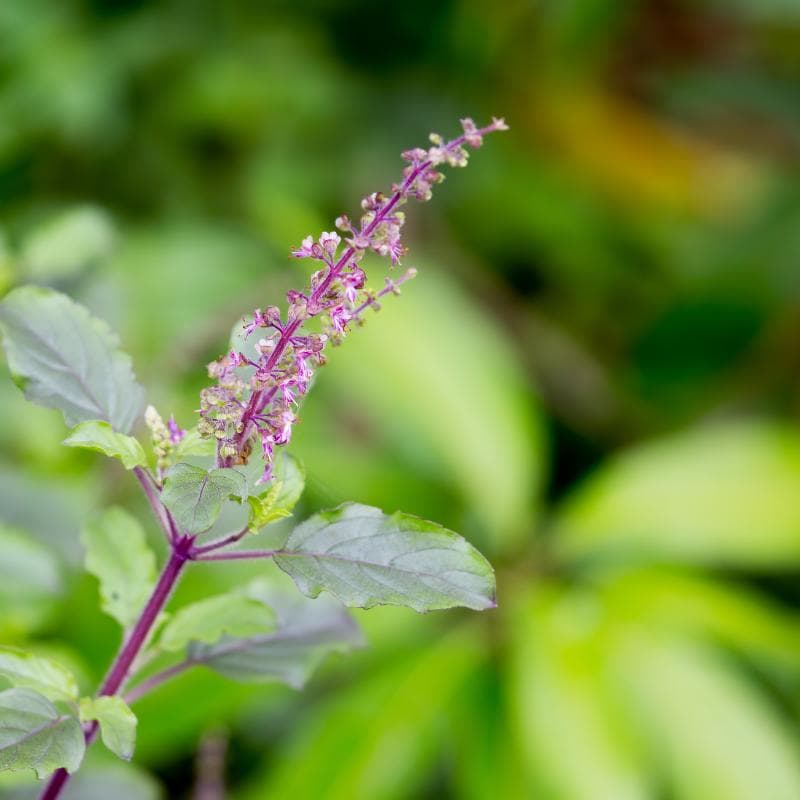
There are green-leaved types (Sri tulsi) and purple-leaved types (Krishna tulsi). Both are grown the same way.
Sandy loam rich in organic matter is ideal. Avoid waterlogged, highly saline or strongly alkaline soil; in heavy soil grow tulsi in a raised bed or pot.
Work well-rotted manure into the soil before planting. Plants in pots benefit from a light balanced feed every few weeks in the growing season.
Pick leaves as needed. For bigger harvests, TNAU cuts plants about 15 cm (6 in) above the ground at full bloom, first at about 90 days after planting and then about every 75 days; plants regrow after each cut.
Favourite plants can also be multiplied from 10-15 cm (4-6 in) tip cuttings, which root in four to six weeks.
Sow tulsi in warm soil for a fragrant holy basil plant on your windowsill, balcony or garden bed.
Usually the soil is too cold or the seed is buried. Tulsi needs about 25-30 °C (77-86 °F) and only a dusting of soil over the seed.
No. Both belong to the genus Ocimum, but tulsi is Ocimum tenuiflorum and sweet basil is Ocimum basilicum. Tulsi needs even more warmth to germinate well.
In warm weather. TNAU sows the nursery about two months before the monsoon and transplants with the first rains; in the cool north, wait until nights are warm in spring.


