Free EMS courier delivery across India
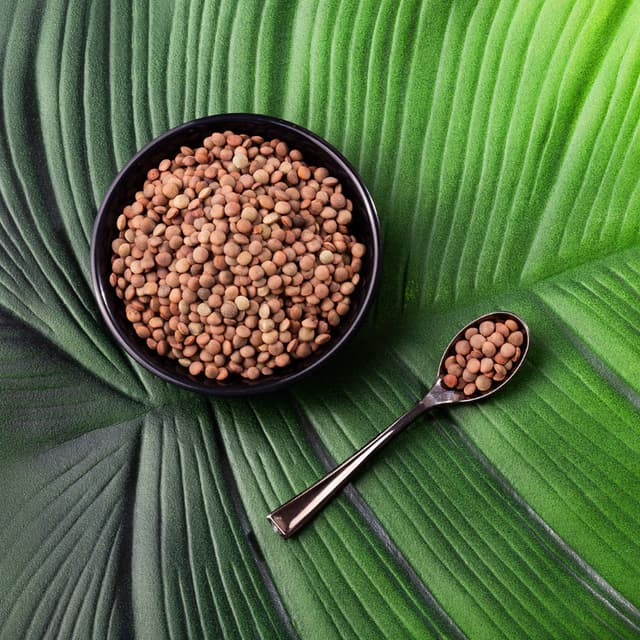
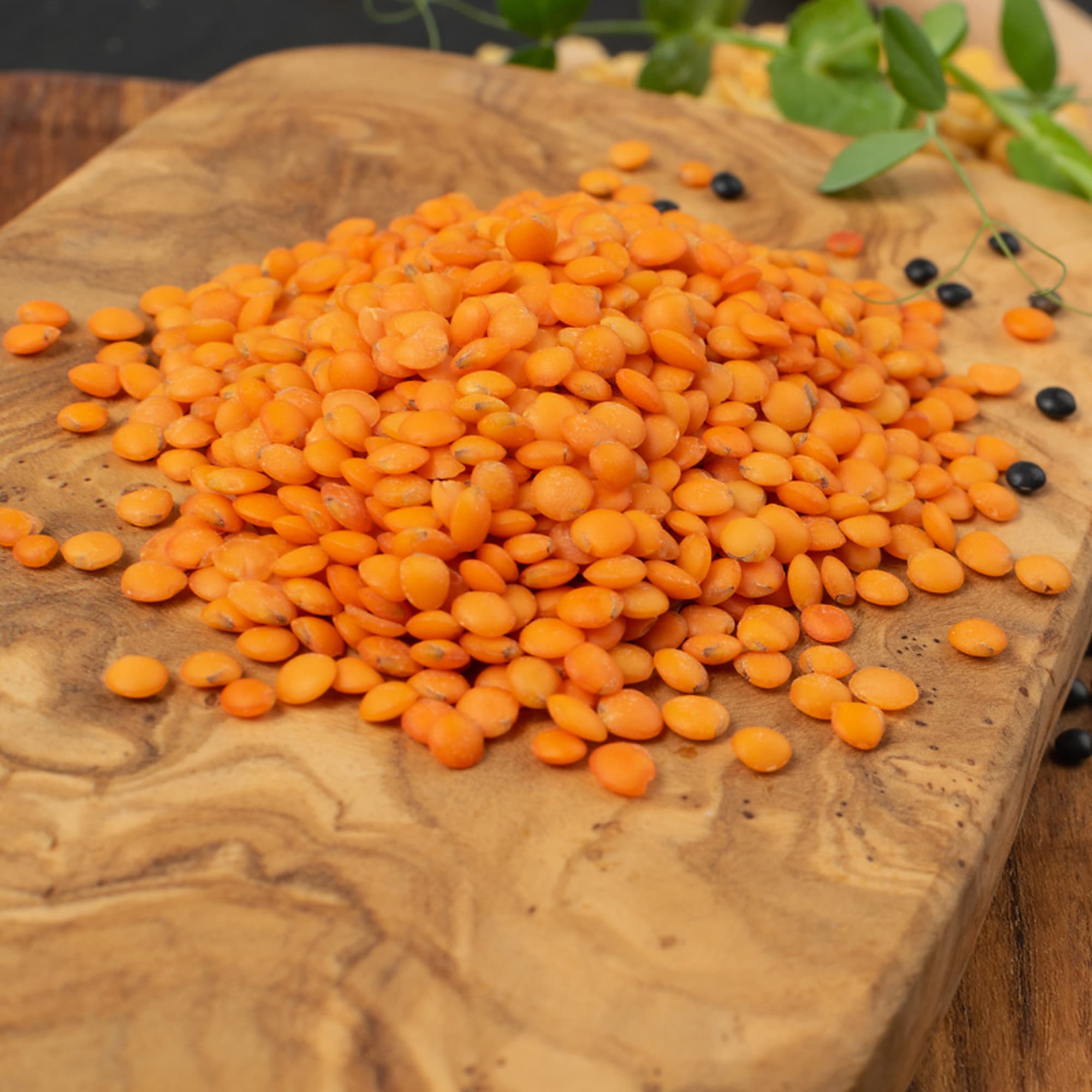
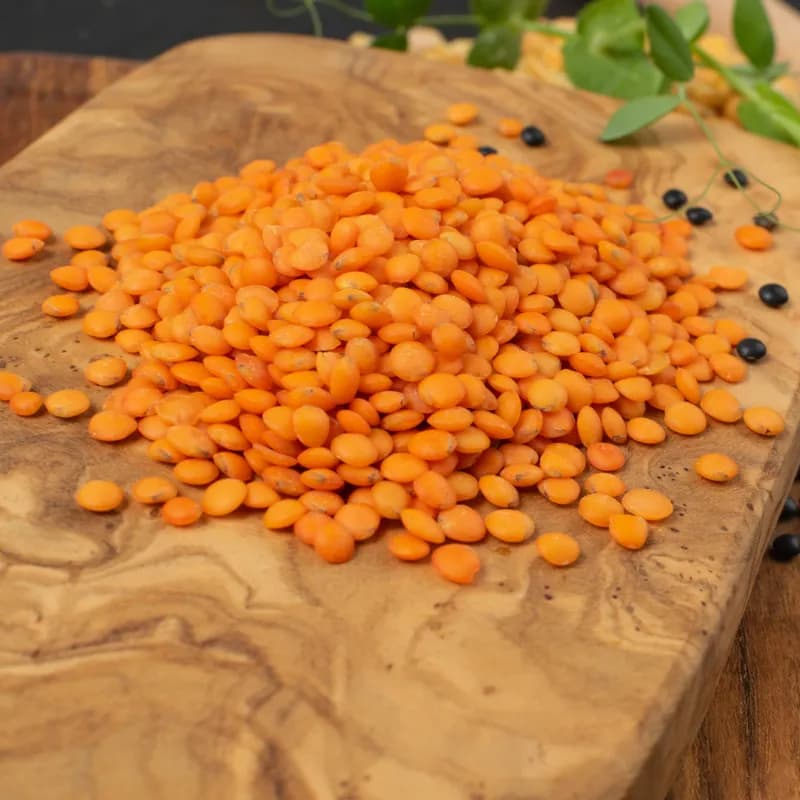
Red lentll Seeds plant

Pulse growing guide

How to grow lentils from seedLens culinaris

Lentil is a cool-season pulse that is sown directly in rows and grown mostly on stored soil moisture. Inoculate the seed, sow 3-4 cm deep into cool soil, keep weeds down early and harvest when most pods turn brown.

≈ 5 °C
Germination temp.
10-21 days
Germination
3-4 cm
Sowing depth

At a glance

Germination temperature
Germinates from about 5 °C (41 °F); emergence is faster in warmer soil.
Sowing depth
3-4 cm (about 1.5 in), into moist soil.
Germination time
Emergence 10-21 days after sowing in cool soil; about 10-14 days at 10-13 °C (50-55 °F).
Light
Seed is covered; grow in full sun.
Pre-treatment
Inoculate with Rhizobium just before sowing.
Transplant or direct sow
Direct sow only.

Seed preparation

Seed preparation

Treat the seed with a lentil Rhizobium inoculant (with PSB, a phosphate-solubilising culture, if available) immediately before sowing. Moisten the seed lightly with clean water, mix in the culture, dry briefly in shade and sow the same day. Farm packages in India also use a fungicide seed treatment against wilt and root rot.
Scarification

Not needed. Lentil seed takes up water quickly once it is in moist soil.

Stratification

Not needed. Lentil is a cool-season crop and germinates without cold treatment.

Soaking

Not needed. The Assam package of practices optionally primes seed by soaking it for 6 hours and drying it back in shade before inoculation; never sow seed that is still swollen and wet, as it can be damaged.

Red lentll Seeds

Germination conditions

Germination temperature

Lentil can germinate in soil as cool as 5 °C (41 °F). In Australian trials emergence took 17-21 days at 5-7 °C (41-45 °F), 14-17 days at 7-10 °C (45-50 °F) and 10-14 days at 10-13 °C (50-55 °F). Flowering stops in heat above about 30 °C (86 °F), which is why lentil is grown in the cool season.

Sowing depth

3-4 cm (about 1.5 in). Sow into moisture; go a little deeper (up to 4-5 cm) only where the surface is dry or the soil is sandy.

Growing medium

Well-drained loam or clay loam. Yields drop sharply on wet, poorly drained soil because root rots increase.

Moisture

Sow into soil that is moist from rain or a pre-sowing irrigation. Do not keep the soil wet afterwards.

Light

No light is needed for germination. Choose an open, sunny field or bed.

Germination time

10-21 days in cool soil. The cotyledons stay below ground, so seedlings can regrow from buds at the base if frost damages the tops.

Transplanting and first growth

  1. Transplanting

    Do not transplant lentils. Sow in rows 25-30 cm (10-12 in) apart, placing seeds a few centimetres apart in the row. Indian packages use 40-45 kg/ha for small-seeded types and 45-60 kg/ha for bold-seeded types.

  2. First growth stage

    Young lentil grows slowly and competes poorly. Keep the crop weed-free for the first 45-60 days with two hand weedings, at about 25-30 and 45-50 days after sowing.

  3. Watering

    Where there is no winter rain, give one light irrigation at about 40-45 days and, if needed, another at pod filling.

Red lentll Seeds

Common problems

ProblemSeedlings wilt and die in patches
Cause
Fusarium wilt or root rot, worse in wet soil.
What to do
Grow wilt-resistant varieties, use treated seed, avoid waterlogging and do not grow lentil on the same land more than one year in four.
ProblemOrange-brown pustules on leaves and stems
Cause
Rust, common on the northern Indian plains.
What to do
Choose rust-resistant varieties and sow on time; spray a recommended fungicide at first symptoms if needed.
ProblemLeaf and pod spots, blighted shoots
Cause
Ascochyta blight or anthracnose, often carried on seed.
What to do
Use clean, disease-free seed, rotate crops and remove infected debris.
ProblemPale, weak plants
Cause
Poor nodulation, usually from uninoculated seed or waterlogged soil.
What to do
Inoculate every sowing and grow on well-drained land.
ProblemHoles in stored seed
Cause
Pulse beetles (bruchids).
What to do
Dry seed to 9-10% moisture and store it in sealed, clean containers.

Practical growing tips

Sow at the right time in India

Rainfed crops: first half of October in central and south India, second half of October in the north. Irrigated crops in the north: first half of November. Late sowings after rice: first week of December, with a higher seed rate.

Feed lightly

On low to medium fertility soils Indian packages apply about 20 kg N, 40 kg P and 20 kg S per hectare at sowing, plus zinc or boron where soils are deficient. More nitrogen only produces leaves.

Choose the variety for your purpose

Small-seeded and bold-seeded types differ in seed rate and use; pick a variety recommended for your region and, on the plains, one resistant to rust and wilt.

Harvest on time

Cut when 70-80% of pods have turned yellow-brown, dry the plants on a threshing floor for 4-7 days, thresh, then sun-dry the clean seed for 3-4 days to 9-10% moisture.

Lentil seeds from Deodar

Sow inoculated lentil seed in cool, well-drained soil for a reliable winter pulse crop.

Frequently asked questions

Can I grow lentils in pots or start them indoors?

Lentils are sown directly where they will grow. A deep container works for a small trial, but sow the seed in it and do not move the seedlings.

Do lentils need nitrogen fertilizer?

Very little. Inoculated lentil fixes its own nitrogen through root nodules; use a small starter dose with phosphorus and sulphur at sowing and no top-dressing.

When should I sow lentils in India?

In October on rainfed land (early October in central and south India, late October in the north) and in the first half of November on irrigated land in the north.

How often should I water lentils?

Rarely. Lentil grows on stored soil moisture; in dry winters one light irrigation at 40-45 days and one at pod filling is enough. Too much water encourages root rot.