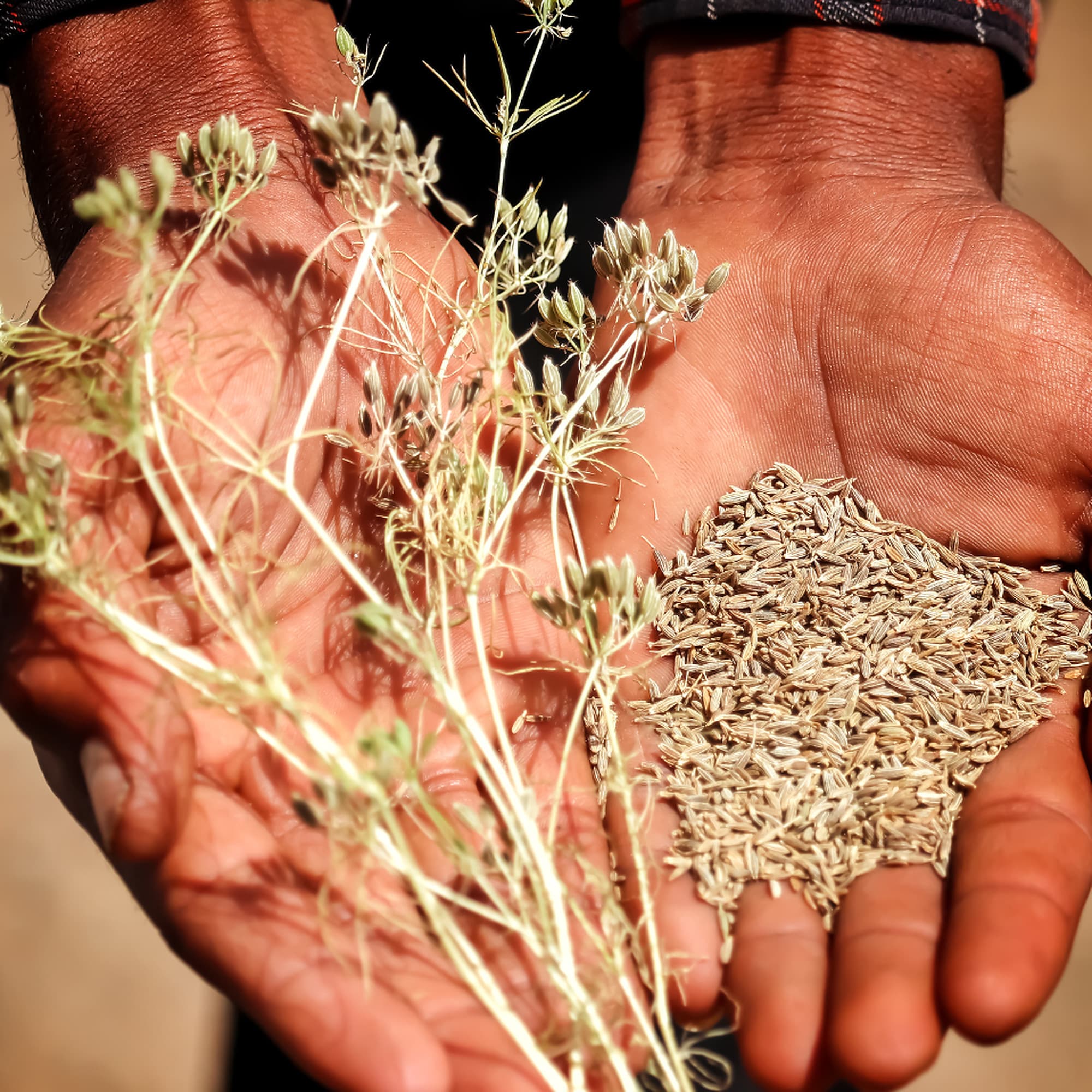
About this seed
Local names
Spidskommen, Cumin, kummin, spisskum, spiskummin, Jeera, Zeera, Zira, Safed jeera, Comino, Cumino, Kreuzkümmel.
Common names of Cuminum cyminum
All 40 names, languages and regions
Local names
| Denmark | |
|---|---|
| Danish | Spidskommen |
| France | |
| French | Cumin |
| Norway | |
| Norwegian Bokmål | kummin |
| Norwegian Nynorsk | spisskum |
| Sweden | |
| Swedish | spiskummin |
| Other places | |
| Spanish | Comino |
| Italian | Cumino |
| German | Kreuzkümmel |
| Dutch | Komijn |
| Arabic | Kammun, كمون (kammoun) |
| Turkish | Kimyon |
| English | Cumin |
| Icelandic | Broddkúmen |
| Romanian | Chimion |
| Welsh | Cwmin |
| Indonesian | Jintan |
| Maltese | Kemmun |
| Polish | Kmin rzymski |
| Esperanto | Oficina kumino |
| Hungarian | Római kömény |
| Norwegian | Spisskummen |
| Portuguese | cominho |
| Slovak | rascovec obyčajný |
| Finnish | roomankumina |
| Hindi | safed-zira |
| Chinese | zi ran qin |
| Czech | Římský kmín |
| Bulgarian | Кимион (Kimion) |
| Marathi | जिरे (jire) |
| Bangla | জিরা (jira) |
| Sinhala | සූදුරු (suduru) |
| Thai | ยี่หร่า (yi ra) |
| Japanese | クミン (Kumin) |
| Simplified Chinese | 孜然芹 (zīrán qín) |
| Jeera, Zeera, Zira, Safed jeera, Cumin (EN), Kreuzkümmel (DE), cumin, safed-zira, zi ran qin | |
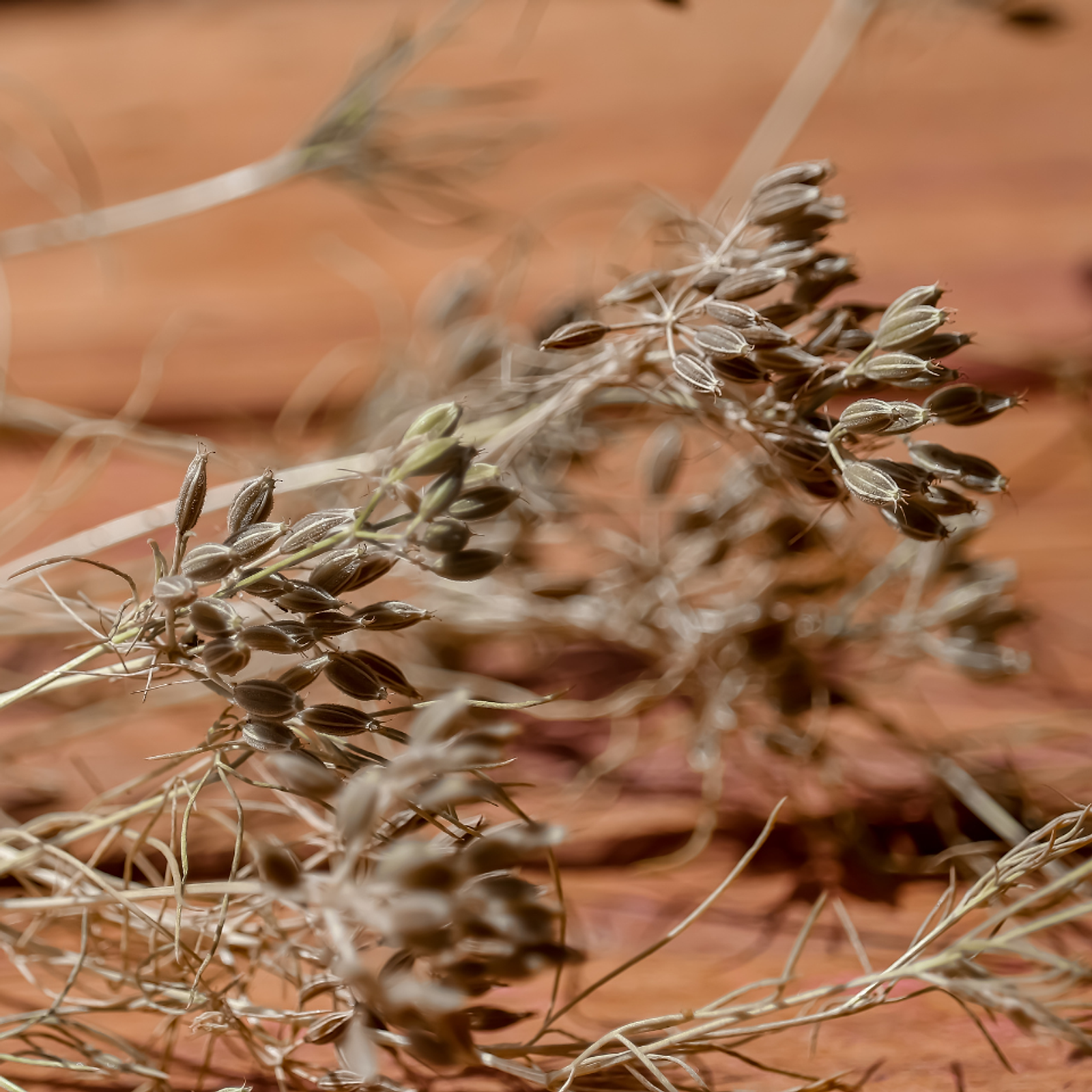
Cumin (Cuminum cyminum, jeera or safed jeera) is a cool-season crop: the seed germinates best at about 20 °C, and growth is reported at 9–26 °C. It is not black cumin (kalonji), a different plant.
Also known as: Jeera, Zeera, Zira, Safed jeera, Comino (Spanish), Cumino (Italian), Kreuzkümmel (German), Komijn (Dutch), Kammun (Arabic), Zireh (Persian), Kimyon (Turkish).
Sowing
- Temperature: in a paper test at 10, 15, 20 and 25 °C, two Gujarat varieties germinated best at 20 °C. Germination suffers above 30 °C and below 10 °C. This is a guide for the species, not a result for this lot.
- Depth and spacing: no deeper than 1.5 cm, in rows 25 cm apart with plants about 10 cm apart.
- Soil: well-drained sandy loam to medium-heavy soil, pH 6.8–8.3. Drainage is critical.
- Seed size: about 4–6 g per 1000 seeds (approximate, from Indian genotypes; this lot has not been weighed).
Time to harvest
Roughly 100–140 days to maturity. Released Indian varieties range from 100 days (Gujarat Cumin-2) to 120–140 days (RZ-19); this seed is not a named variety, so treat the range as a guide.
What goes wrong
- Fusarium wilt: tips and leaves droop and the whole plant dies.
- Alternaria blight: small brown spots that turn blackish, favoured by humid, cloudy weather at flowering and seed setting.
- Frost at flowering and early fruit set harms the crop.
When to sow
In India cumin is grown mainly in Rajasthan and Gujarat, and trials point to November sowing. Where winters are cold, such as the northern USA and the UK, sow outdoors 1–2 weeks after the average last spring frost, or start indoors 6–8 weeks before it; the crop needs about 120 frost-free days.
Sowing jeera in India
In a three-season trial at Jagudan, Gujarat, a 5 November sowing in rows 30 cm apart gave the highest seed yield of the four dates and three spacings tested. CZC-94, a variety bred in arid Rajasthan, can be sown up to mid-December without losing yield.
Wilt is the main field risk: reported yield losses reach up to 25% in North Gujarat and up to 60% in Rajasthan.
FAQ
Is jeera the same as black cumin or shah jeera?
No. This is Cuminum cyminum (Apiaceae). Black cumin, kalonji, is Nigella sativa (Ranunculaceae) and shah jeera is Bunium persicum. The name kala jeera is used for more than one spice, so compare Latin names.
Can I sow cumin in hot weather?
It is a poor bet. Germination suffers above 30 °C, so wait for cooler conditions near 20 °C.