 Shop at deodar-seeds.com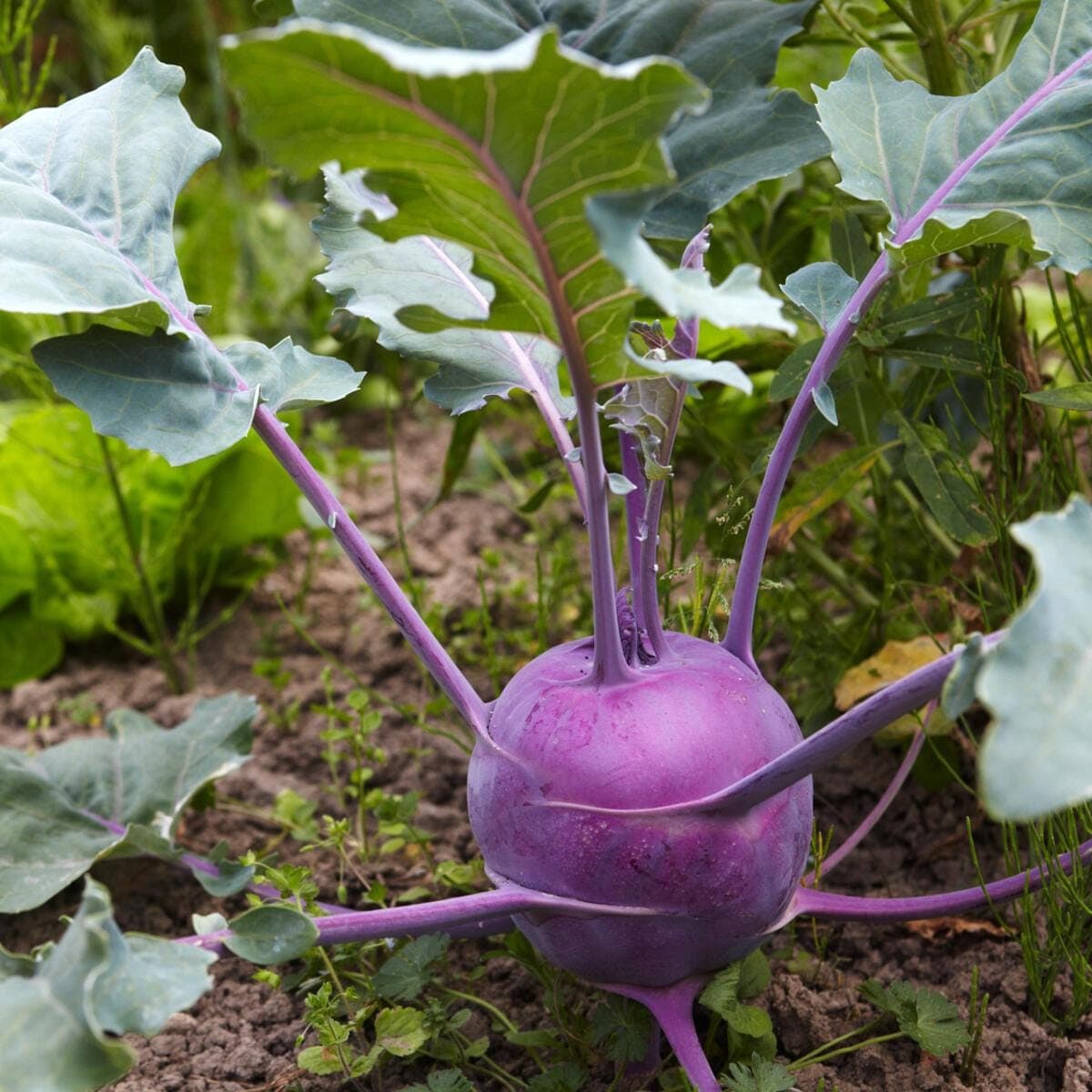


About this seed
Grow purple kohlrabi from this packet of 100 seeds. Kohlrabi belongs to Brassica oleracea in the Brassicaceae family, and the cultivated kohlrabi group is commonly written as var. gongylodes. Unlike a turnip, the rounded edible part is not a root: it is an enlarged stem that forms just above the soil line. This lot is offered as an unnamed purple type, without assigning the Purple Vienna name or another cultivar.
Also known as: Knol-khol, German turnip, Turnip cabbage, Gaanth gobhi, Noolkol, Colirrábano, Chou-rave, Cavolo rapa and Brassica caulorapa.
Product Overview: Purple kohlrabi develops coloured skin and leaf stalks around a pale interior. Red types may appear purple after harvest, and the colour does not change the basic way the crop is grown. Final colour, size, and harvest timing still depend on the seed lot, temperature, spacing, water, and soil. The page therefore does not borrow a maturity date or exact globe diameter from a named purple cultivar.
- Botanical identity: Brassica oleracea var. gongylodes
- Family: Brassicaceae
- Crop type: Cool-season stem vegetable
- Colour type: Purple exterior
- Packet quantity: 100 seeds
Growing from Seed
Site and soil: Choose a sunny position with fertile, well-drained soil rich in organic matter. Use a soil test to guide fertiliser decisions. Incorporate only well-finished compost and avoid keeping the root zone waterlogged. Good drainage and steady growth matter because stressed, slow-growing plants can develop a tougher enlarged stem.
Sowing: Kohlrabi may be direct-sown or started as transplants. Cover seed about 1/4 to 1/2 inch (6–13 mm) deep. For direct sowing, make a shallow row, distribute seed thinly, cover lightly, and water gently. For transplants, provide bright conditions and move plants while they are still compact rather than allowing them to become crowded and stretched.
Spacing: Thin or transplant after seedlings are established. Allow about 6 inches (15 cm) between plants and rows about 1 foot (30 cm) apart. Closer plant spacing of 2–5 inches is also used, but the 6-inch spacing is a useful conservative choice where gardeners want room for the swollen stem and foliage. Avoid burying the stem too deeply when transplanting.
Temperature: Kohlrabi is a cool-season crop. Growth is best below about 75°F (24°C), with high summer temperatures reducing quality and making enlarged stems tougher. Very cold conditions can also trigger flowering in mature plants. Use locally appropriate spring or autumn sowing windows and protect young plants from hard frost.
Water and care: Keep the soil evenly moist, not saturated. Fertile soil, adequate moisture, and weed control support steady crop development. Remove weeds while they are small so their roots do not disturb the crop. Check leaves regularly for common brassica pests; physical exclusion such as a suitable insect cover may help where local practice supports it.
Harvest: The enlarged stem sits above the ground, so its development is easy to observe. Standard kohlrabi is usually harvested at roughly 2–3 inches (5–7.5 cm) in diameter because oversized stems tend to become woody. Use that range as a practical garden guide, not a guarantee for this unnamed lot. Cut the stem at ground level, remove leaf stalks, and peel the outer skin before preparing the interior.
Kitchen use: Kohlrabi can be eaten raw or cooked. The enlarged stem is the main edible portion. It can be sliced, grated for slaw, roasted, sautéed, or added to soups and stir-fries. Young, sound leaves may also be cooked as greens. Wash all harvested produce before use.
What You Receive: One packet containing 100 Purple Kohlrabi seeds. The licensed gallery shows a representative purple/pink cultivated kohlrabi stem, a young kohlrabi plant, and kohlrabi seed pods with seeds. These are reference-taxon images rather than photographs of this individual seed lot; the packet contains loose seeds, not pods, plants, or harvested stems.
Frequently Asked Questions
Is the kohlrabi globe a root?
No. The rounded edible portion is an enlarged stem formed above the soil line. The true roots remain below it.
Can I transplant kohlrabi?
Yes. Kohlrabi can be direct-sown or transplanted. Set compact seedlings at the same practical depth and leave enough room for the enlarged stem to develop.
When should I harvest?
Begin checking when the enlarged stem approaches 2–3 inches (5–7.5 cm) across. Larger, older stems are more likely to become woody.