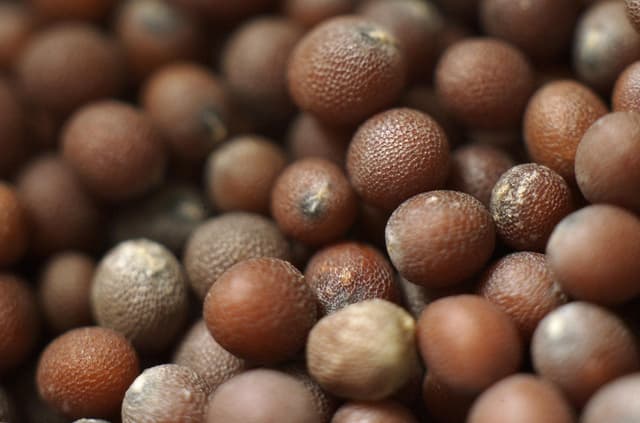
Seed preparation
Sow dry seed straight from the packet, thinly, so seedlings need little thinning later.
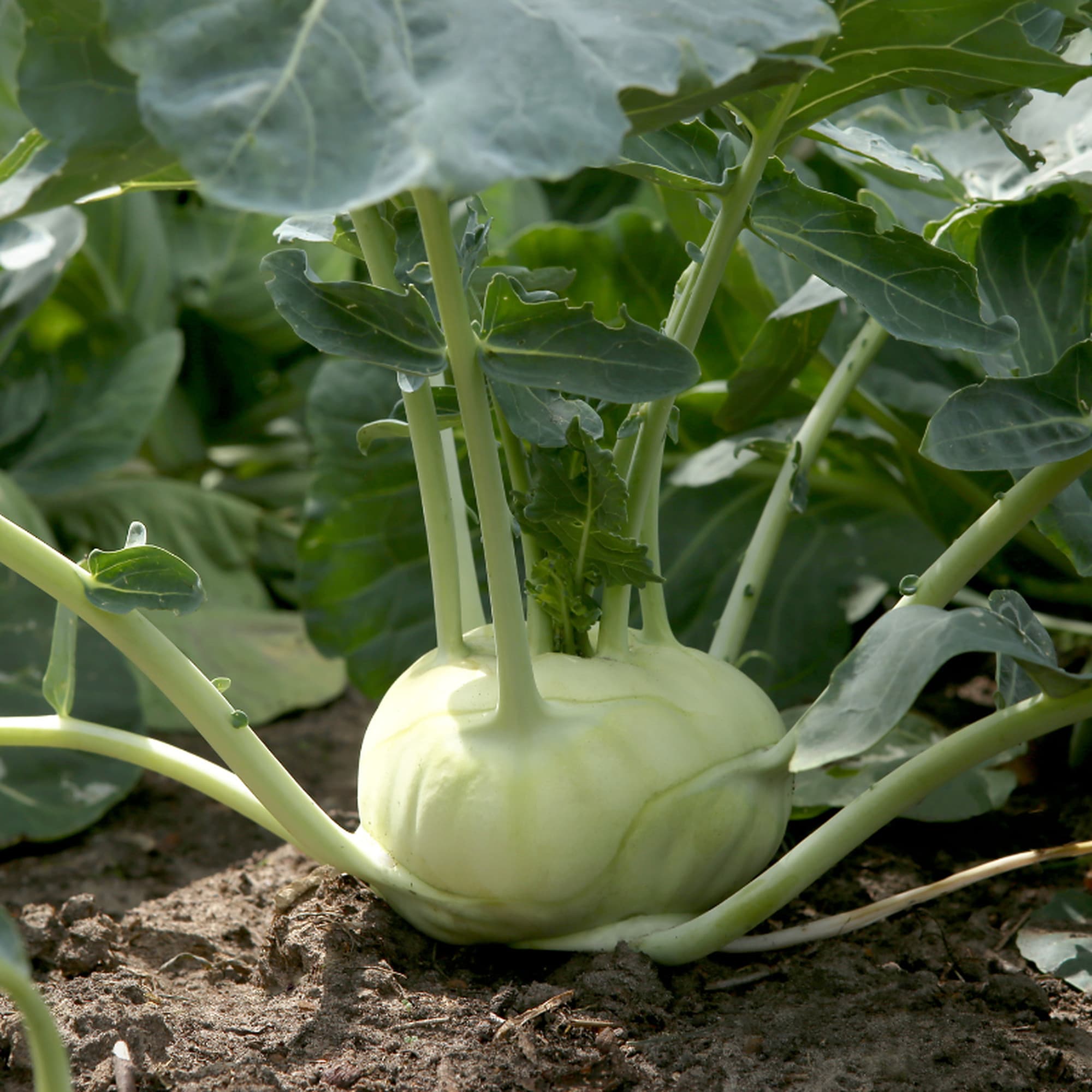
Vegetable growing guide
Kohlrabi (knol khol) is a fast cool-season brassica grown for its swollen stem, ready in about 40-70 days from sowing. The secret to a tender, sweet bulb is steady growth in cool weather and harvesting it young.
Sow dry seed straight from the packet, thinly, so seedlings need little thinning later.
Not needed. The seed coat absorbs water readily.
Not needed. There is no cold-dormancy requirement for germination.
Not needed. Seed in moist, warm soil emerges within about a week.
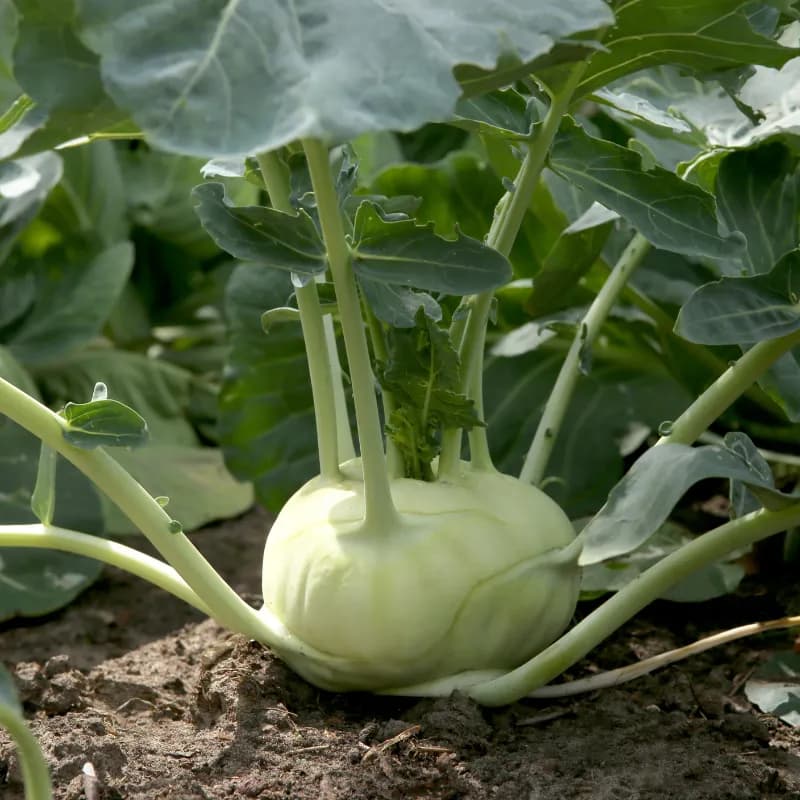
Kohlrabi is the same species as cabbage, for which Harrington's data give a minimum soil temperature of about 4.5°C (40°F) and an optimum near 29°C (85°F). Indoors, grow seedlings at 16-21°C (60-70°F).
Sow 0.6-1.3 cm (1/4-1/2 inch) deep. Outdoors, sow about 2.5 cm (1 inch) apart and thin later, or sow three seeds per station.
Fertile, moist, well-drained soil, ideally a sandy loam, with pH 6.0-7.5. Indoors use a fine seed mix in cells.
Keep the seedbed evenly moist. Kohlrabi has shallow roots from the start, so the surface must not dry out.
Seed germinates under its soil cover; move seedlings to full light immediately after emergence.
Harrington's cabbage figures are a good guide: about 9 days at 15°C (59°F), 6 days at 20°C (68°F) and 4 days at 25°C (77°F).
Start seed 4-6 weeks before planting out. Transplant when seedlings have 4-6 leaves and a good root system, usually after 5-6 weeks. Set plants 15 cm (6 inches) apart in rows 30 cm (12 inches) apart; giant types need about 30 cm (12 inches) between plants. Indian packages of practice use 30 x 25 cm.
Thin direct-sown seedlings at the 2-4 true leaf stage to 10-15 cm (4-6 inches). Kohlrabi grows best at 18-24°C (65-75°F). Keep growth steady: a check in growth makes the stem fibrous, while a sudden surge after drought makes it crack.
Grow kohlrabi in the cool season. In Assam, for example, sowing runs from early September to late November. In the tropics it does best at higher elevations; in hot lowlands use the coolest months only.
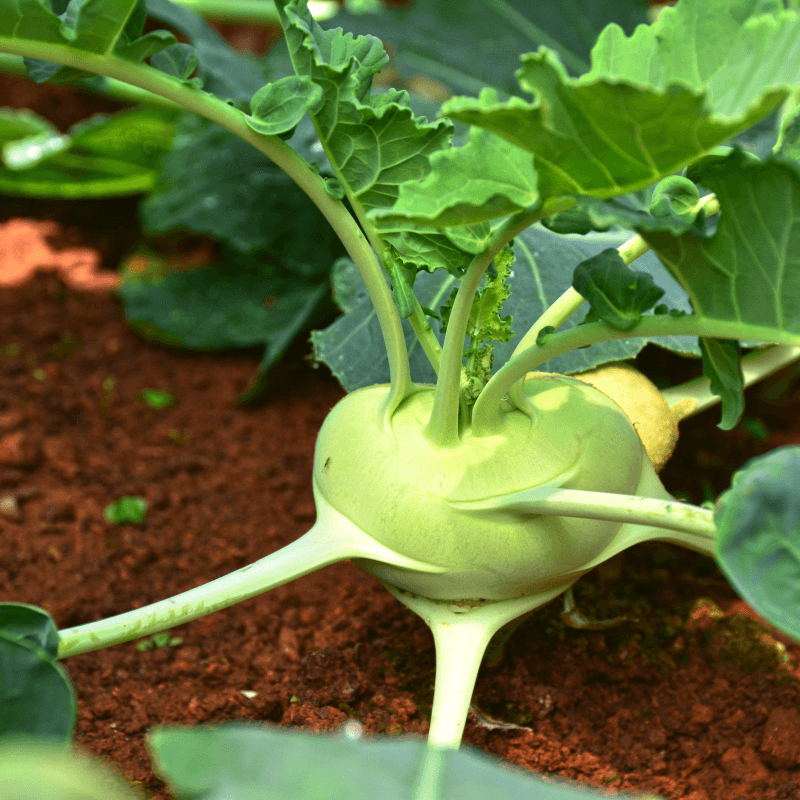
Each plant gives one bulb. Sow short rows every few weeks through the cool season for a steady supply.
White Vienna and Purple Vienna types take about 60 days to maturity (Assam trials report about 60 days for White Vienna and 70 days for Purple Vienna); purple types have coloured skin.
Once temperatures pass about 27°C (80°F), an organic mulch of straw or dry grass keeps the shallow roots cool and moist.
Do not follow other brassicas in the same bed for 3-4 years. Side-dress lightly with nitrogen about three weeks after transplanting or thinning.
Young kohlrabi leaves can be cooked like cabbage or kale. Bulbs keep 2-3 weeks in the fridge.
Grow crisp white and purple kohlrabi from our knol khol and Vienna seed.
It was harvested too large, grew in hot weather, or had irregular watering. Pick bulbs at 5-7.5 cm (2-3 inches) and keep soil evenly moist.
Fast types are ready in about 40 days; White Vienna and Purple Vienna types take about 60-70 days from sowing.
Both work. Direct sowing avoids transplant shock; transplants raised for 5-6 weeks give an earlier harvest and are easier to protect from flea beetles.