

About this seed
Local names
Margoz, Margoza, Antsaska tarondro, Bitter gourd, Bitter melon, Bitter balsam apple, Balsam apple, Wild balsam-apple, Bitter apple, Bitter squash, Bitter cu, Karela, Kakarakaya, Pavakkai, Kaipakka, Ampalaya, Goya, Ku gua, bitter melon, balsam pear.
Common names of Momordica charantia
All 41 names, languages and regions
Local names
| Cambodia | |
|---|---|
| ម្រ៉ះ (mrah) | |
| Mayotte | |
| Margoz, Margoza, Antsaska tarondro | |
| United Kingdom | |
| English | Bitter gourd, Bitter melon, Bitter balsam apple, Balsam apple, Wild balsam-apple, Bitter apple, Bitter squash, Bitter cu |
| Other places | |
| Telugu | Kakarakaya |
| Tamil | Pavakkai |
| Filipino | Ampalaya |
| Okinawan | Goya |
| Chinese | Ku gua |
| English | Balsam Pear, Bitter Cucumber, Bitter Gourd, Bitter Melon, Bitter squash, Lizzard Food, Lizzard Pepper, Maiden Apple, Snake Apple Bush, balsam-apple, carilla gourd, alsam pear |
| Chamorro | Atmagoson Hålom Tåno' |
| German | Balsambirne |
| Spanish | Balsamina |
| Hungarian | Balzsamkörte |
| Karela, Kaipakka, bitter melon, balsam pear, bitter squash, Batata di Djuku, Batata di Zumbi, Cerasee, Lenga di Chuchubi, Mamótika, Markosong, Momótika, Paya, Plantasia, bitter gourd, indondombo, ku gua, ndombo, tangkuipais, yeoju, 여주 (yeoju) | |
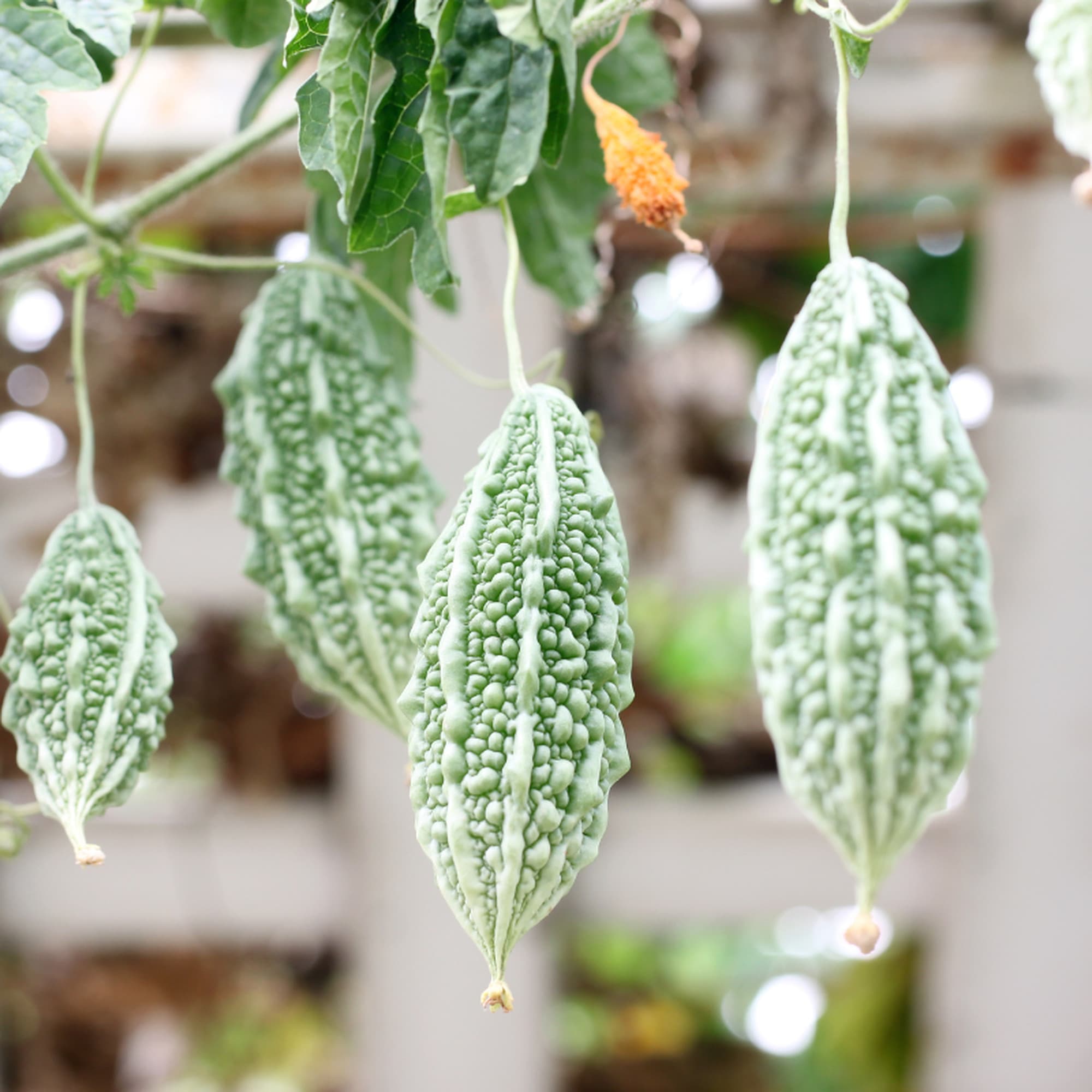
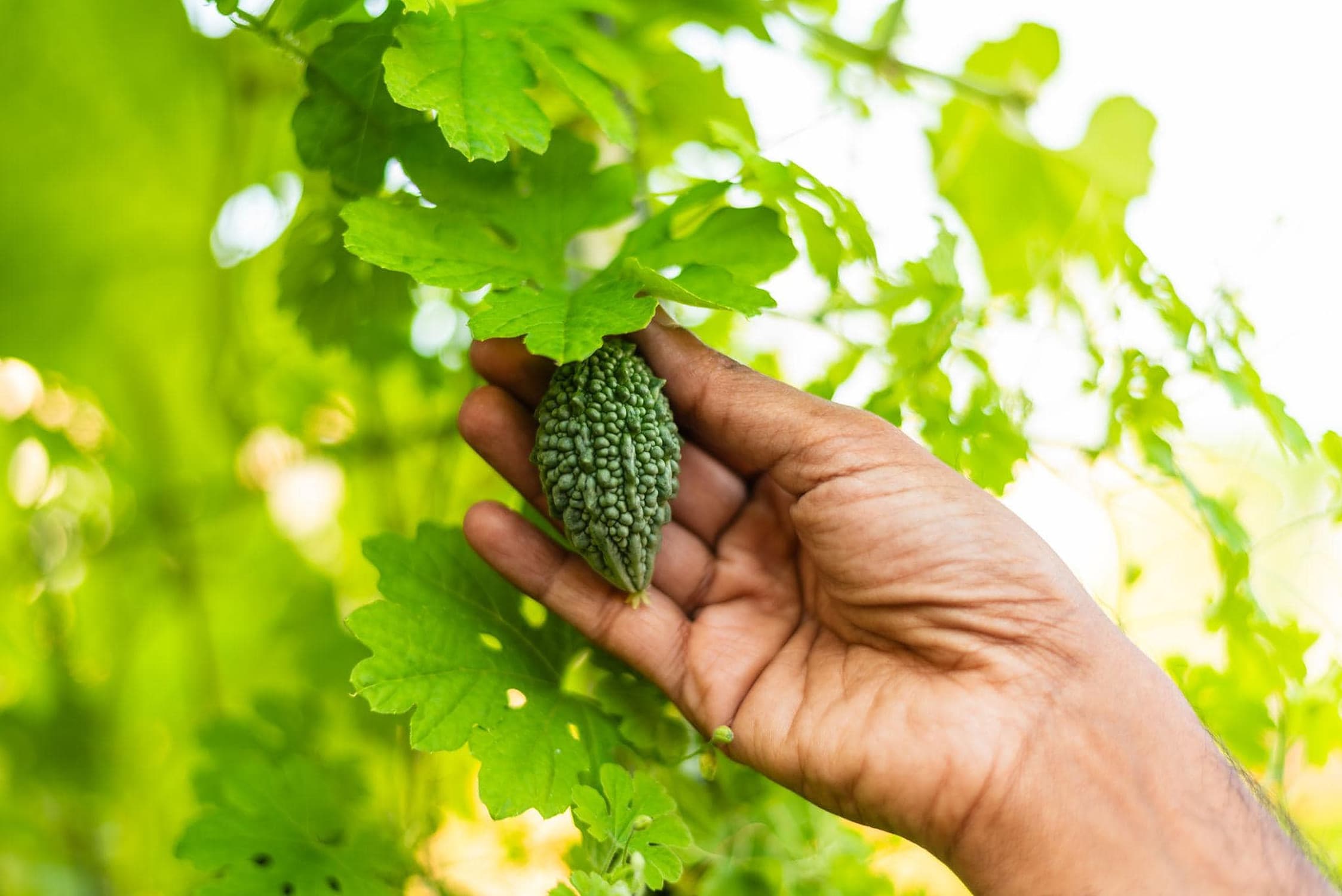
Small bitter gourd (Momordica charantia), called karela in India, is a warm-season climbing annual grown for small, deeply ridged, bright green fruits about 8–12 cm long. The seed coat is thick, so the seed is soaked and nicked before sowing, and the vine needs a trellis and warm soil.
Also known as: Karela, Kakarakaya (Telugu), Pavakkai (Tamil), Kaipakka, Ampalaya (Filipino), Goya (Okinawan), Ku gua (Chinese), bitter melon, balsam pear, bitter squash.
What the fruit is like
The flesh is crisp and intensely bitter, with soft seeds. In Indian cooking the fruits go into stir-fries, curries and pickles, or are hollowed out and stuffed with spiced fillings. Soaking sliced fruit in salt water mellows the bitterness.
Sowing: warmth, soaking and depth
- Seed preparation: soak the seed in water and nick the hard coat; extension guidance lists both as needed for the best germination.
- Temperature: laboratory tests gave the best germination near 25 °C and less below 20 °C or above 30 °C. This is an approximate species value, not a result for this lot.
- Depth: about 2 cm (approximate), two or three seeds per hole.
- Timing: sow outdoors only once the soil is at least 15 °C; planting-time soil of 25–35 °C is the optimum.
Growing on
Give the vine a sturdy vertical trellis. The fruit hangs down, so an arched support works well. Space plants 60–90 cm apart in full sun and well-drained, fertile soil of pH 6.0–7.5. Water regularly, but avoid waterlogging, which leads to root rot.
Harvest
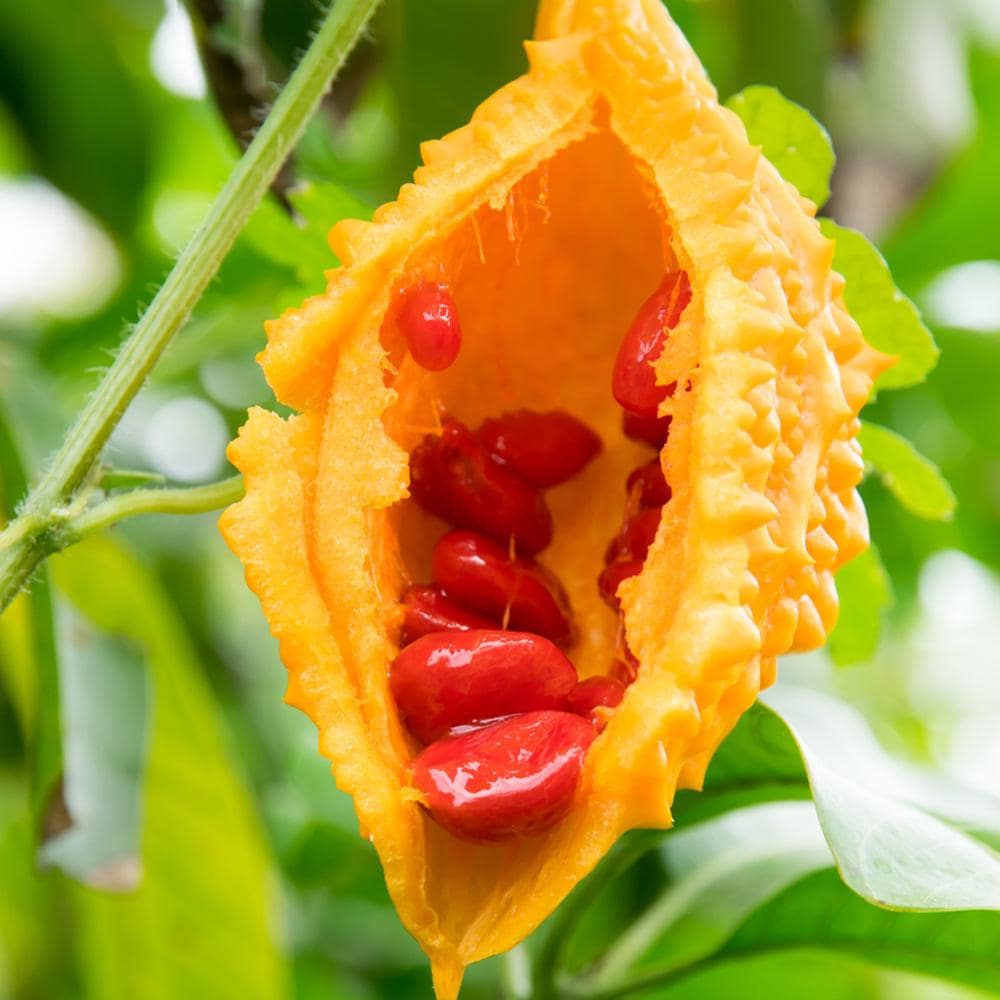
Pick young, firm, green fruit. First harvests are reported from about 50 days after sowing in warm climates and 60–90 days depending on cultivar. Left on the vine, fruit turns orange and splits to show red seed pulp, and by then it is hard and overly bitter.
FAQ
Why do my vines flower but set no fruit?
Each plant bears separate male and female flowers, and males usually open first. Fruit forms only on pollinated female flowers, so grow at least three plants together, encourage bees, or hand-pollinate during the day.
Is this the long Chinese bitter melon?
No. The Chinese type is 20–30 cm long, pale green and blunt-ended. The Indian type is narrower, pointed at both ends and has jagged ridges, and this small karela is about 8–12 cm.