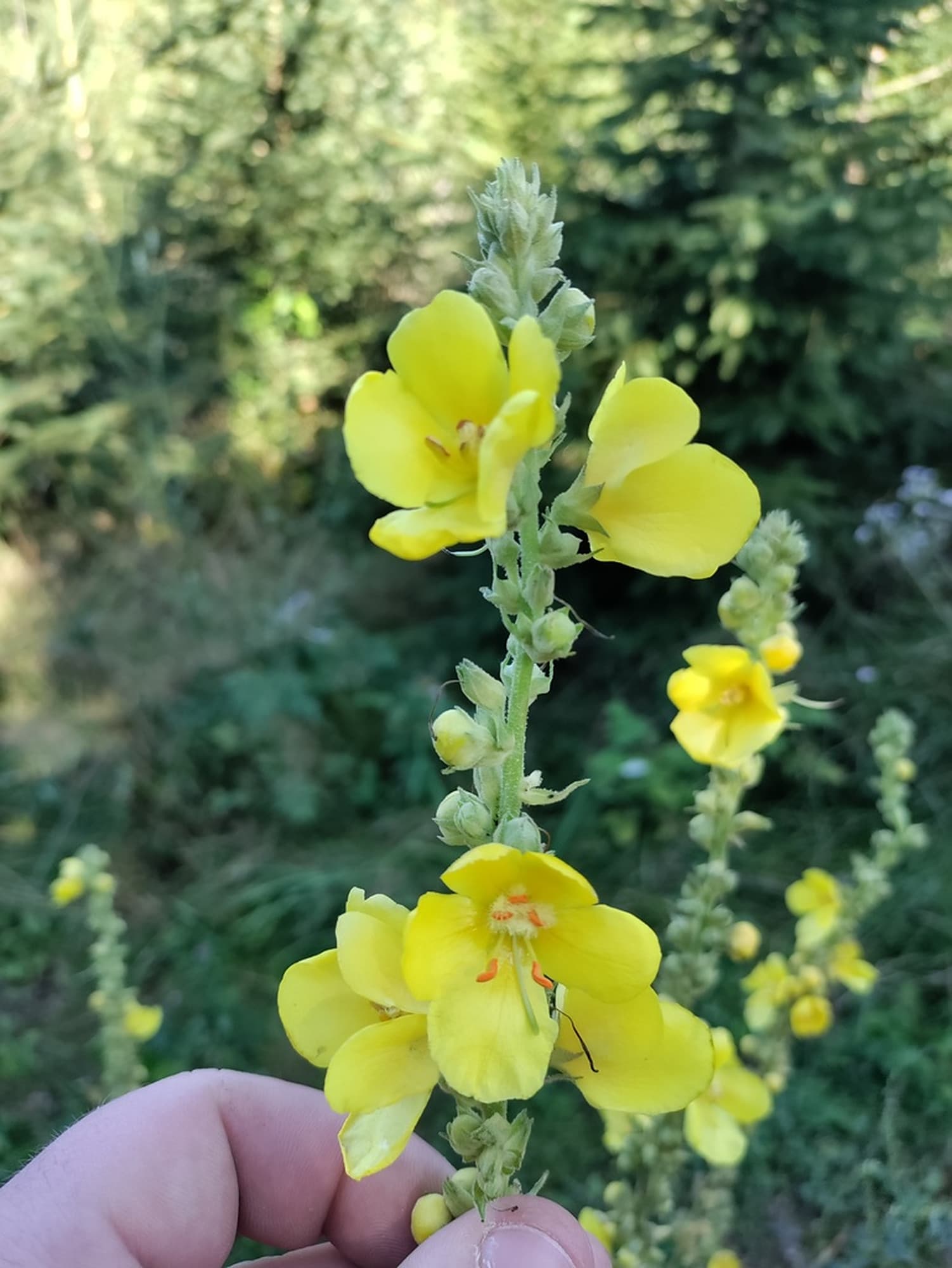
About this seed
Local names
Keizerskaars, Hjertebladet kongelys, rohtotulikukka, Molène fausse phlomide, Molène faux phlomis, Molène faux-phlomide, hjartekongslys, hjertekongslys, Storkungsljus, läkekungsljus, Orange mullein, Clasping mullein, Windblumen-Königskerze.
Common names of Verbascum phlomoides
All 33 names, languages and regions
Local names
| Belgium | |
|---|---|
| Dutch | Keizerskaars |
| Denmark | |
| Danish | Hjertebladet kongelys |
| Finland | |
| Finnish | rohtotulikukka |
| Swedish | rohtotulikukka |
| France | |
| French | Molène fausse phlomide, Molène faux phlomis, Molène faux-phlomide |
| Norway | |
| Norwegian Nynorsk | hjartekongslys |
| Norwegian Bokmål | hjertekongslys |
| Sweden | |
| Swedish | Storkungsljus, läkekungsljus |
| Ukraine | |
| Ukrainian | Дивина лікарська (Divyna likarska) |
| Other places | |
| German | Windblumen-Königskerze, Filzige Koenigskerze, Filzige Königskerze, Filziges Wollkraut |
| French | Molène faux-phlomis, Molene rugueuse, Molène rugueuse, cierge de Notre-Dame, herbe de Saint-Fiacre, molène fausse-phlomide |
| English | Orange Mullein, clasping mullein, clasping-leaved mullein, mullein, woolly mullein |
| Lithuanian | Gauruotoji tūbė |
| Welsh | Pannog Oren |
| Italian | Verbasco barbarastio |
| Hungarian | Szöszös ökörfarkkóró |
| Czech | divizna sápovitá |
| Slovenian | navadni lučnik |
| Orange mullein, Clasping mullein, Windblumen-Königskerze (DE); Orange Mullein (EN); molène faux-phlomis (F), korovâk lekarctvennyj | |
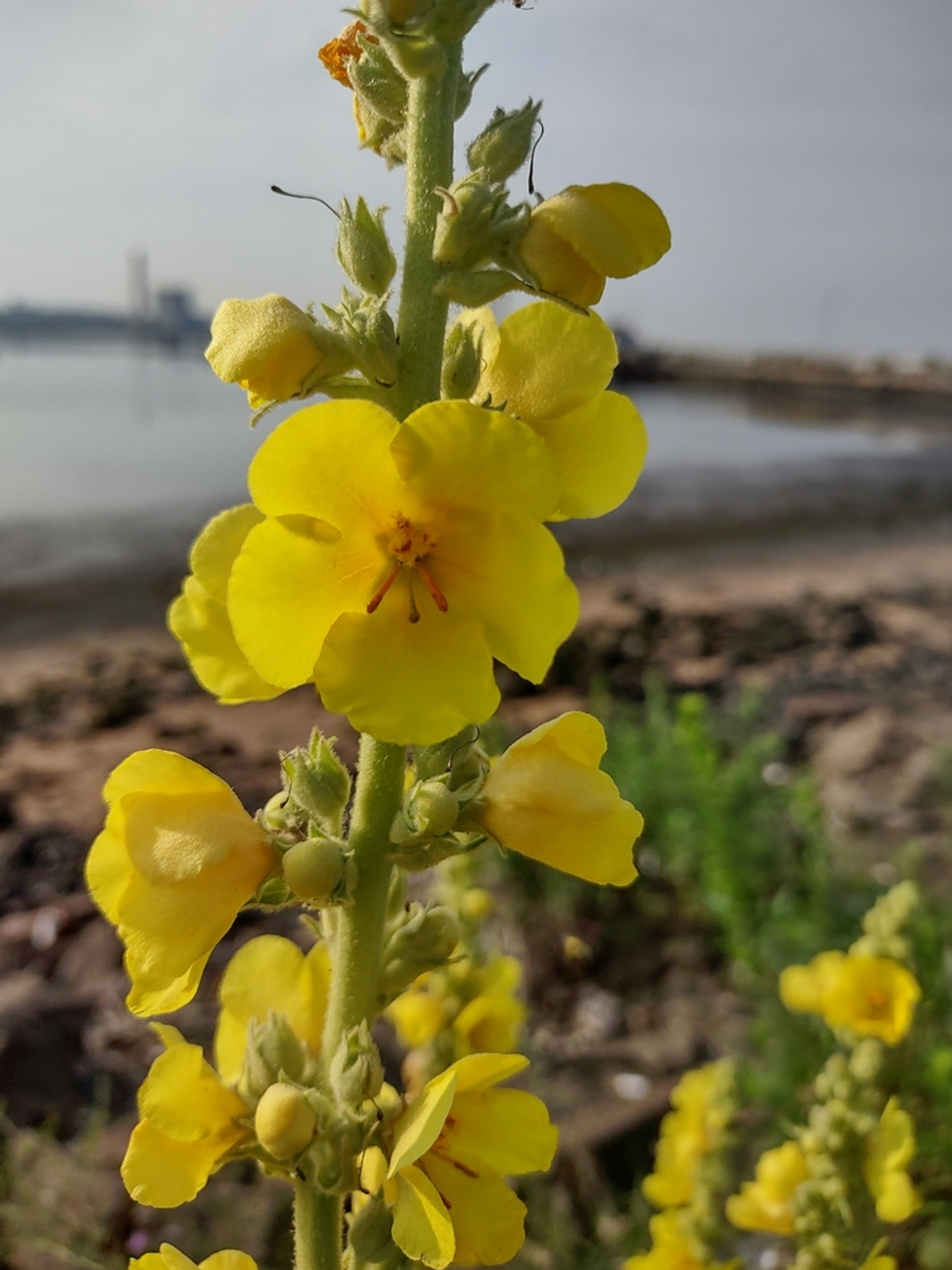
Orange mullein (Verbascum phlomoides) is a biennial: it spends its first season as a rosette of soft grey-green leaves and usually flowers in its second, reaching 1.5–2.5 m in full sun. The RHS rates it H6, hardy to about –20 to –15 °C, and it suits poor, well-drained soil.
Also known as: Orange mullein, Clasping mullein, Windblumen-Königskerze (German), Molène faux-phlomis (French).
Year one and year two
The sowing year gives leaves only. Flowering stems normally rise the following season, carrying large yellow flowers from early to late summer (RHS). Time to maturity is one to two years, so do not expect flowers in the year of sowing.
Site and soil
- Full sun; the plant dislikes shade and wet soil.
- Poor, alkaline, well-drained soil (chalk or loam) suits it. In fertile soil it grows very large and needs support (RHS).
- Spread 0.5–1 m; drought-resistant once established.
Sowing steps
- Sow in containers in spring or early summer; the RHS uses a cold frame.
- Press the fine seed onto clean, free-draining compost and cover it only very lightly.
- Keep the medium evenly moist in bright light. One plant database reports germination in 2–3 weeks; this is not a lot test.
- Prick out into individual pots when seedlings can be handled, then plant out in late summer.
- Remove faded spikes if you do not want self-sown seedlings.
We hold no saved germination temperature for this species and do not state one.
FAQ
Why has my mullein not flowered yet?
It is a biennial. The first season is the leafy rosette; flower spikes follow in the second season.
Is orange mullein the same plant as common woolly mullein?
No. The roadside plant usually called woolly mullein is Verbascum thapsus. Orange mullein is V. phlomoides, and some sources also call it woolly mullein, so check the Latin name.
Can the plant be used as food or tea?
This listing is for ornamental growing. We make no food, tea or medicinal claim.