Free EMS courier delivery across India
Podocarpus macrophyllus Buddhist Pine Seeds plant

Conifer growing guide

How to grow yew plum pine from seedPodocarpus macrophyllus

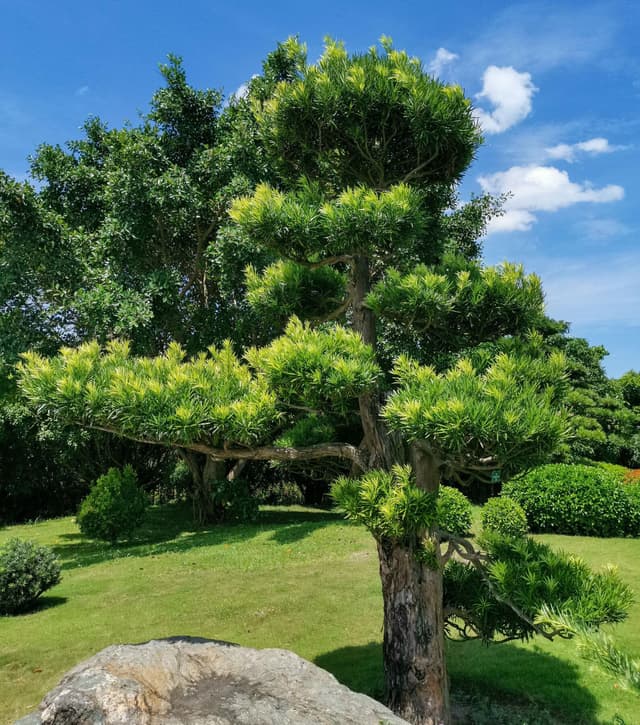
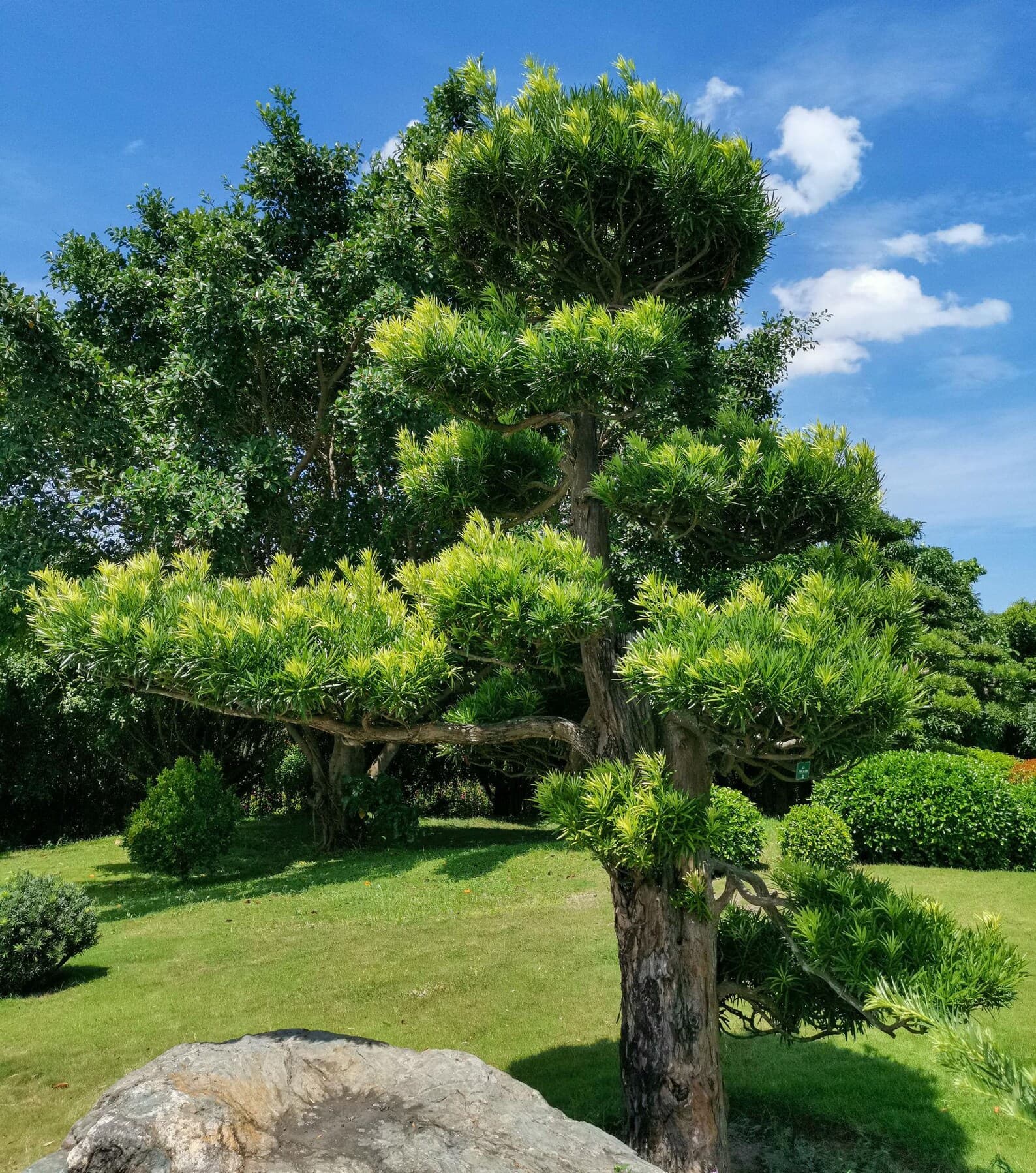
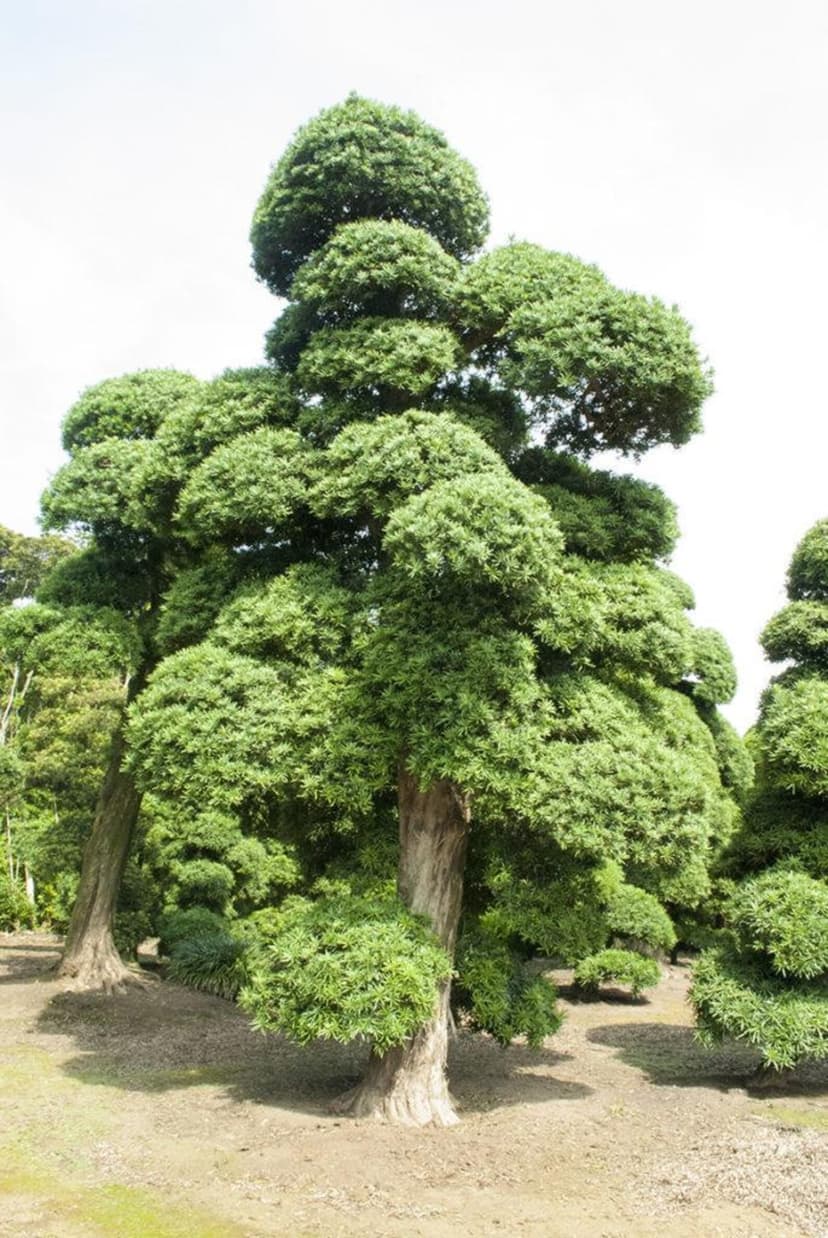
Podocarpus macrophyllus, the yew plum pine or Buddhist pine from southern China and Japan, is a slow-growing evergreen conifer used for hedges, screens, containers and bonsai. Sow its seeds fresh, cleaned of the fleshy fruit, and keep them warm and moist.

25 °C
Germination temp.

At a glance

Germination temperature
Warm: a related species germinated well at 25 °C (77 °F) and at day/night 25/15-30/20 °C.
Sowing depth
Shallow; cover the seed only lightly. No tested depth is published.
Germination time
A few weeks for fresh seed in a related species; allow longer before giving up.
Light
Bright light without hot direct sun on trays; full sun to partial shade later.
Pre-treatment
Remove the fleshy receptacle; no cold stratification.
Transplant or direct sow
Sow in trays or small pots and pot on individually.

Seed preparation

Seed preparation

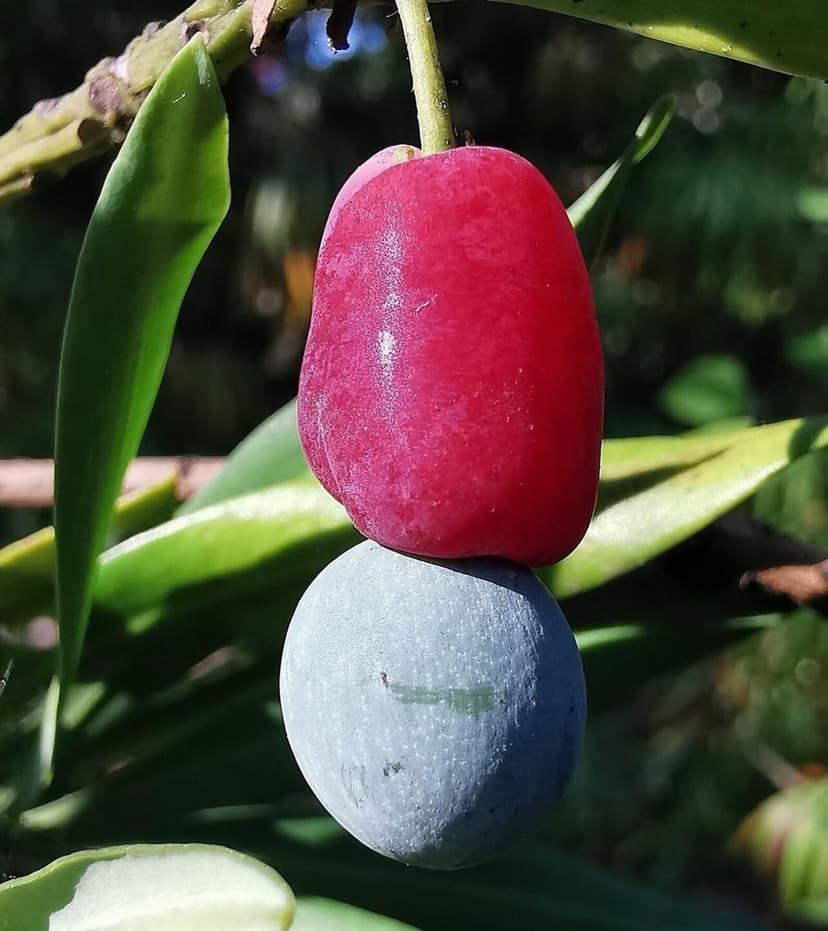
Each 'fruit' is a single round seed, about 1 cm across, sitting on a swollen, fleshy, purplish receptacle. Only the seed is sown: pull it off the receptacle and wipe away any soft pulp. No storage trial for this species was found, so treat the seed as short-lived and sow it as soon as you receive it rather than keeping it for a later season.
Scarification

Not needed. The seed coat does not need nicking or filing.

Stratification

Not needed. In a study of the related Podocarpus costalis, more than 90% of fresh seeds germinated in warm conditions without cold stratification.

Soaking

Not needed. A short soak in clean water can soften leftover pulp before cleaning, but it is not a germination treatment.

Podocarpus macrophyllus Buddhist Pine Seeds

Germination conditions

Germination temperature

Keep the seed warm. In the P. costalis study, germination was high at a constant 25 °C (77 °F) and at day/night temperatures of 25/15 °C and 30/20 °C (77/59 °F and 86/68 °F). In most of India this matches the warm months; in cooler climates use a heated propagator or a warm windowsill.

Sowing depth

Press each seed into the mix and cover it with a thin layer of fine mix or sand, so it is only just buried. The study above germinated seed in light, so deep burial is not needed.

Growing medium

A free-draining seed mix, such as compost with plenty of coarse sand or perlite. The species does not tolerate wet soil, so avoid heavy, waterlogged mixes.

Moisture

Keep the mix evenly moist but never soggy. Do not let fresh seed dry out.

Light

Bright light or light shade. Keep trays out of hot midday sun, which dries the surface.

Germination time

Fresh P. costalis seed germinated within about 4 weeks. Seeds studied in this family have an underdeveloped embryo that must grow before the root appears, so older or cooler seed can take much longer; keep trays for several months.

Transplanting and first growth

  1. Potting on

    When seedlings have a few sets of needle-like leaves, move each into its own deep pot with the root ball intact. Use a well-drained, slightly acidic potting mix.

  2. First growth stage

    Growth is slow. Keep young plants in bright light or partial shade and water when the top of the mix starts to dry. Plant out in the ground when frost risk has passed, or keep them in containers for years.

Podocarpus macrophyllus Buddhist Pine Seeds

Common problems

ProblemSeeds do not germinate
Cause
The seed dried out, was kept too long, or is too cold.
What to do
Sow fresh, cleaned seed in a warm spot and keep the mix evenly moist.
ProblemSeedlings rot or collapse
Cause
A wet, poorly drained mix.
What to do
Use a gritty, free-draining mix and water only when the surface begins to dry.
ProblemYellowing leaves
Cause
Magnesium deficiency on sandy soil, or chlorosis in alkaline soil.
What to do
Apply magnesium sulphate on sandy soil; in alkaline soil grow in a slightly acidic potting mix or improve the soil with organic matter.
ProblemSticky leaves or black film
Cause
Scale insects, sometimes with sooty mould; mites can also appear, especially indoors.
What to do
Check undersides of leaves and treat early; these pests are rarely serious.

Practical growing tips

Expect male and female plants

Plants are male or female. Only females fruit, and only when a male grows nearby. Seedlings vary more than plants from cuttings, so expect some difference in shape and vigour.

Choose the site

Full sun to partial shade in well-drained soil. It tolerates heat, salt spray and drought once established, but not waterlogging. Sources disagree on frost: from about -10 to -15 °C (14 to 5 °F) in shelter to damage in cold winters.

Shape it freely

It tolerates clipping well and is often grown as a hedge, column, topiary or bonsai.

Seeds are not food

The fleshy part of the fruit is described as edible, but the seeds are reported as toxic, causing nausea, vomiting and diarrhoea; keep seed away from children and pets, including cats, dogs and horses.

Yew plum pine seeds from Deodar

Sow Podocarpus macrophyllus seeds fresh and cleaned in a warm, free-draining mix.

Frequently asked questions

Do I need to stratify podocarpus seeds?

No. Clean off the fleshy part and sow the seed fresh in warm, moist conditions. A related Podocarpus germinated well without any cold treatment.

Is the fruit of yew plum pine edible?

The fleshy part is described as edible by some sources, but the seed is reported as toxic. Do not eat the seeds, and keep them away from children and pets.

Will a seed-grown plant produce fruit?

Only if it turns out female and a male plant grows nearby. The sex is not visible until the plant matures.

Is Podocarpus macrophyllus the same as Afrocarpus?

No. Both are in the family Podocarpaceae, but Afrocarpus is a separate African genus whose trees, such as Afrocarpus falcatus, are still sometimes sold as podocarpus.