Free EMS courier delivery across India
Cabbage Express Seeds plant

Vegetable growing guide

How to grow cabbage from seedBrassica oleracea var. capitata

Cabbage is a cool-season crop that is easy to raise from seed in a nursery bed or tray and transplant at four to six weeks. Timing matters most: sow so that heads form in cool weather, and keep young plants growing without a check.

≈ 29°C
Germination temp.
≈ 4-6 days
Germination
1-2 cm
Sowing depth

At a glance

Germination temperature
Optimum soil temperature about 29°C (85°F); germinates from about 4.5°C (40°F) up to 35°C (95°F).
Sowing depth
1-2 cm (about 1/2-3/4 inch).
Germination time
About 4-6 days at 20-25°C (68-77°F); about 15 days at 10°C (50°F).
Light
Seed does not need light to germinate; seedlings and plants need full sun.
Pre-treatment
None needed. Sow dry seed.
Transplant or direct sow
Usually transplanted at 4-6 weeks old with 4-6 true leaves.

Seed preparation

Seed preparation

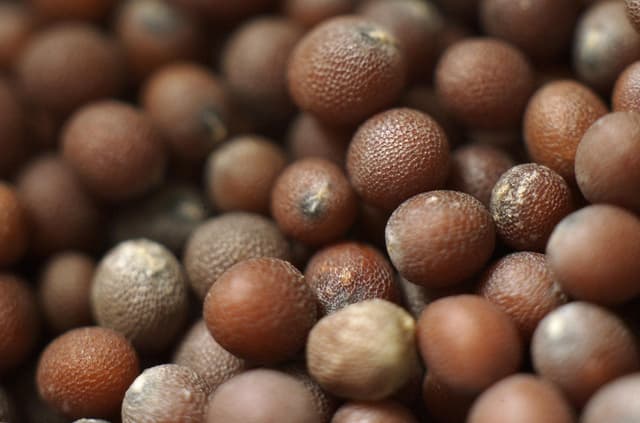
Cabbage seed germinates readily without treatment. Sow it thinly so seedlings do not stretch. Indian nursery practice is to treat seed with a biological such as Trichoderma viride (4 g per kg of seed) before sowing to reduce damping-off.

Scarification

Not needed. The seed coat is thin and absorbs water quickly.

Stratification

Not needed. Cabbage seed has no cold-dormancy requirement.

Soaking

Not needed. Seed sown into moist soil at 20-25°C (68-77°F) emerges in under a week without soaking.

Cabbage Express Seeds

Germination conditions

Germination temperature

Harrington's soil-temperature data give a minimum of 4.5°C (40°F), an optimum range of 7-35°C (45-95°F) and an optimum near 29°C (85°F). Ohio State recommends about 24°C (75°F) for indoor starts. After emergence, grow seedlings cooler, around 16°C (60°F), to keep them stocky.

Sowing depth

Sow 1-2 cm (1/2-3/4 inch) deep in lines 5-7 cm (2-3 inches) apart in a nursery bed, or one to two seeds per cell in trays.

Growing medium

Use a fine, well-drained seed mix or a raised nursery bed 10-15 cm (4-6 inches) high with well-rotted compost. Raised beds prevent waterlogging during the rains.

Moisture

Keep the surface evenly moist but never waterlogged. In Indian nurseries the bed is covered with dry straw or grass until the seedlings appear, then the cover is removed.

Light

Seed germinates in darkness under its soil cover. Give seedlings full light as soon as they emerge to prevent leggy growth.

Germination time

Typical emergence is 3-6 days in warm conditions. Harrington's data: about 15 days at 10°C (50°F), 9 days at 15°C (59°F), 6 days at 20°C (68°F), 4 days at 25°C (77°F) and 3 days at 30°C (86°F).

Transplanting and first growth

  1. Transplanting

    Transplant seedlings at 4-6 weeks, when they have 4-6 true leaves. Do not hold them longer: older seedlings establish poorly and yield less. Harden them off, then set them about 40 cm (16 inches) apart in rows 75 cm (30 inches) apart.

  2. First growth stage

    Cabbage grows best at 15-20°C (59-68°F), ideally with a day-night difference of at least 5°C. Young plants still grow above 25°C (77°F), but heading slows. Water about 25 mm (1 inch) per week and keep the supply even.

  3. Indian sowing season

    In the Indian plains cabbage is grown through the cool rabi season: nurseries are sown from July to November, depending on the variety and district, so heads form in the cool months. In the hills, sow from April to August. In the tropics generally, the best heads come from elevations above about 800 m.

Cabbage Express Seeds

Common problems

ProblemPlants bolt instead of heading
Cause
Cabbage is a biennial that flowers after a long cold spell (vernalization). Ohio State reports that 2-10°C (35-50°F) for 10 days or more can cause premature flowering. PROSEA puts the requirement for most types at roughly 6-8 weeks below 10°C (50°F).
What to do
Do not set transplants out into a prolonged cold spell, and in cold-winter areas time spring planting after the long cold period.
ProblemLeaves riddled with holes or windows; caterpillars in the heart
Cause
Diamondback moth larvae (small, green, wriggle and drop on a thread when touched) and cabbage butterfly caterpillars. Diamondback moth is the key cabbage pest in South and South-East Asia and resists many insecticides.
What to do
Check plants twice a week, use Bacillus thuringiensis (Bt) sprays, protect natural enemies, and consider rows of Indian mustard as a trap crop between cabbage rows.
ProblemStunted, wilting plants with swollen, distorted roots
Cause
Clubroot (Plasmodiophora brassicae), favoured by acid, wet soil. Its spores survive in soil for up to 20 years.
What to do
Rotate brassicas, lime acid soil (Ohio State suggests raising pH to about 7.2 where clubroot has appeared), improve drainage with raised beds, raise transplants in clean compost to a larger size (pots at least 9 cm) and grow clubroot-resistant varieties where the disease is present. There is no chemical cure for gardeners.
ProblemHeads split open
Cause
A surge of growth after heavy rain or irrigation late in the season, or late feeding.
What to do
Water evenly, avoid late fertilizer, harvest as soon as heads are firm, or cut part of the roots with a spade to slow growth.
ProblemSeedlings collapse at soil level
Cause
Damping-off in wet, crowded nursery beds.
What to do
Sow thinly in raised, well-drained beds, thin overcrowded seedlings, and use seed treatment as described above.

Practical growing tips

Keep soil pH 6.0-6.8

This range suits cabbage and reduces clubroot risk; below pH 6.0 clubroot is more likely.

Rotate brassicas

Do not plant cabbage, cauliflower, kohlrabi, mustard or radish in the same bed for several years.

Choose the variety for the season

Early, quick-heading types suit a short cool window; red cabbage and larger types need a longer cool season. In hot lowland conditions, aim for the coolest months available.

Harvest at firmness

Cut heads when they are firm and full size. Cabbage stores for months at about 0°C (32°F) and high humidity.

Cabbage seeds

Choose from our early, Indian and red cabbage varieties to grow your own cool-season heads.

Frequently asked questions

How old should cabbage seedlings be before transplanting?

Four to six weeks, at the 4-6 true leaf stage. Older, overgrown seedlings establish poorly and give lower yields.

When should I sow cabbage in India?

In the plains, sow the nursery between July and November so the crop heads in the cool rabi months; early varieties go first. In hill areas, sow from April to August.

Why did my cabbage flower without making a head?

The plants were exposed to a long cold spell before or after transplanting, which triggers flowering in this biennial crop. Sources give from about 10 days at 2-10°C to 6-8 weeks below 10°C, depending on variety.

Can I sow cabbage seed directly in the garden?

Yes, but transplants give a more even crop, are easier to protect from pests and flea beetles while small, and let you choose the strongest seedlings.