
Seed preparation
Use fresh, raw, unroasted and unsalted seed; snack nuts will not grow. Remove any remaining soft outer husk, which is thought to inhibit germination.
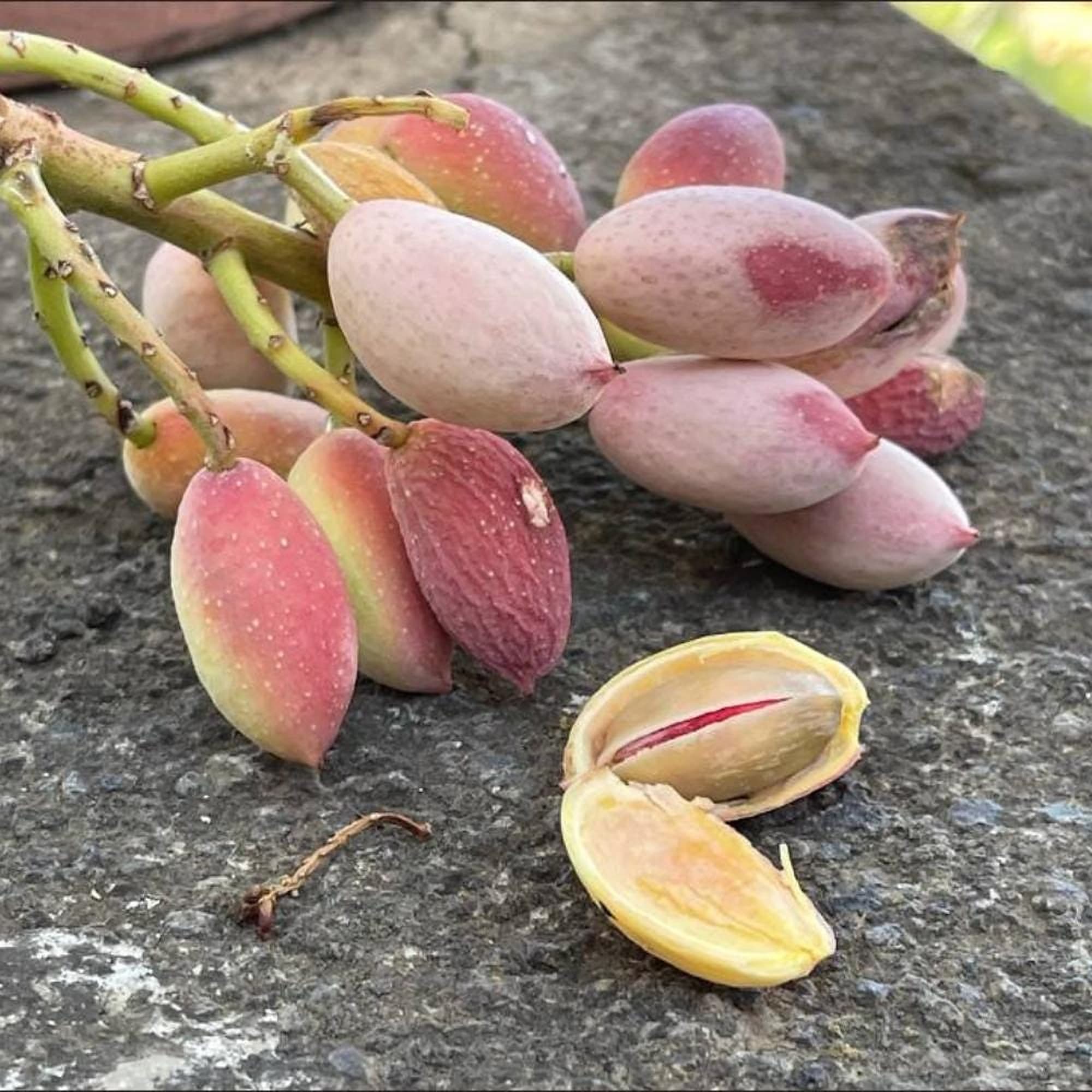
Nut tree growing guide
Pistachio seeds sprout well after a short soak and six weeks of cold, but nuts only follow where winters are cold enough and summers long, hot and dry. Seedlings also need a male and a female tree, so read the climate section before you sow.
Use fresh, raw, unroasted and unsalted seed; snack nuts will not grow. Remove any remaining soft outer husk, which is thought to inhibit germination.
Usually not needed for Pistacia vera, which germinates well after stratification. Nurseries sometimes crack or nick the hard shell mechanically; never use acid at home.
Mix the soaked seed with moist sand and peat (or coir) and keep it in the refrigerator at about 4 °C (40 °F) for about six weeks. Research found that one to three months of cold improved both the percentage and the speed of germination.
Soak in cool water for about 3 hours before stratification.
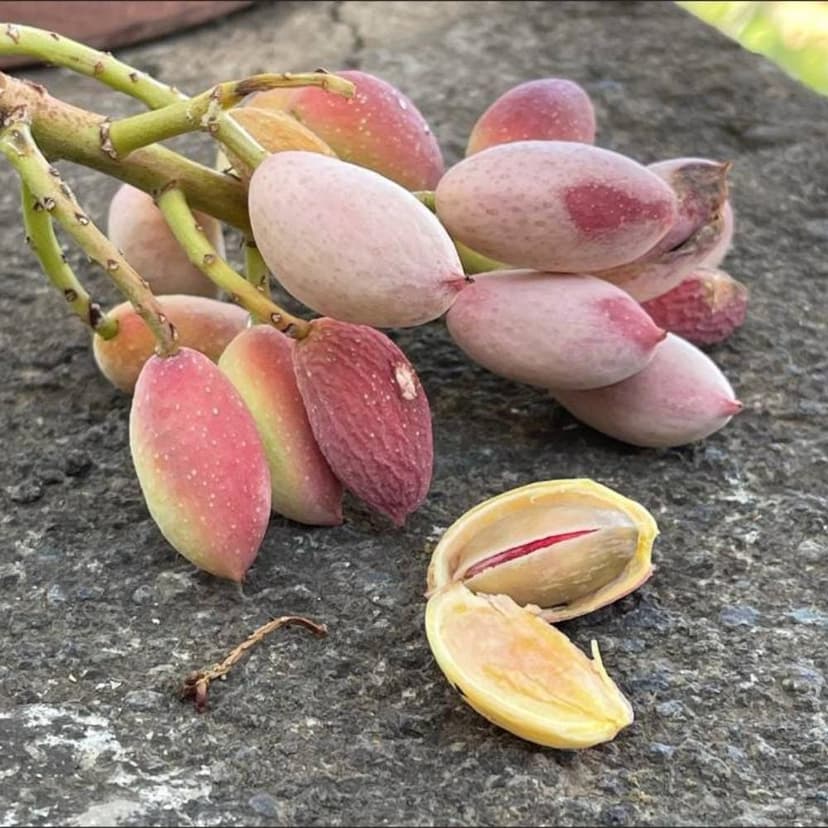
After stratification, keep the seed in moist sand or damp cloth in a cool, dark place and check it often; plant each seed as soon as the root appears.
Set the sprouted seed with the root pointing down and just cover it with mix.
Deep pots, about 18-20 cm (7-8 in) wide and 45 cm (18 in) long, filled with equal parts peat or coir, vermiculite and perlite. Pistachio forms a long taproot.
Keep the mix moist but never wet; young roots rot in waterlogged pots.
Move pots into good light as soon as shoots appear.
Sprouts appear after the cold period; check every few days and pot up promptly. Seedlings are ready to move into larger containers after about 2-3 months.
Plant out when the roots reach the bottom of the pot. Choose full sun and deep, well-drained soil (deep sandy loam is best); break up any hardpan. Space trees about 6 m (20 ft) apart.
Each seedling is either male or female, and you will not know which until it flowers. Plant several seedlings, or bud them later with named varieties; orchards use one male for every 8-10 females.
Water young trees steadily through the first summers. Budded trees start bearing in about 4-5 years, with a real crop around year 7-8.
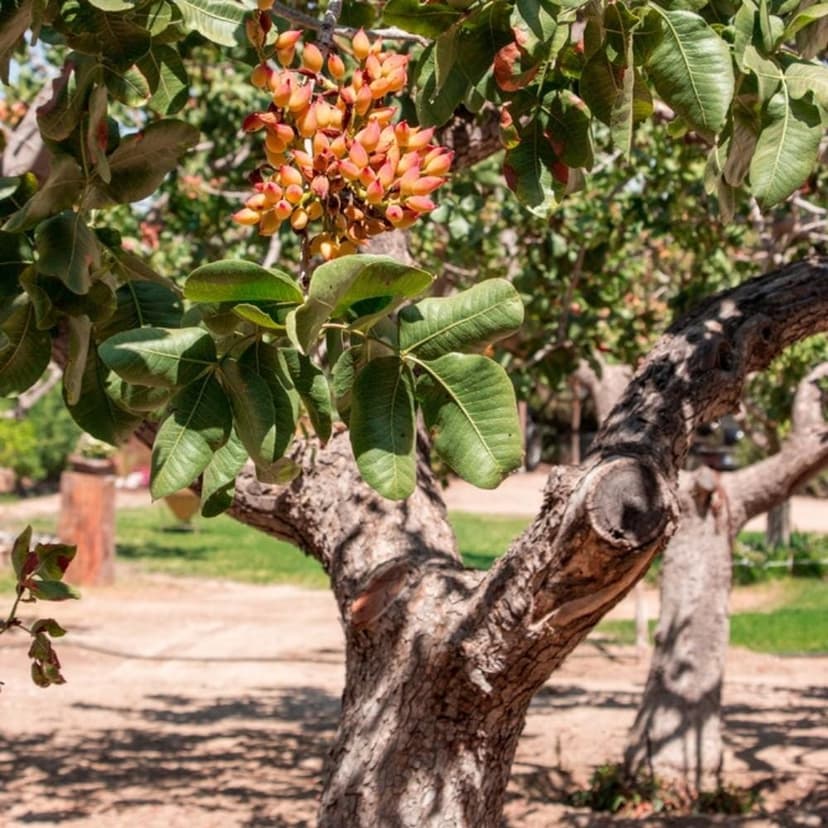
Pistachio crops where winters give about 1,000 chill hours and summers are long, hot and dry, as in its native Central Asia. The Indian plains and humid southern and coastal regions do not provide this chill, and monsoon rain and humidity suit it poorly; there the tree can be grown for interest, not for nuts. Only cold, dry high-altitude areas come close to its needs.
Spring frosts kill flowers, and temperatures below about -12 °C (10 °F) can kill young trees.
Established trees are drought and salt tolerant but need soil moisture from late winter to early summer. Never let water pond around the trunk.
Pistachios often crop heavily one year and lightly the next. Prune bearing trees every 3-4 years, in winter.
Soak and cold-stratify pistachio seed, then grow it on in deep pots for a long-lived nut tree.
Not from roasted or salted nuts; the heat kills the seed. Use fresh, raw seed meant for sowing.
Only where winters provide about 1,000 hours at or below 7 °C (45 °F) and summers are hot and dry. On the plains and in humid regions it will grow poorly and is unlikely to crop.
Budded trees start bearing in about 4-5 years, with a significant crop around year 7-8 and full production near year 12.
Yes. Pistachio is male or female, and a female tree needs a male nearby for wind pollination.

