Free EMS courier delivery across India
Tabebuia rosea Pink Trumpet Tree Seeds plant

Tree growing guide

How to grow pink lapacho (pink trumpet tree) from seedHandroanthus impetiginosus, Tabebuia avellanedae

Pink lapacho, also called pink trumpet tree or ipê-roxo, is a frost-tender tropical tree that flowers pink on bare branches. Its thin winged seed loses viability quickly, so sow it fresh, barely covered and warm.

≈ 30 °C
Germination temp.
6-12 days
Germination
0.5 cm
Sowing depth

At a glance

Germination temperature
Warm: about 30 °C (86 °F) is best.
Sowing depth
Very shallow, no deeper than 0.5 cm (0.2 in).
Germination time
6-12 days.
Light
Germinates well in light; grow in full sun.
Pre-treatment
None; sow fresh seed.
Transplant or direct sow
Raise in pots or nursery bags; plant out after 6-8 months.

Seed preparation

Seed preparation

Sow as soon as possible. The seed is orthodox but short-lived at room temperature: in one storage trial viability fell to zero after 90 days on a laboratory shelf, while seed kept in a refrigerator still germinated at about 96 percent after 180 days. If you must wait, keep the seed dry in a sealed container in the refrigerator.
Scarification

Not needed. The seed coat is thin and papery and takes up water readily.

Stratification

Not needed. This is a tropical tree that germinates without cold.

Soaking

Not needed. Embrapa researchers improved germination and reduced seedling disease with a brief surface clean (one minute in 70 percent alcohol, then three minutes in 2 percent sodium hypochlorite, rinsed); this is optional.

Tabebuia rosea Pink Trumpet Tree Seeds

Germination conditions

Germination temperature

Germination reached 70-80 percent at a constant 30 °C (86 °F) with light in controlled tests. In India and other tropical regions sow in the warm season; in cooler climates use a heated propagator.

Sowing depth

Lay the winged seed flat and cover it with no more than 0.5 cm (0.2 in) of mix.

Growing medium

Embrapa recommends a clay soil enriched with organic matter, or a mix of soil, sand and manure; sand or vermiculite also work for seed trays.

Moisture

Keep the mix evenly moist but never waterlogged; wet, warm trays encourage the seed-borne fungi that cause seedling lesions.

Light

Germination is good in light, so shallow sowing is ideal.

Germination time

Seedlings emerge in 6-12 days. Germination is variable, often only 40-50 percent, so sow two or three seeds per pot.

Transplanting and first growth

  1. Potting on

    Move seedlings from trays into deep nursery bags (Embrapa uses black polythene bags of about 15 x 32 cm) once they have their first true leaves.

  2. Planting out

    Seedlings spend 6-8 months in the nursery and are planted out at 40-60 cm (16-24 in) tall, in full sun and well-drained soil.

  3. First growth stage

    Train the young tree to a single trunk and stake it until it is about 1.8-2.4 m (6-8 ft) tall, then let the crown develop naturally. Water regularly until it is established.

Tabebuia rosea Pink Trumpet Tree Seeds

Common problems

ProblemNo seedlings at all
Cause
Old seed kept at room temperature, or seed buried too deep.
What to do
Sow fresh or refrigerated seed and cover it with no more than 0.5 cm (0.2 in) of mix.
ProblemOnly some seeds come up
Cause
Naturally variable germination, often 40-50 percent.
What to do
Sow two or three seeds per pot and thin to the strongest.
ProblemSeedlings rot or show lesions
Cause
Seed-borne fungi in a wet, warm tray.
What to do
Surface-clean the seed before sowing and do not keep the mix waterlogged.
ProblemYoung tree damaged in winter
Cause
Frost.
What to do
Grow outdoors only where frost does not occur; elsewhere keep it in a large container under glass in winter.
ProblemWeak, leaning trunk
Cause
Several competing leaders.
What to do
Prune to one central trunk while young and stake it until established.

Practical growing tips

Site

Full sun in well-drained soil. Once established, the tree is highly drought tolerant and moderately tolerant of salt spray.

Expect slow growth

In cultivation in Florida the tree is slow growing and reaches about 3.7-5.5 m (12-18 ft) with a 3-4.5 m (10-15 ft) spread; in its native forests it can reach 8-30 m.

Flowering

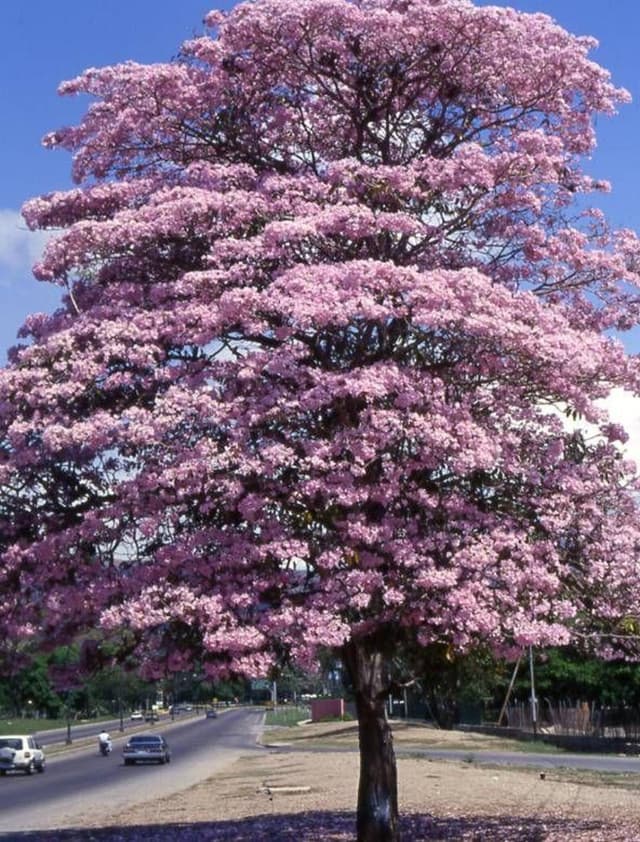
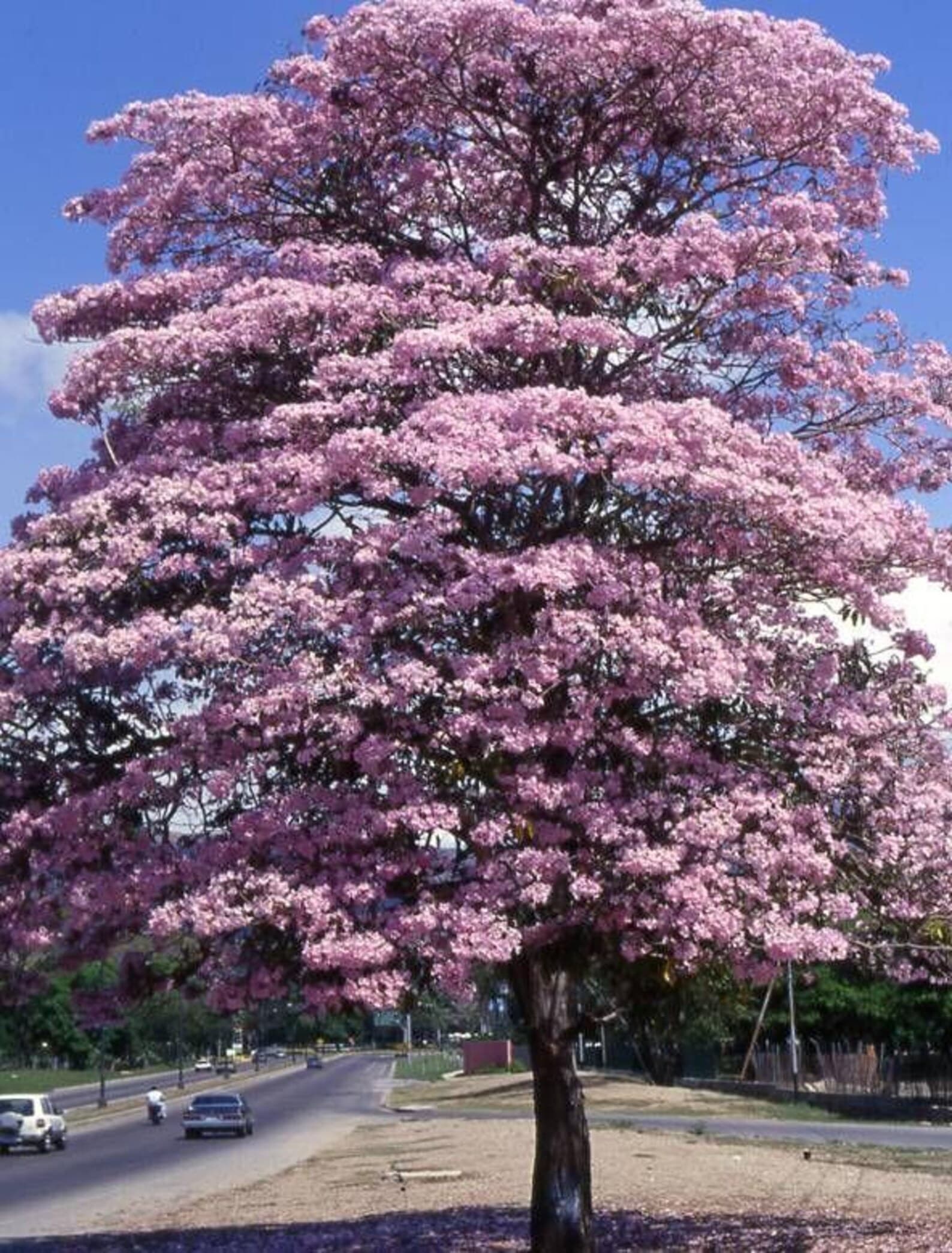
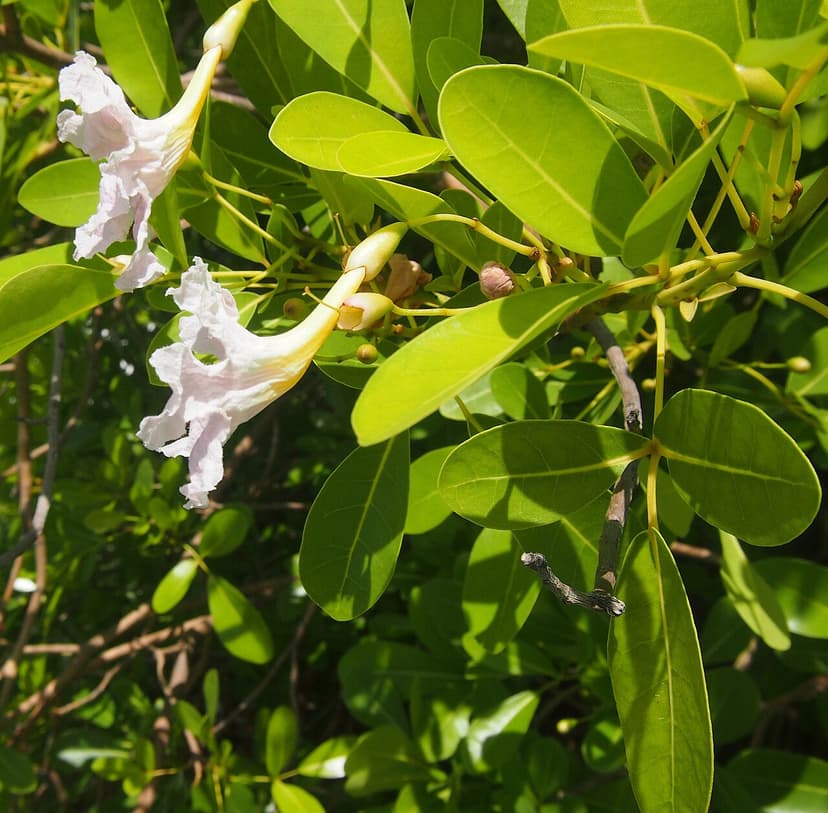
Trees begin to flower at around five years. The tree is deciduous and flowers while leafless; in central Brazil this happens in the dry season, from May to September. Flowers are rose-pink to purple trumpets.

Collecting seed

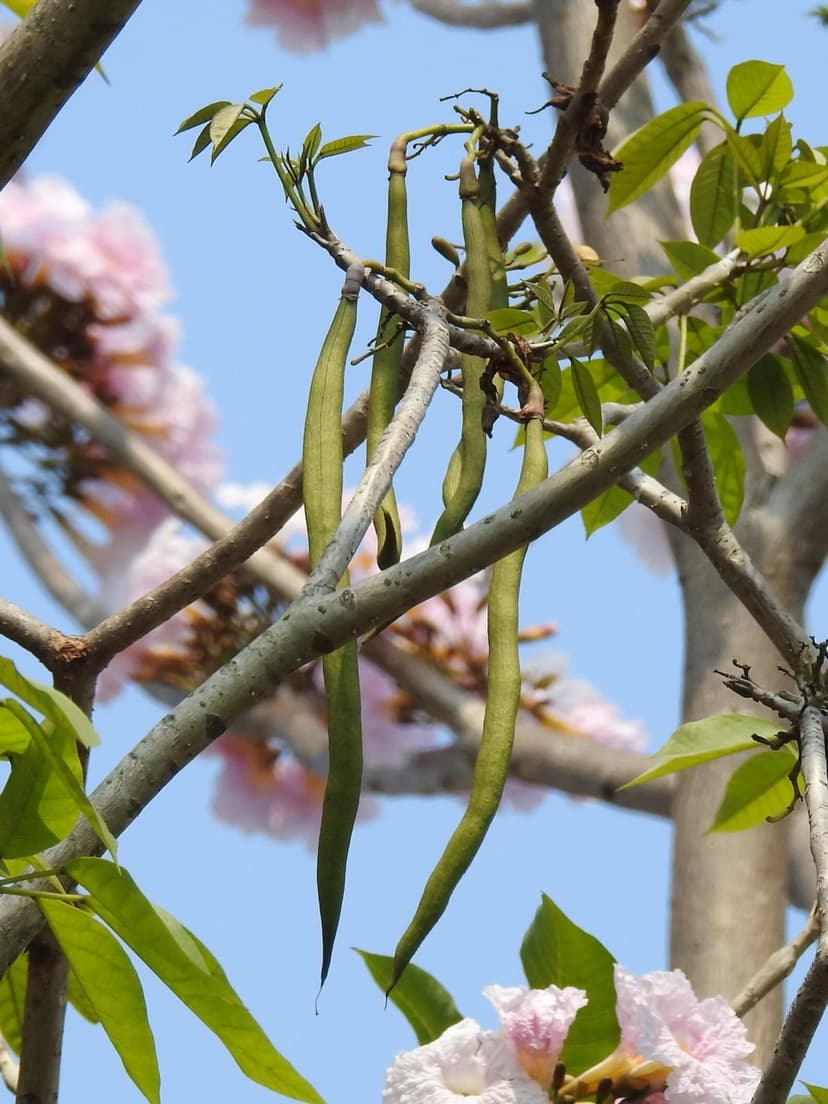
The capsules are 25-30 cm long. Collect them as they begin to split, before the winged seeds blow away, and sow the seed fresh.

Pink lapacho seeds from Deodar

Sow pink lapacho seed fresh and shallow in warm conditions for a flowering tree in about five years.

Frequently asked questions

Is Tabebuia avellanedae the same as Handroanthus impetiginosus?

Yes. Botanists now place pink lapacho in the genus Handroanthus, and Tabebuia avellanedae and Tabebuia impetiginosa are older names for the same tree.

How long do pink lapacho seeds stay viable?

Not long at room temperature: in one trial viability dropped to zero after about three months. Dry seed kept in a refrigerator stayed viable for at least six months.

Can I grow pink lapacho where winters are cold?

Only in a container that comes under glass for winter. The tree does not tolerate frost and is grown outdoors in USDA zones 9B-11 and frost-free tropical regions.