Seed preparation
The seeds are small achenes with a fluffy tuft of bristles. Rub off loose fluff between your fingers so the seed falls evenly, then sow thinly on the surface.
Flower growing guide
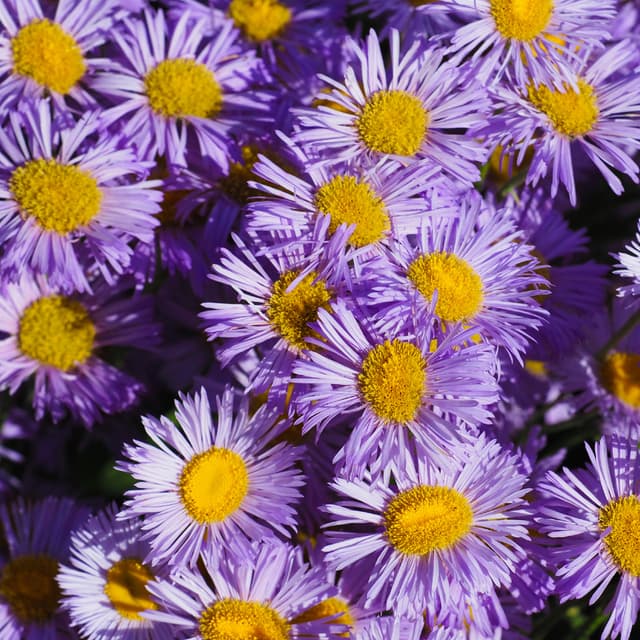
Alpine aster is a low, very hardy perennial with violet-blue daisies and yellow centres in early summer. Sow the seed thinly covered at about 20 °C, then grow it in full sun and sharply drained soil.
The seeds are small achenes with a fluffy tuft of bristles. Rub off loose fluff between your fingers so the seed falls evenly, then sow thinly on the surface.
Not needed. The seed coat is thin and lets water in.
Not needed. Jelitto lists alpine aster as a rapidly germinating perennial at room temperature without a cold period.
Not needed. Keep the sown pot evenly moist instead.
Keep the pots at about 20 °C (68 °F). Once seedlings appear, move them somewhere cooler and bright; warm, dim conditions make them soft and leggy.
Sow on the surface and cover with a thin layer of fine compost, vermiculite or grit.
A free-draining seed compost; mixing in some grit or sand helps, as alpine aster rots in wet compost.
Keep the compost constantly moist but not wet until germination, then water only when the surface begins to dry.
Germination does not depend on light because the seed is covered, but seedlings need good light immediately after they emerge.
About 2-3 weeks; slower in a cool room.
Move seedlings into individual 7-8 cm (3 in) pots when they can be handled by their leaves. Grow them on in a cold frame or a bright, cool spot.
Harden off and plant out in mid to late spring into full sun and well-drained soil. Space plants so each has room for its clump of about 10-50 cm (4-20 in) across.
Water young plants until they are rooted in, then only in long dry spells. Keep the crown free of fallen leaves and mulch around it with grit rather than bark, which holds moisture.
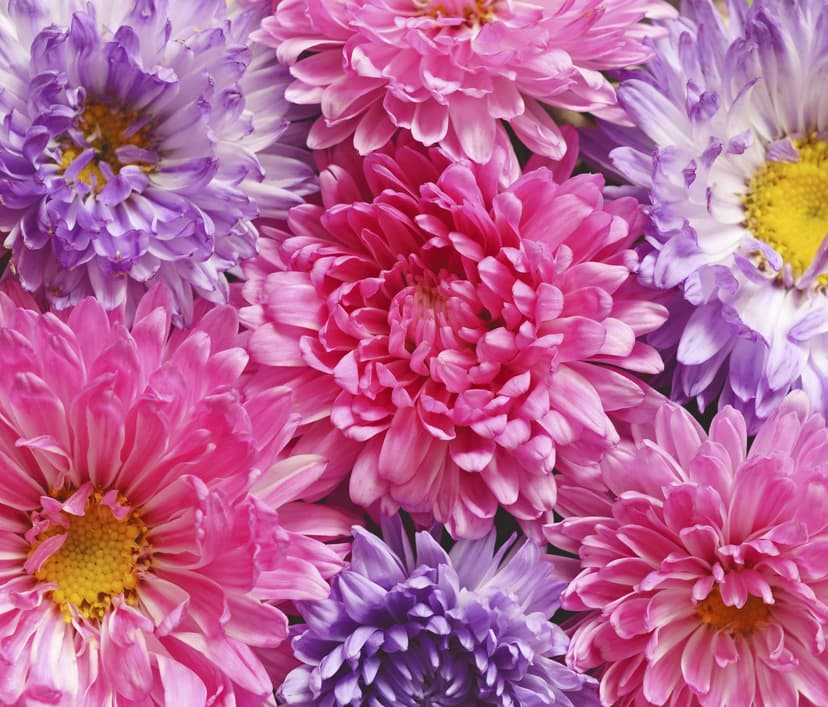
Give alpine aster full sun and well-drained soil: chalk, loam or sand of any pH. It suits rock gardens, wall tops, edges and containers.
This is a plant of subalpine and cold climates, hardy below -20 °C (-4 °F). It grows best in temperate gardens and in Indian hill gardens; on hot, humid plains it tends to struggle and may need a shaded, very well-drained pot.
Little feeding is needed: average, well-drained soil suits it, and a little compost at planting is enough.
Cut off faded flower stems to keep plants neat, or leave a few to collect seed.
Besides seed, established clumps can be divided in spring, and basal softwood cuttings root in spring.
Sow alpine aster for long-lived clumps of violet-blue daisies in sunny rock gardens and borders.
About 2-3 weeks at around 20 °C (68 °F). Keep the compost evenly moist and be patient; do not discard the pot after one week.
No. It germinates at room temperature without a cold period. Sowing in a cold frame in winter also works, and the seedlings come up in spring.
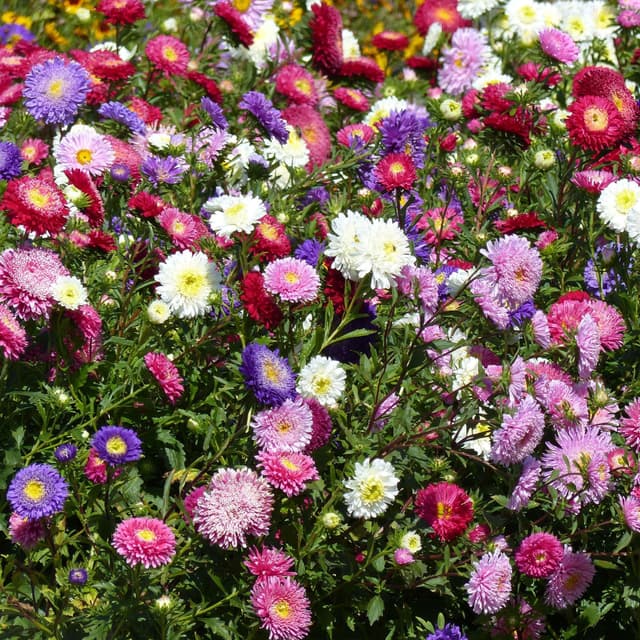
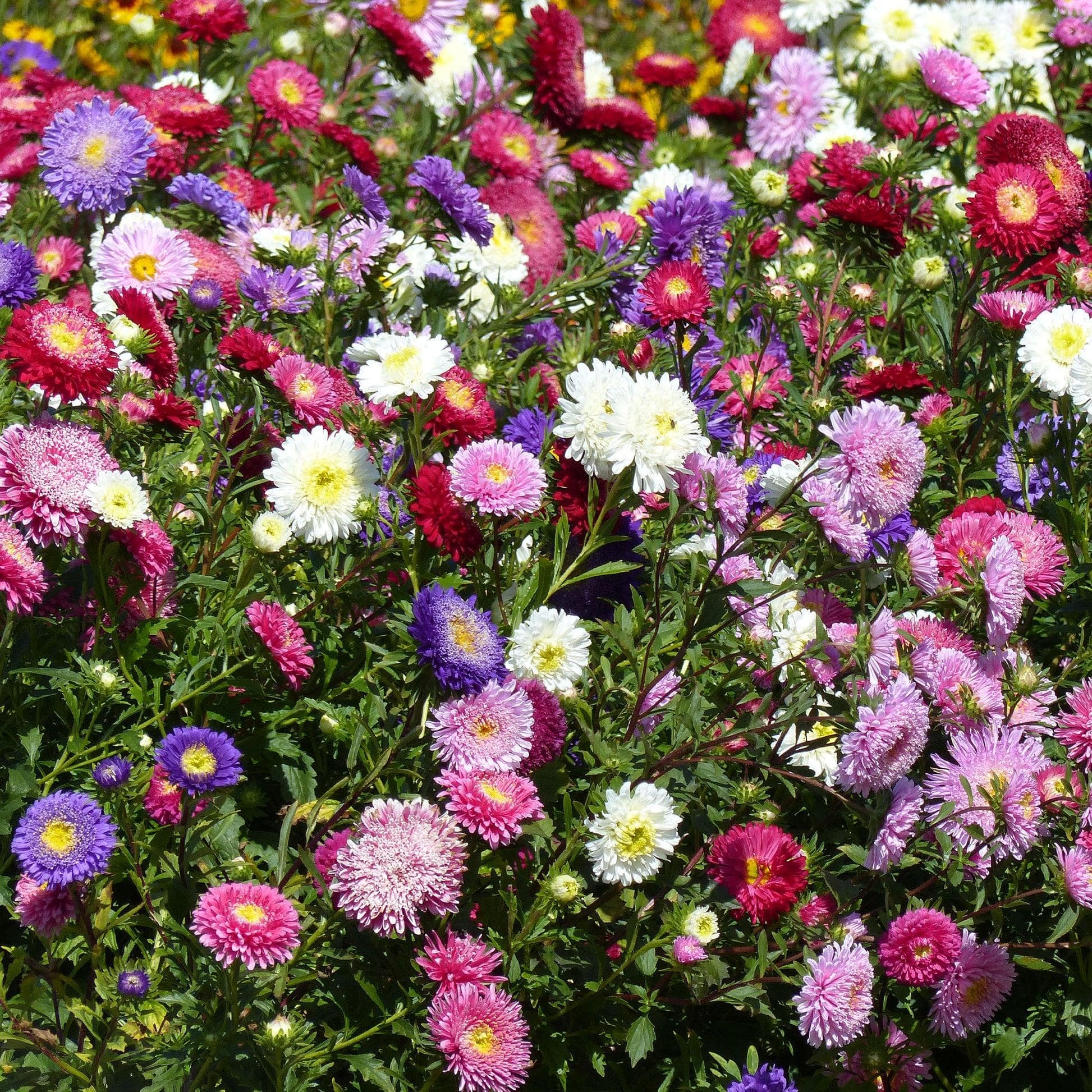
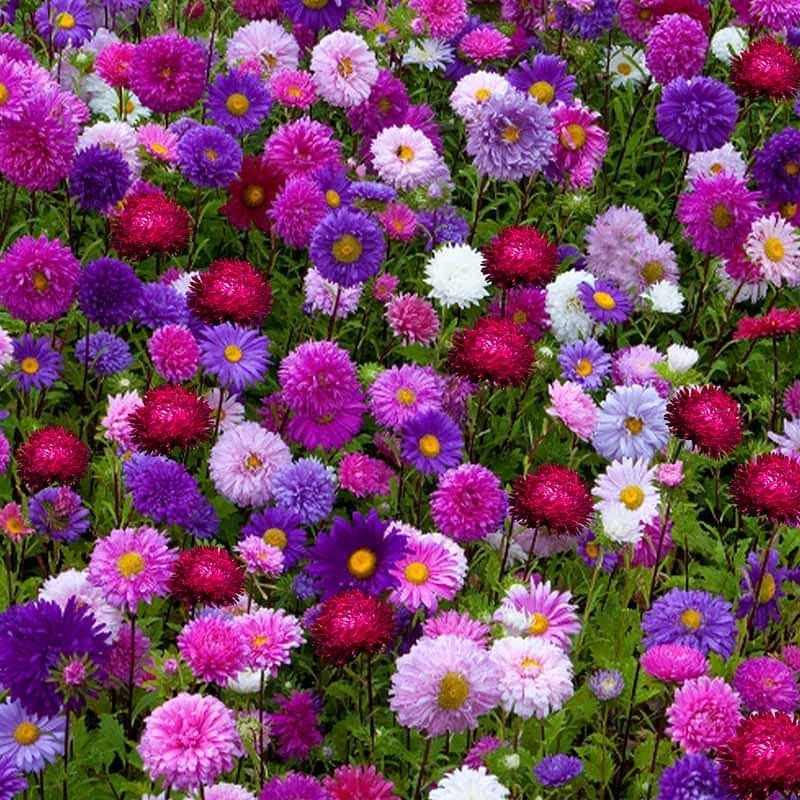
No. Alpine aster (Aster alpinus) is a low, hardy perennial for rock gardens. China aster (Callistephus chinensis) is a taller annual grown for summer bedding and cut flowers.