Free EMS courier delivery across India
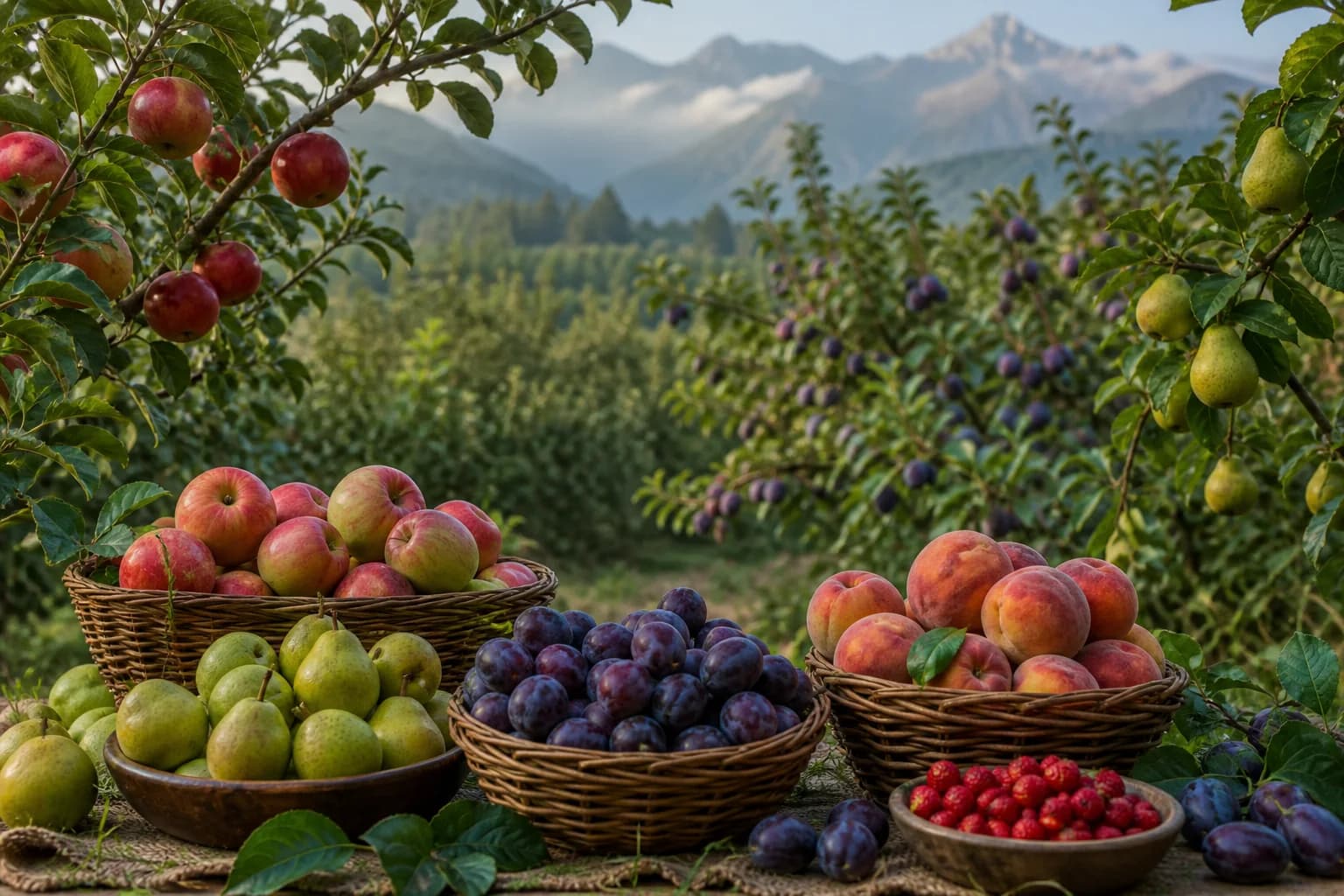
Apples, pears, plums, peaches and berries harvested from a mountain orchard

Fruit tree growing guide

How to grow mango from seedMangifera indica

Mango seed must be sown fresh: it dies quickly once it dries. Take the kernel out of its woody husk, sow it on edge in a free-draining mix and use the seedling as a tree or as a rootstock for grafting.

≈ 10-14 days
Germination

At a glance

Germination temperature
Warm, hot-season conditions; mango is a tropical tree and the seed should be sown in the warm months straight after the fruit season.
Sowing depth
Kernel set on its edge, concave side down, with the top just showing above the mix.
Germination time
About 10-14 days for a husked kernel; whole seeds sown in the husk can take about 3-6 weeks.
Light
Not needed for germination; give bright light or part shade to seedlings.
Pre-treatment
Sow fresh. Clean off the pulp and remove the woody husk; do not let the kernel dry out.
Transplant or direct sow
Sow in a bed or tray, move to individual pots, plant out or graft later.

Seed preparation

Seed preparation

Mango seed is recalcitrant: it holds a lot of water and loses viability as it dries, so sow it within days of eating the fruit. Scrub off the pulp, dry the stone in the shade for a day or two, then cut a small slit in the husk at the stalk end and prise it open to free the kernel. Discard kernels that are shrivelled, brown or black.

Monoembryonic or polyembryonic

Look at the kernel. A single solid kernel is monoembryonic and gives one hybrid seedling that will not match the parent fruit. A kernel divided into several segments is polyembryonic and sends up several shoots; most are clones of the mother tree.

Scarification

Not needed beyond removing the husk. Husking speeds and evens up germination and lets you check the kernel.

Stratification

Not needed. Cold harms tropical recalcitrant seed.

Soaking

Not needed. A short rinse is enough; the main rule is never to let the kernel dry out. In one Indian trial a gibberellic acid soak raised germination, but fresh seed germinates well without it.

Germination conditions

Germination temperature

Warm. Sow in the hot, humid season; in India that means right after the March-June fruit season, not in the cool months.

Sowing depth

Set the kernel on its edge with the concave side facing down and leave part of the top uncovered. Whole stones in the husk can be pushed in deeper; a hill-zone trial found deeper sowing (10 cm) emerged earlier than seeds left on the surface.

Growing medium

Coarse and free-draining. Western Australia's nursery mix is 50% coarse river sand, 25% vermiculite and 25% peat with slow-release fertiliser; a sand and compost mix works in home pots.

Moisture

Keep evenly moist but never waterlogged; rotting kernels turn brown or black.

Light

Germinates in the dark under its cover; keep trays in bright shade.

Germination time

Husked kernels sprout in about 10-14 days. Whole seeds sown in the husk took about 25-41 days in the Indian trial.

Transplanting and first growth

  1. Thin polyembryonic shoots

    If one kernel sends up several shoots, the weak, stunted one usually comes from fertilisation; remove it and keep one or more vigorous clonal shoots.

  2. Pot on

    Move seedlings into deep individual pots once the first leaves have hardened. For grafting, a rootstock should reach a stem 8-10 mm thick and 10-15 cm tall, usually within eight months.

  3. Plant out

    Plant into a well-drained, sunny site. TNAU digs 1 x 1 x 1 m pits and plants from July to December at 7-10 m spacing. Water at planting, every other day the first week, then once or twice a week until established.

Common problems

ProblemSeed never sprouts
Cause
The kernel dried out or was stored too long.
What to do
Sow within days of eating the fruit and keep the husked kernel moist.
ProblemKernel rots in the tray
Cause
A heavy, waterlogged mix.
What to do
Use coarse sand-based media and let excess water drain freely.
ProblemSeedling fruit is poor
Cause
Monoembryonic seed gives a hybrid.
What to do
Graft a named variety onto the seedling (veneer, cleft or epicotyl grafting) in mild weather.
ProblemBlack spots on flowers and young fruit
Cause
Anthracnose, worst in rain and heavy dew.
What to do
Avoid wetting flowers, keep the canopy open and follow local extension spray advice from bud break.
ProblemWhite powder on flowers in dry weather
Cause
Powdery mildew.
What to do
Sulphur sprays at early panicle stage prevent spread.

Practical growing tips

Frost-free sites only

Mature trees survive about -3.9 °C (25 °F) for a few hours with damage; young trees die at -1.7 °C (29 °F). In cold climates keep mango in a large pot under glass.

Soil

Red loamy, well-drained soil suits mango; TNAU gives pH 6.5-8.0. On very alkaline soils iron and zinc deficiencies are common.

Water less as the tree matures

Mature trees need water only in long dry spells; overwatering lowers fruit quality.

Judging ripeness

Pick when the shoulders fill out and the flesh near the seed is yellow; fruit ripens 3-8 days after picking at 21-24 °C (70-75 °F). Refrigerate only once ripe.

Mango seeds from Deodar

Sow mango seed fresh and grow your own tree or grafting rootstock.

Browse seeds

Frequently asked questions

Will a mango grown from seed give the same fruit?

Only if the seed is polyembryonic; most of its shoots are clones of the mother tree. Monoembryonic seed gives a hybrid with unpredictable fruit, so graft a named variety onto it.

How long does a seedling mango take to fruit?

Longer than a grafted tree. Grafted trees start bearing 3-5 years after planting; seedlings are slower and their fruit is not guaranteed.

Can I store mango seed until next season?

Not reliably. The seed is recalcitrant and loses viability as it dries; Indian trials kept it alive for about ten weeks at most in moist ash or wet gunny bags.