
Seed preparation
Mallow seeds are flat, kidney-shaped segments that come from a ring-shaped fruit. Separate them and sow only plump, dry seed.
Herb and wildflower growing guide
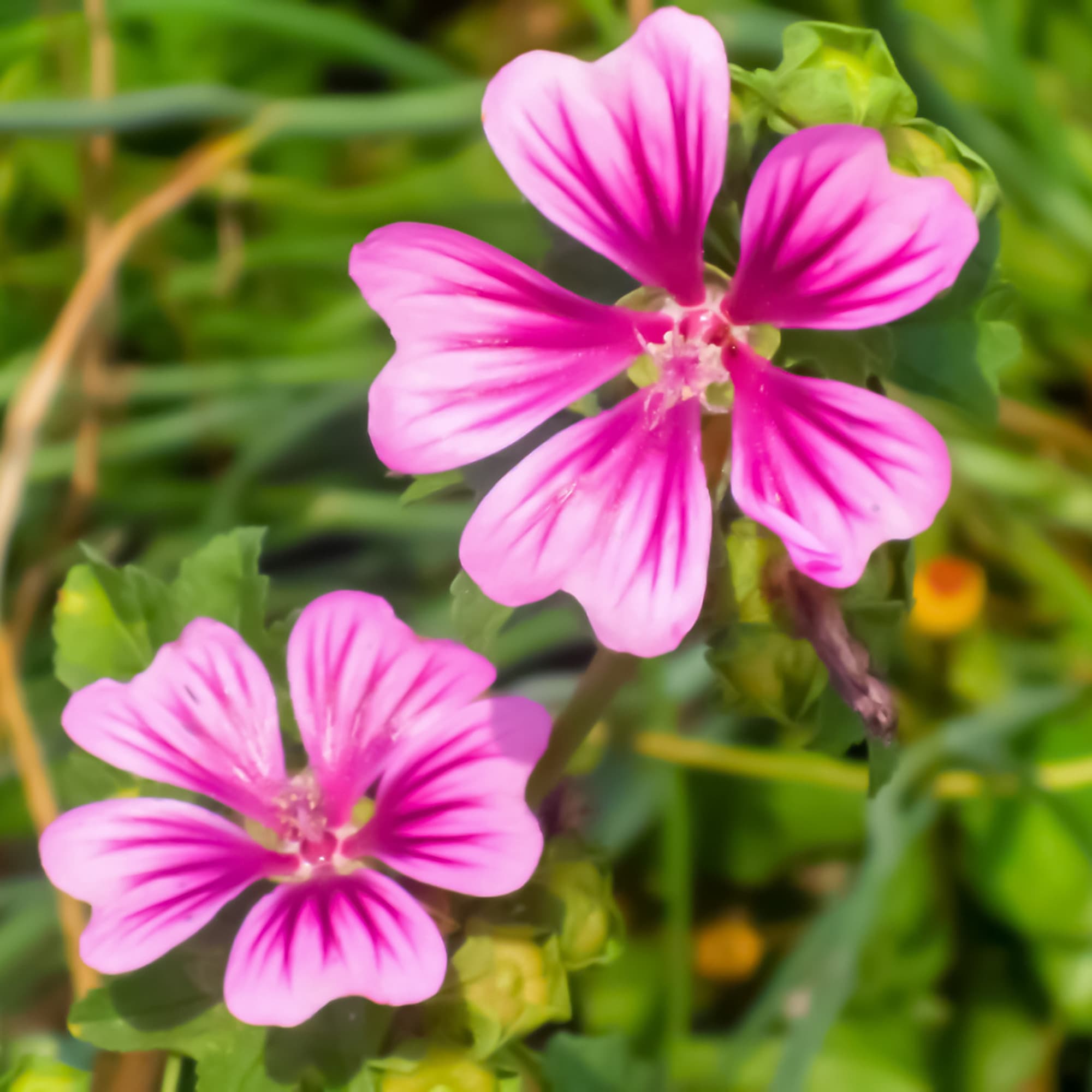
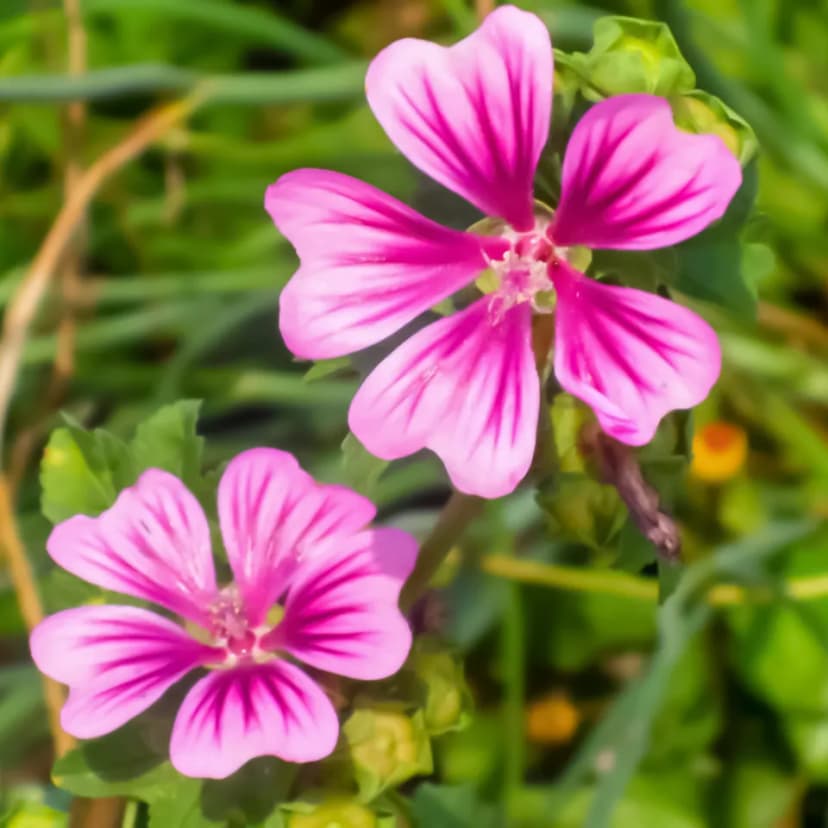
Forest malva, or common mallow, is a tall, hardy short-lived perennial with dark-veined pink-purple flowers from summer into autumn. Lightly scarify the hard seed, sow it shallow in spring and grow it in sun and well-drained soil.
Mallow seeds are flat, kidney-shaped segments that come from a ring-shaped fruit. Separate them and sow only plump, dry seed.
Recommended. Much of the seed has a hard coat that keeps water out. Rub the seed gently between two sheets of fine sandpaper until the surface is dull; in a seed-science study scarification was the most effective way to break this dormancy. Do not try laboratory acid treatments at home.
Not needed. The dormancy is in the seed coat, not something that cold breaks.
Optional after scarifying. A few hours in room-temperature water shows which seeds have swollen; sow them straight away.
Germination is fastest at about 23-34 °C (73-93 °F). The study's base temperature was about 1 °C, so seed sown in cool spring soil still comes up, just more slowly. Above about 42 °C (108 °F) germination stops.
About 1 cm (0.4 in) deep; cover with fine soil and firm lightly.
Any free-draining seed compost in pots; outdoors, a weed-free, crumbly seedbed.
Keep evenly moist until seedlings emerge; waterlogged soil makes seed rot.
Light is not needed for germination. Seedlings need full sun or light shade.
The first seedlings usually appear in about 7-10 days in warm conditions. Unscarified seed comes up unevenly, sometimes over several weeks.
Pot-sown seedlings can be planted out when they have two or three true leaves. Move young plants early, before their roots fill the pot. Allow about 50-100 cm (20-40 in) between plants for their spread.
Water young plants until they are established; after that water only in long dry spells. Stake tall plants in windy, exposed places.
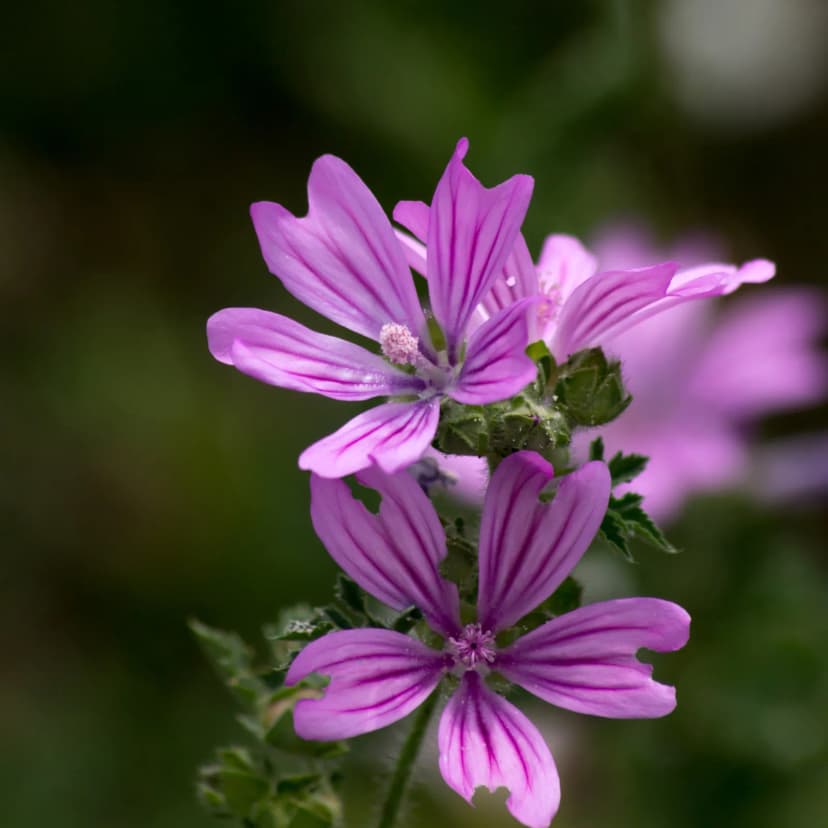
Full sun and well-drained soil of almost any type and pH. It is naturally a plant of field edges, verges and disturbed ground, so it does not need rich soil.
The wild range reaches the West Himalaya, and it is naturalised in parts of India. It does best in temperate and hill gardens; in hot plains grow it in the cooler months.
It flowers from summer into autumn. Remove faded stems if you want to limit self-seeding.
Plants reseed readily. Leave a few seed heads if you want new plants next year; individual plants are short-lived.
The flowers are visited by many kinds of bees, and mallows feed caterpillars of butterflies such as the painted lady.
Sow forest malva in a sunny spot for tall, easy flowers that bees love all summer.
Many mallow seeds have a hard coat that keeps water out. Rub the seed lightly with fine sandpaper before sowing and keep the soil moist; the rest may still come up over the following weeks.
Sources describe it as a biennial or a short-lived perennial. Individual plants do not live long, but a patch keeps going by self-seeding.
Yes. The RHS rates it hardy to about -10 to -15 °C, so seedlings can go out in spring once hardened off.
