
Seed preparation
Sow the seed as supplied. Removing the papery calyx hull around the seed did not change germination in trials, so there is no need to clean it further. A thousand seeds weigh about 2.5 g.
Herb growing guide
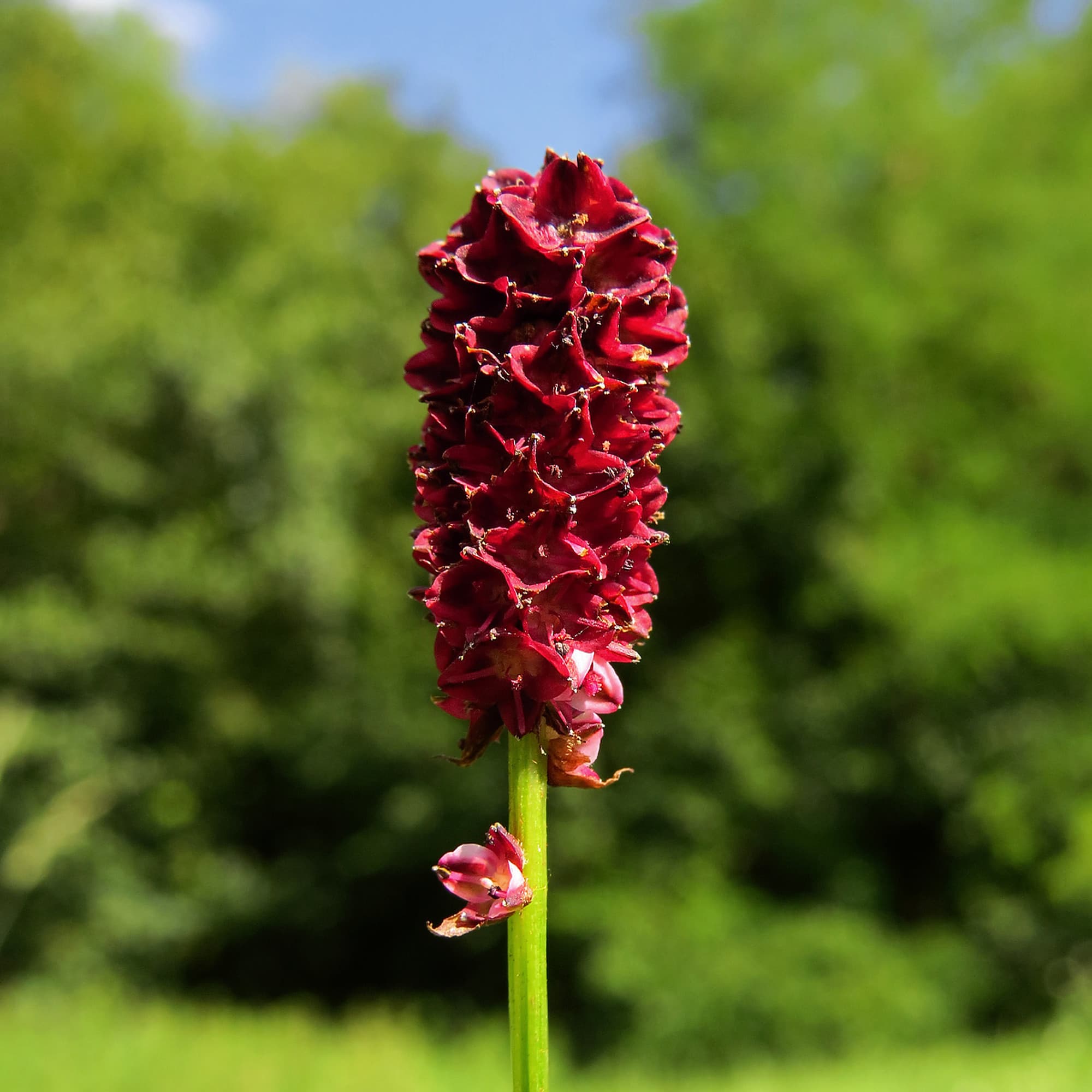
Great burnet is a very hardy perennial with deep maroon flower heads on tall, wiry stems. Its seed usually germinates readily in mild warmth within about two weeks, without any cold treatment.
Sow the seed as supplied. Removing the papery calyx hull around the seed did not change germination in trials, so there is no need to clean it further. A thousand seeds weigh about 2.5 g.
Not needed for home sowing. A Chinese study attributed some dormancy in wild-collected seed to a hard coat and used strong acid, which is not a home method; North American trials found good germination without any treatment.
Usually not needed. Cold, moist storage for 1 week to 5 months at 4 °C (39 °F) did not improve germination, and dry cold storage for a year made no difference. If a sowing at room temperature shows nothing after several weeks, a Nordic gene bank suggests one month in a refrigerator and then a return to room temperature.
Not needed.
Sources put the optimum between 20 °C (68 °F) and 24-25 °C (75-77 °F). At 20 °C about 70-80% germinated in Alaskan trials. Great burnet also germinated at every temperature from 5 to 30 °C (41-86 °F), but at 5 °C it was slow and reached less than half the 25 °C result.
Sow on the surface of the mix and cover very thinly.
A fine, moisture-retentive seed mix in trays or pots. The adult plant grows in chalk, clay, loam or sand, provided the soil does not dry out.
Keep the mix evenly moist but not waterlogged.
Light or darkness made no consistent difference to germination, so a thin cover is fine.
Germination began 4-5 days after sowing, reached half its total in about 7 days and was largely complete within 15 days at 25 °C (77 °F).
Move seedlings into small individual pots once they are large enough to handle, then plant out into moist, moderately fertile soil in sun or part shade.
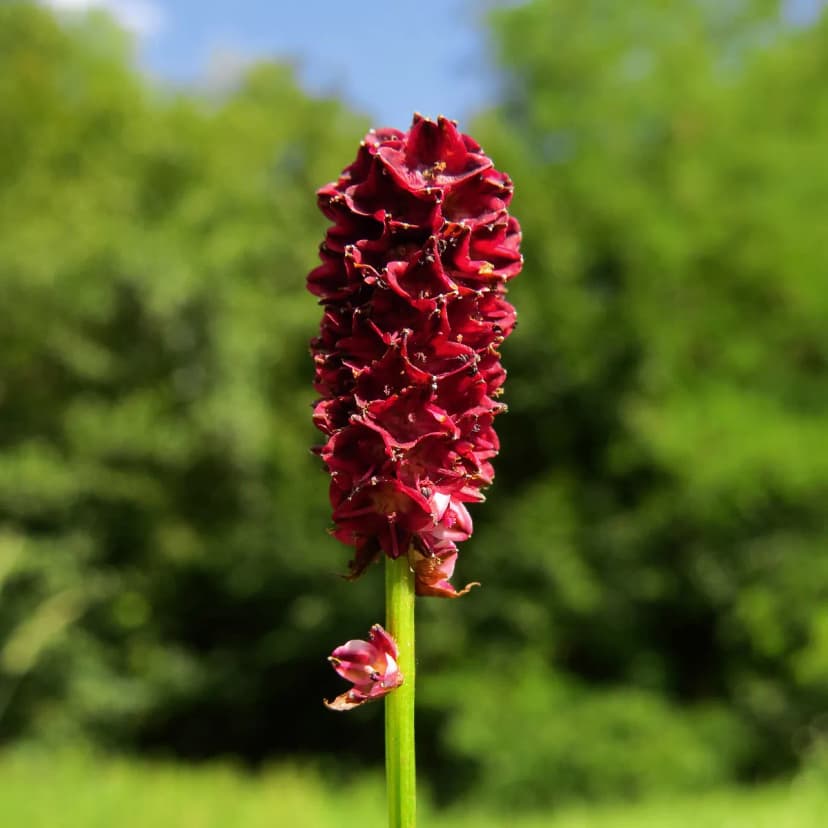
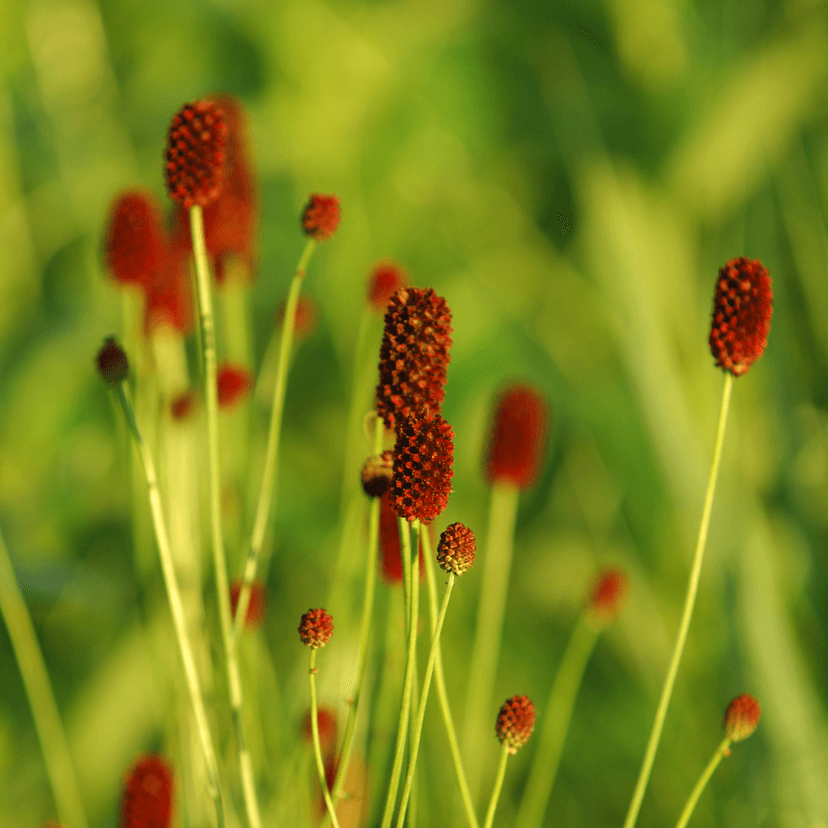
Young plants first build a basal clump of divided leaves. Flowering stems reach 1-1.5 m (3-5 ft) on established plants, with maroon heads from summer into early autumn.
In cool climates sow in spring (April-May in the Nordic region) or in autumn in a cold frame. In hot lowland climates, sow in the mildest months so seed germinates near 20-25 °C (68-77 °F).
Rhizomes spread readily and can become a nuisance, so plant where the clump can widen or contain it.
Great burnet survives below -20 °C (-4 °F), so in cold regions it can stay in the ground all winter.
Established clumps can be divided in spring or autumn, which is quicker than raising more plants from seed.
Grow great burnet for its hardy foliage and dark red summer flower heads.
Usually not. In trials, 1 week to 5 months of cold, moist treatment did not improve germination. Sow at 20-25 °C first and chill for a month only if nothing appears.
At about 25 °C (77 °F), seedlings start to appear in 4-5 days and most have germinated within about two weeks.
It is a cool-temperate plant that needs soil that does not dry out. In hot regions, sow in the mildest season, give afternoon shade and keep it well watered.
