Seed preparation
Verbena seed often germinates only partly, even when most of it is alive, so sow more seed than the number of plants you need.
Flower growing guide
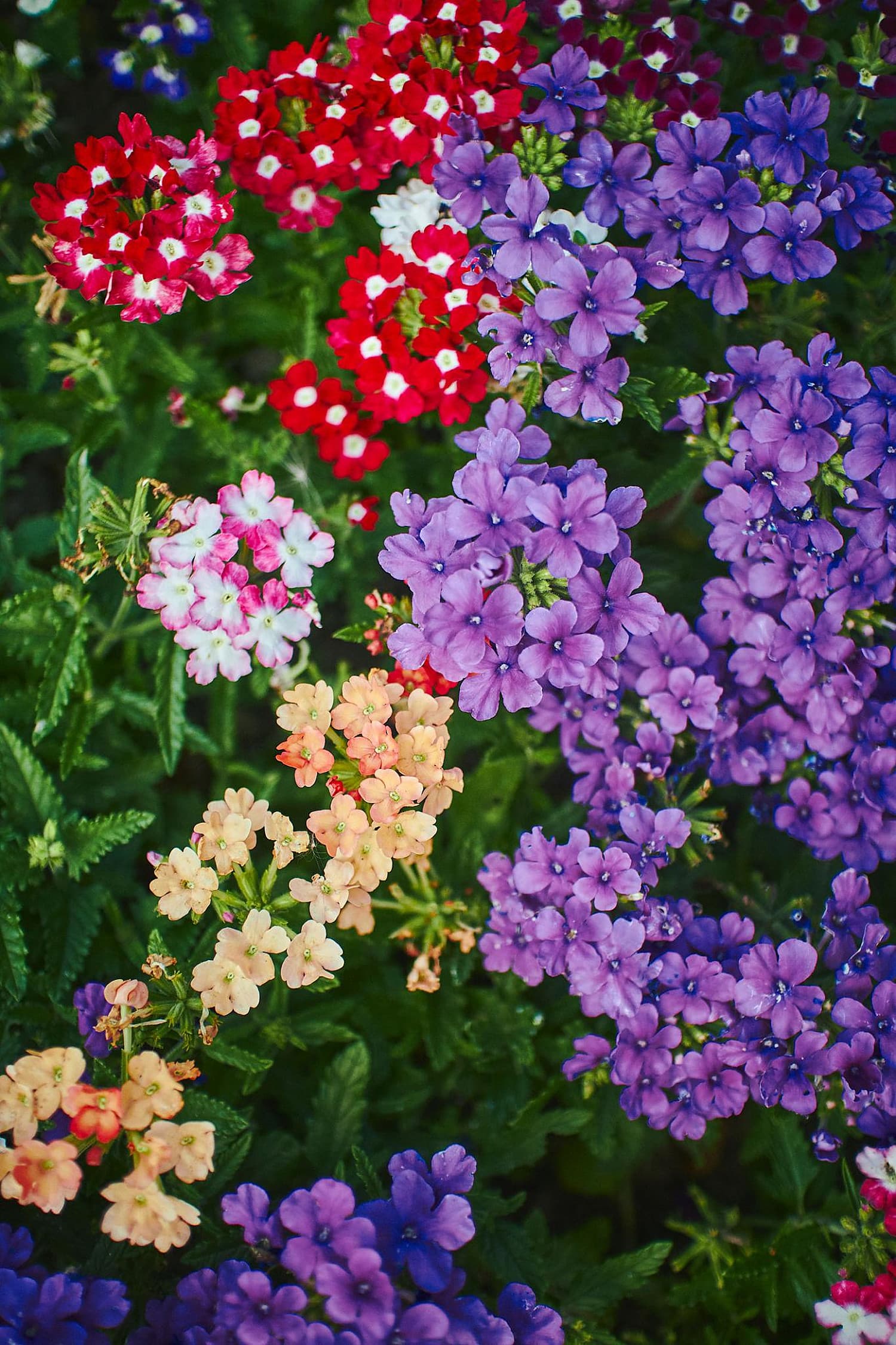
Moss verbena is a low, wide-spreading plant with finely cut leaves and clusters of small lilac to purple flowers, ideal for hot, dry, sunny spots. Sow the seed warm and shallow in good light, and plant out after frost.
Verbena seed often germinates only partly, even when most of it is alive, so sow more seed than the number of plants you need.
Not needed.
Not needed. Seed sown warm in spring germinates without a cold period; in mild climates self-sown seedlings appear on their own in spring.
Not needed. Verbena seed is prone to rotting, so a long soak can do more harm than good; keep the tray evenly moist instead.
Use a warm windowsill or heated propagator at about 21-24 °C (70-75 °F). At 17 °C (62 °F) emergence in the study took a week longer and was less even.
Press the seed onto the surface or cover it with only a light dusting of fine compost or vermiculite.
Fine, free-draining, sterile seed compost. Clean trays matter because verbena seed and seedlings rot easily.
Keep the compost evenly moist, never waterlogged. Water from below so the seed stays in place.
Give the tray light from sowing: in the study, continuous light raised germination from 35% to 50% compared with darkness.
About 14 days at 24 °C (75 °F), around 21 days in cooler conditions. Do not discard the tray too early.
In frost climates sow indoors from late winter to early spring, keep young plants frost-free, harden them off and plant out after the last frost. In frost-free and tropical climates avoid raising seedlings in heavy monsoon rain, when they rot easily; a drier, milder spell suits them better.
Prick seedlings out into small pots when they have their first true leaves, then plant out in full sun. Allow plenty of room: one plant can spread 0.9-1.8 m (3-6 ft) while staying only 20-30 cm (8-12 in) tall.
Water young plants until rooted in, then let the soil dry between waterings. Plants bloom in their first summer from an early sowing.

Full sun and well-drained sandy or loamy soil, even of low fertility. It is a good choice for dry banks, gravel beds, wall tops, path edges and hanging baskets.
Moss verbena is a perennial in warm, frost-free climates and has naturalised in parts of India; where winters are cold it is grown as an annual and flowers in its first summer.
Plants in the ground need no feeding. In pots and baskets, start a potassium-rich liquid feed, such as tomato fertilizer, about a month after planting.
Established plants in the ground need water only in long dry spells. Check pots by feeling the compost 2.5 cm (1 in) down and water when it is dry there.
Moss verbena reseeds where it is happy. Lift unwanted seedlings in spring and replant them where you want them.
Sow moss verbena for a low carpet of lilac flowers on the sunniest, driest spots in your garden.
Verbena seed is naturally slow and uneven. Keep the tray at 21-24 °C (70-75 °F), in the light and evenly moist, and allow at least three weeks before giving up.
Yes. Botanists now place moss verbena in the genus Glandularia; Verbena tenuisecta is an older name for the same plant, and the seed and its growing needs are the same.
No. Once established it is drought tolerant and dislikes wet soil. Water during long dry spells and keep water off the leaves.