
Seed preparation
Check which type you have. Sweet corn (standard sugary, sugary-enhanced or supersweet), popcorn and field maize cross freely, and pollen from one type changes the kernels of another in the same season.
Cereal growing guide
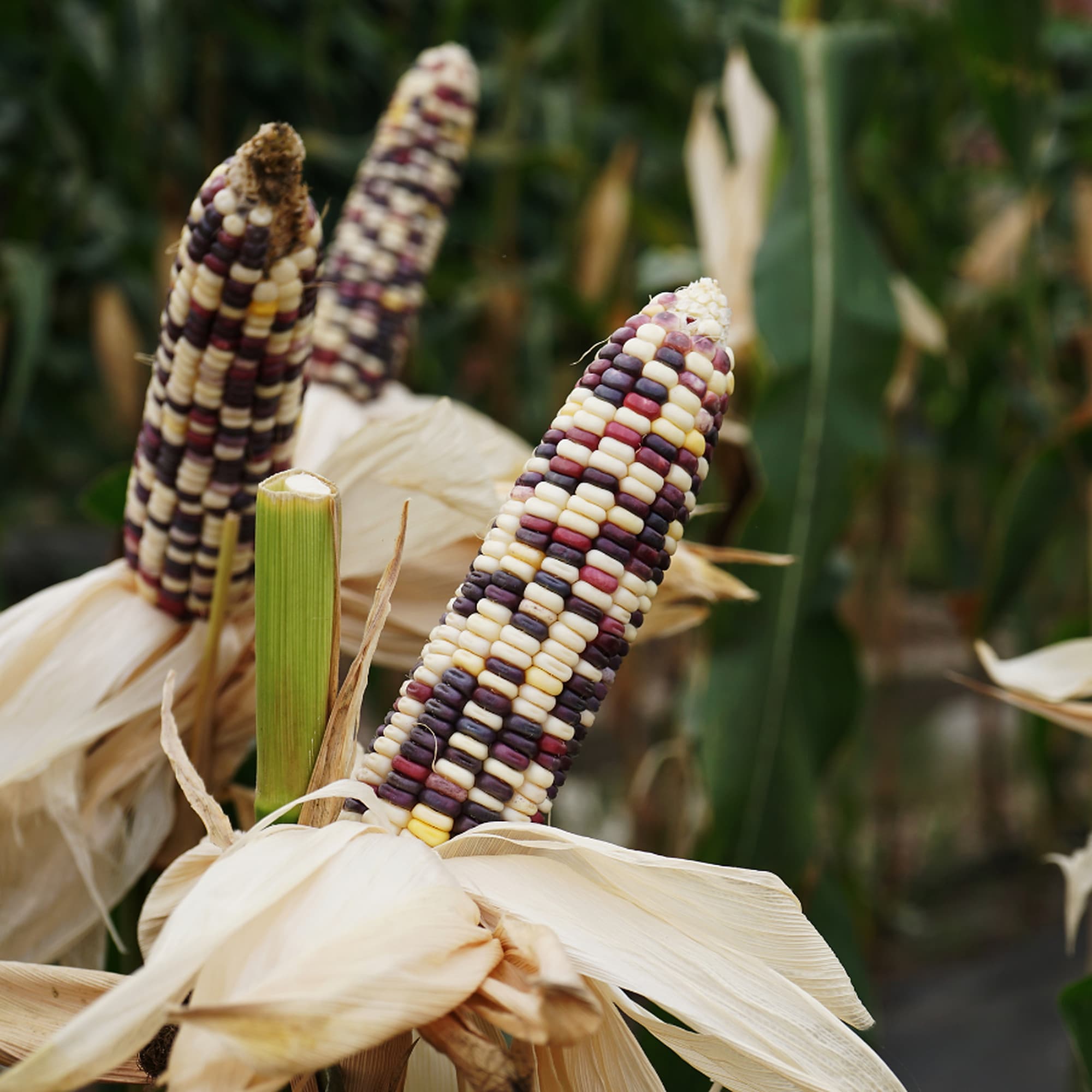
Corn is a warm-season grass that is pollinated by wind, so it does best sown direct into warm soil in a compact block of short rows. Keep sweet corn apart from popcorn and field maize, and pick it at the milky stage.
Check which type you have. Sweet corn (standard sugary, sugary-enhanced or supersweet), popcorn and field maize cross freely, and pollen from one type changes the kernels of another in the same season.
Not needed. Corn kernels take up water readily.
Not needed. Corn is a warm-season crop and needs no cold treatment.
Not needed. Sow into moist, warm soil instead; soaked seed sown into cold soil tends to rot.
Corn can germinate from 10 °C (50 °F) and does well at 16-35 °C (60-95 °F). Sow standard and sugary-enhanced sweet corn once the soil is 13-16 °C (55-60 °F); supersweet (sh2) types need at least 16 °C (60 °F) and should go in about two weeks later.
2.5 cm (1 in) deep in heavy soil and up to 5 cm (2 in) in light, sandy soil. TNAU dibbles field maize 4 cm (1.6 in) deep.
Fertile, well-drained loam. Corn is sensitive to waterlogging and salinity, so avoid low-lying, poorly drained plots; on heavy soil sow on ridges or raised beds.
Sow into moist soil and keep it moist until seedlings are up. On east-west ridges, ICAR-IIMR advises sowing on the southern side for better germination.
No light needed under the soil cover. Choose an open, sunny bed.
Fast in warm soil. In cold, wet soil emergence is slow and seedlings rot, which is why planting waits for warm soil.
Sow direct, one or two seeds per spot, 20-30 cm (8-12 in) apart in rows 75-90 cm (30-36 in) apart. TNAU uses 60 x 25 cm (24 x 10 in) for field maize.
Plant four or more short rows side by side rather than one long row. Pollen falls from the tassels onto the silks of nearby plants, and a block gives well-filled ears.
Where two seeds came up, thin to the stronger seedling. Weed carefully while plants are small and keep the soil moist; young seedlings and knee-high plants are sensitive to drought.
ICAR-IIMR gives the last week of June to mid-July for kharif (ideally 12-15 days before the monsoon arrives), late October to 15 November for rabi, and the first week of February for spring maize.
Aim for about 2.5 cm (1 in) of water a week. The crop must not go short at the knee-high stage, at tasselling and silking, and during grain filling.
Check ears 18-23 days after the silks appear. Silks should be brown and dry and a kernel pressed with a thumbnail should give milky juice; clear juice means it is not ready. In hot weather ears stay at their best for only one or two days, so check often.
Leave ears on the plant until the husks and kernels are dry, then dry the cobs further before shelling and store the grain cool and dry.
Sow corn direct into warm soil in a block of short rows for full, well-filled ears.
Corn is wind-pollinated. A single row or a very small patch gets too little pollen on the silks. Plant at least four short rows side by side and water during tasselling if the soil is dry.
Not side by side. Pollen from field corn or popcorn makes sweet corn starchy in the same season. Keep at least 76 m (250 ft) between them or sow so they tassel at least two weeks apart.
Late June to mid-July for kharif, late October to mid-November for rabi, and early February for spring maize, according to ICAR-IIMR.
