Free EMS courier delivery across India
Nutmeg Seeds plant

Tree growing guide

How to grow nutmeg from seedMyristica fragrans

Nutmeg is a slow, shade-loving evergreen tree of the humid tropics whose seed must be sown fresh, because it dies if it dries out. This guide covers sowing, the long wait for germination, shade, and the male-or-female question that seed-grown trees only answer when they first flower.

≈ 25-30 °C
Germination temp.
≈ 30-90 days
Germination
≈ 2 cm
Sowing depth
Shade
Light

At a glance

Germination temperature
Warm and humid; the crop's climate is about 25-30 °C (77-86 °F).
Sowing depth
About 2 cm (0.8 in), in sand over a sandy soil bed.
Germination time
Slow: about 30-90 days, typically 50-80 days.
Light
Shade. Germinate and grow young plants in a cool, shaded spot.
Pre-treatment
Remove the fleshy rind and red mace, then sow at once. Never dry the seed.
Transplant or direct sow
Sow in a bed or pot, move to polybags at the two-leaf stage, plant out at the start of the rains.

Seed preparation

Seed preparation

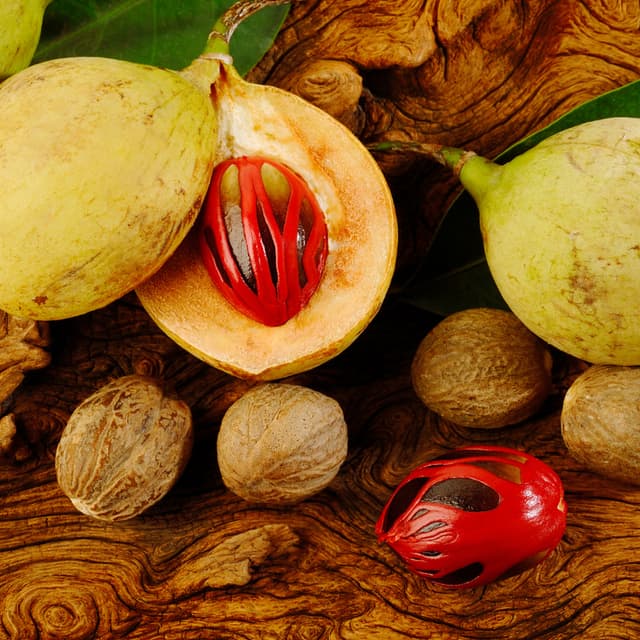
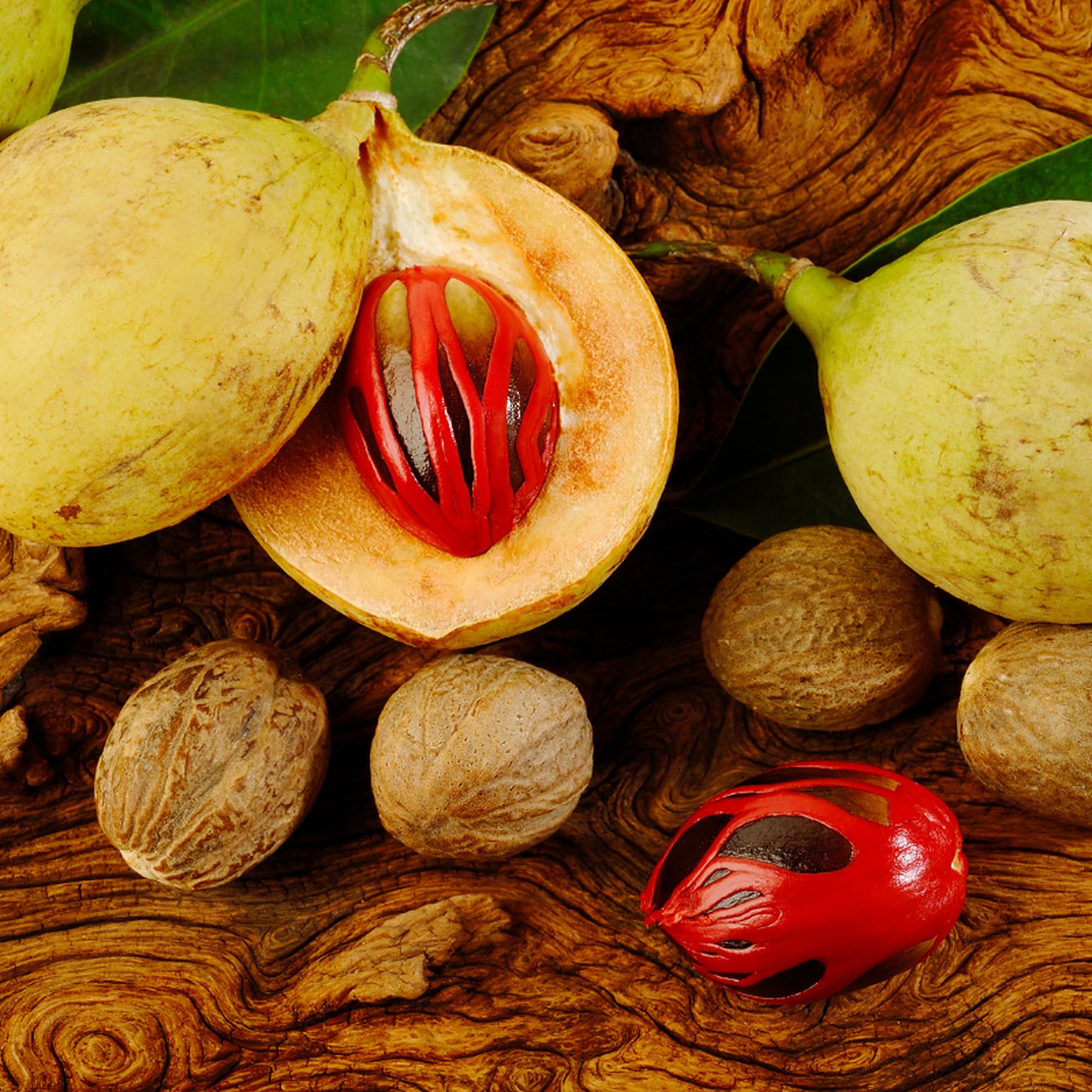
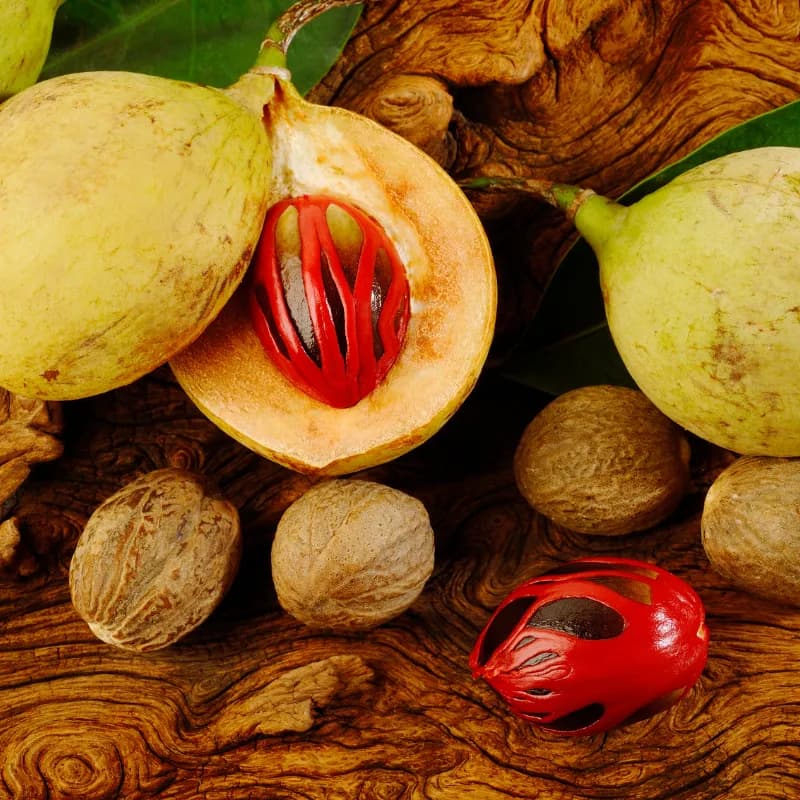
Nutmeg seed is recalcitrant: it is killed by drying and cannot be stored like ordinary seed (ICFRE Institute of Wood Science and Technology). In an Indonesian storage trial the best packaging still held only about 56% germination after 12 days, and the authors advise sowing soon after harvest. Kerala Agricultural University (KAU) recommends sowing immediately after collection; if sowing must wait a few days, keep the seed in damp soil, not in a dry packet. Remove the fleshy rind and the red mace before sowing.
Scarification

Not needed. Sow the nut in its shell; cracking it damages the kernel.

Stratification

Not needed. Nutmeg is a tropical tree; cold kills the seed.

Soaking

Not needed when the seed is fresh. Keep it moist from harvest to sowing instead of soaking a seed that has already dried, which will not revive it.

Nutmeg Seeds

Germination conditions

Germination temperature

Warm. No precise germination temperature is published for nutmeg, but the tree grows in hot, humid climates with mean temperatures of about 25-30 °C (77-86 °F). Outside the tropics use a heated propagator or a warm greenhouse.

Sowing depth

About 2 cm (0.8 in) deep and roughly 12 cm (5 in) apart in the bed (KAU). In pots, sow one seed per deep pot.

Growing medium

KAU uses raised beds 100-120 cm (40-48 in) wide and 15 cm (6 in) high of garden soil and sand mixed 3:1, topped with 2-3 cm (1 in) of sand. Any free-draining, sandy mix works in pots.

Moisture

Water regularly so the bed never dries, but do not let it waterlog; the seed rots in stagnant water.

Light

Choose a cool, shaded place. Young nutmeg plants are grown under about 50% shade (World Agroforestry).

Germination time

Patience is essential. KAU gives 50-80 days in seedling beds; in rootstock beds germination starts around day 30 and can take up to 90 days.

Transplanting and first growth

  1. Transplanting

    Move seedlings into polybags when the shoot has produced its first two opposite leaves (KAU), using a soil, sand and cow dung mix of 3:3:1, and keep them shaded.

  2. Planting out

    KAU plants in pits 90 x 90 x 90 cm (3 ft) filled with topsoil and compost or manure, spaced 8 x 8 m (26 ft), at the start of the rains. Plant shade trees or bananas in advance; World Agroforestry notes that shade can be reduced gradually and trees can grow without it after 6-7 years.

  3. Male or female?

    Nutmeg is dioecious: a seedling shows its sex only when it first flowers, about 7-9 years old in good conditions, and about half of seedling trees turn out to be unproductive males (KAU). Growers who want fruit plant grafted females with about one male per 20 females; from seed, raise several plants so that at least some are female.

Nutmeg Seeds

Common problems

ProblemNo germination at all
Cause
The seed dried out before sowing, so the recalcitrant embryo died.
What to do
Sow only fresh seed straight away, and keep any waiting seed in damp soil.
ProblemNothing after a month
Cause
Nutmeg is simply slow.
What to do
Keep the bed shaded and moist and wait up to 90 days before giving up.
ProblemScale insects on stems and leaves of seedlings
Cause
Black, white and shield scales attack nursery seedlings and young plants (KAU).
What to do
Inspect regularly and wipe off or treat small infestations early.
ProblemLeaf spots that fall out to leave holes
Cause
Leaf spot and shot hole (Colletotrichum gloeosporioides).
What to do
Remove infected leaves and avoid overcrowding; KAU sprays 1% Bordeaux mixture in the rainy season on plantations.
ProblemLeaves scorched on young plants
Cause
Too much sun.
What to do
Give 50% shade until the tree is established.

Practical growing tips

Choose a humid site

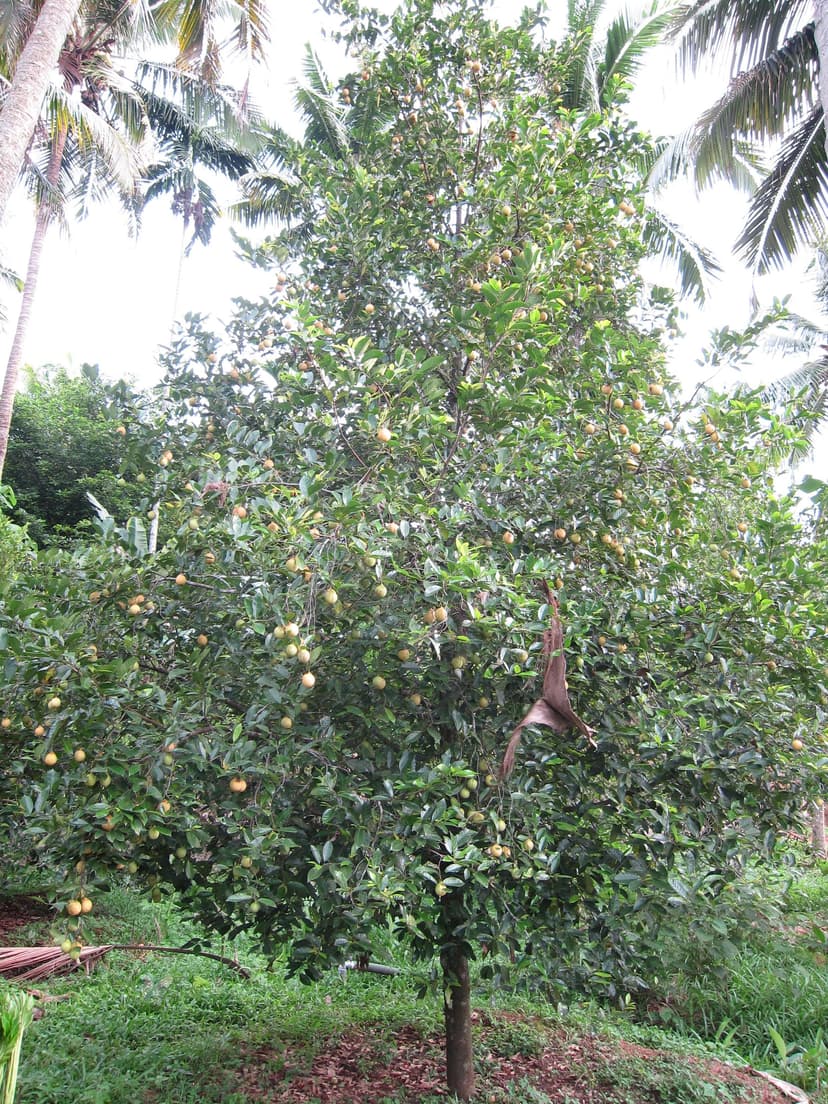
KAU recommends a hot, humid climate with no pronounced dry season and at least 1,500 mm of rain, from sea level to about 1,300 m. Dry climates and waterlogged soil are unsuitable; the humid south-west of India suits it well.

Plan for a long wait

Seed-grown trees flower and fruit from about 7-9 years, and in less favourable areas only after 15-20 years (World Agroforestry). Grafted trees bear earlier and are female by choice.

Do not over-shade mature trees

Thread blight is worse under heavy shade. Thin the shade trees as nutmeg grows.

Indoor growing

Outside the tropics nutmeg needs a warm, humid greenhouse year round; it will not tolerate cold.

Nutmeg seeds from Deodar

Sow nutmeg seed as soon as it arrives, in warm, shaded and moist conditions.

Frequently asked questions

Can I store nutmeg seeds and sow them later?

No. Nutmeg seed is recalcitrant and dies when it dries out; an Indonesian trial kept only about half of seeds viable after 12 days even in the best packaging. Sow on arrival.

Will a nutmeg seedling give nutmegs?

Only if it is female, and you will not know until it first flowers at about 7-9 years. About half of seedlings are male, so grow several plants or use grafted females for a crop.

Can I grow nutmeg from a kitchen nutmeg?

No. Shop nutmegs are dried kernels, and drying kills the seed.

How long do nutmeg seeds take to sprout?

Usually 50-80 days, sometimes up to 90. Keep them warm, shaded and moist.