
Seed preparation
Sow straight from the packet into a sterile, soilless seed mix. What usually holds jalapeño seed back is a cold mix, not the seed itself.
Vegetable growing guide
Jalapeño seed sprouts in 2 to 4 weeks when the mix is kept at 27-29 °C (80-85 °F); in a cool room it is slower. Sow indoors 8 to 10 weeks before it is safe to plant out, move plants outside once nights stay above 10 °C (50 °F), and pick the first firm green pods about 75-85 days after transplanting.
Sow straight from the packet into a sterile, soilless seed mix. What usually holds jalapeño seed back is a cold mix, not the seed itself.
Not needed. Extension seed-starting instructions for chile peppers go straight to sowing.
Not needed. Jalapeño is a warm-season plant and a cold spell only delays it.
Not needed. Extension guides for chile peppers do not call for it; a warm, evenly moist mix does the same job without the risk of rotting seed.
Warmth decides how fast jalapeño seed comes up. The New Mexico State University Chile Pepper Institute gives 2 to 4 weeks, and its timing depends on soil temperature far more than on light.
Keep the mix at 27-29 °C (80-85 °F). The University of Minnesota keeps flats on a heat mat at 27-32 °C (80-90 °F) until seedlings emerge. A heat mat dries the mix faster, so check moisture daily.
Cover the seed with about 6 mm (1/4 in) of mix and firm it lightly.
Fine, sterile, soilless germination mix in trays or small cells. Once true leaves appear, thin or transplant seedlings to 5-8 cm (2-3 in) apart.
Water the mix before sowing, then let the surface dry slightly before watering again. Empty any water left in the drip tray: overwatering is the main cause of damping-off, the fungal disease that topples young seedlings.
Seed germinates in the dark, but seedlings need strong light from day one. An ordinary windowsill often gives leggy, weak plants; use bright overhead light or a window with sun all day.
2 to 4 weeks. Check the mix with a soil thermometer: if it reads near 21 °C (70 °F) rather than 27 °C (80 °F), expect the slower end of the range before you decide the seed has failed.
When seedlings are 2-3 cm (1 in) tall, move each into its own module or small pot (RHS), and into a 13 cm (5 in) pot once roots show through the drainage holes. Keep young plants bright at 16-18 °C (60-64 °F) or warmer. Pinch off any flower buds that form indoors.
From about 6-8 weeks old, water a little less and start taking plants outside for one or two hours a day, sheltered from wind. Increase the time over one to two weeks until they stay out day and night, and bring them in if nights drop below 13 °C (55 °F).
Plant out after night lows stay above 10 °C (50 °F), in the late afternoon or on a cloudy, calm day. Set plants at the same depth as in the pot, 45 cm (18 in) apart in rows 75-90 cm (30-36 in) apart, in soil of pH 6.5-7. Avoid beds where tomato, potato, pepper, aubergine or tomatillo grew in the last three or four years.
Jalapeño is grown the same way as Indian chilli. The windows below come from Tamil Nadu Agricultural University; north Indian dates are in our month-by-month chilli sowing guide.
TNAU sows chilli in January-February, June-July or September-October and transplants 40-45-day-old seedlings. In a frost-free climate you can start jalapeños in any of these windows.
Flowers may not set above about 32 °C (90 °F) or below 16 °C (60 °F) (NMSU), and the RHS notes that temperatures above 30 °C (86 °F) reduce fruiting. Time sowing so plants flower outside the hottest weeks of the year.
Sow indoors in late winter to early spring, 8 to 10 weeks before planting out. The RHS waits for nights of at least 12 °C (54 °F) before plants go outside, usually late May or early June in the UK.
Water at the base, not over the leaves, and soak the soil rather than sprinkling it: light sprinkling keeps roots shallow. Pots may need water every day in hot, dry weather.
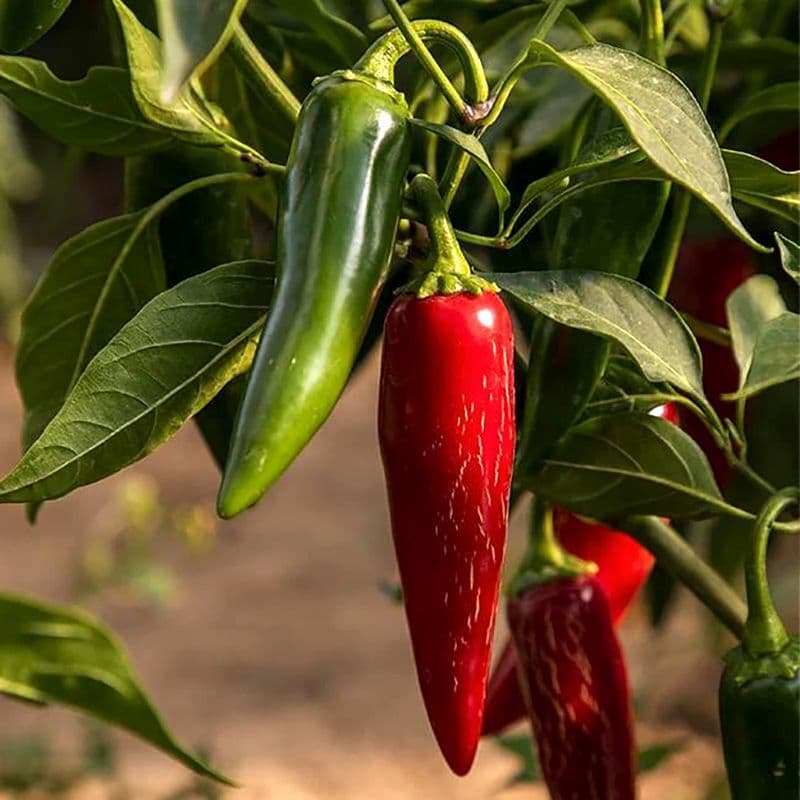
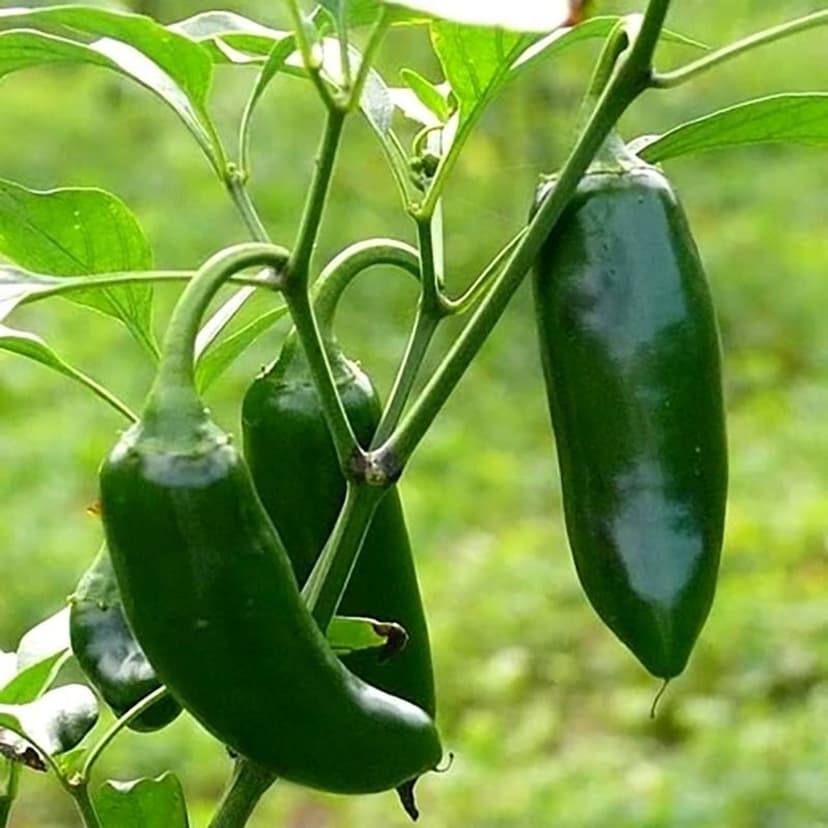
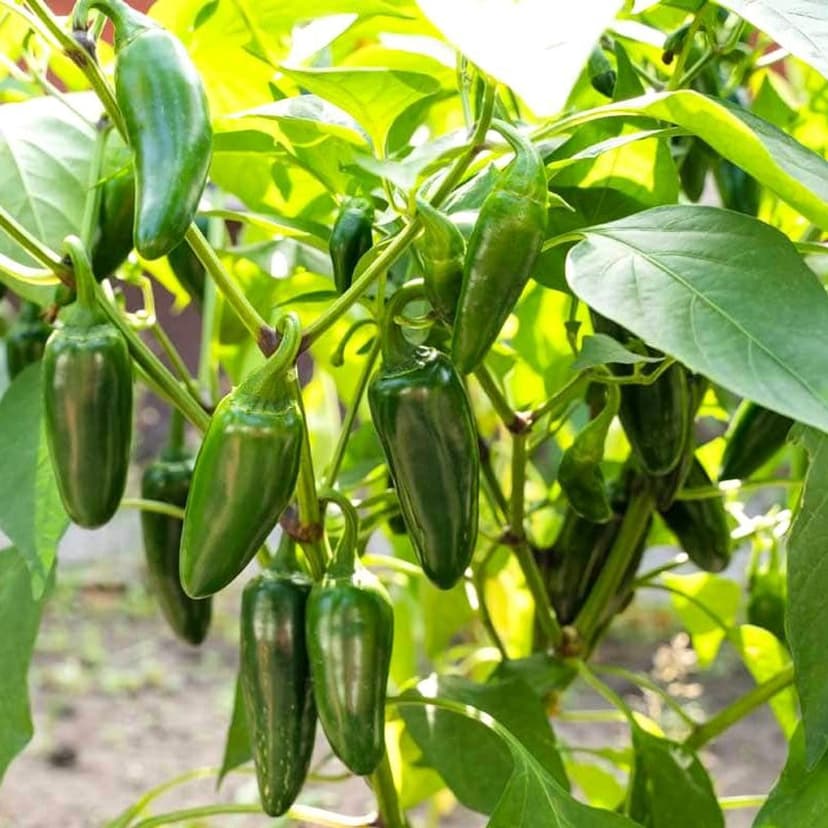
Jalapeños are usually harvested firm and dark green, about 45-55 days after the flower is pollinated. Leaving pods to turn red early in the season slows new flowering, so regular green picking gives more pods over the season.
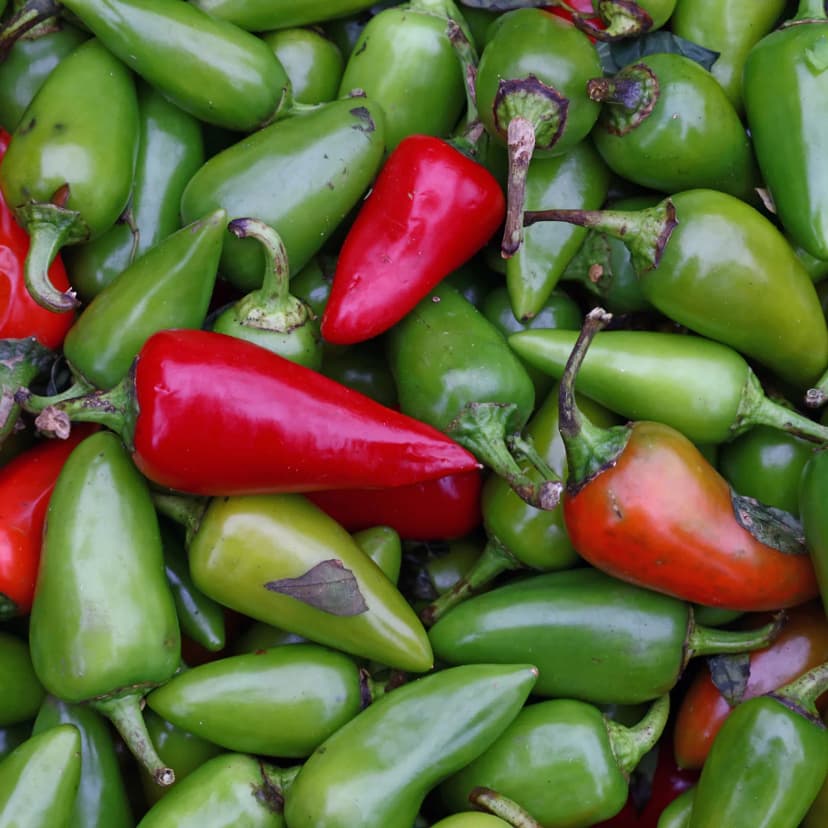
A red pod is a fully ripe one. Leave a few to ripen near the end of the season if you want red jalapeños or seed of your own.
The RHS puts jalapeño at 2,500-8,000 Scoville heat units and Texas A&M at 3,500-4,500. Capsaicin is concentrated in the seeds and the white inner membrane, so removing them makes a pod milder.
Wear gloves to pick and cut hot peppers and wash your hands before touching your eyes. Fresh pods keep 2-3 weeks at most at 7-13 °C (45-55 °F).
Choose a jalapeño by pod colour, size and heat, and start it 8 to 10 weeks before your planting-out date.
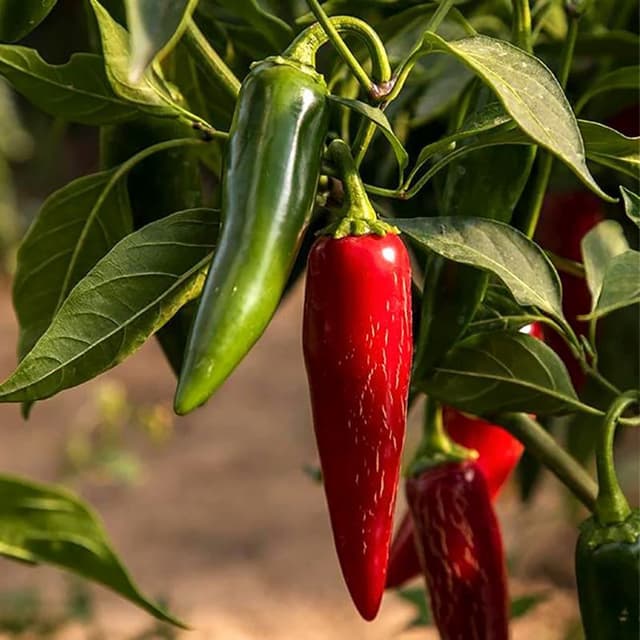 Hot pepper Jalapeno Giant SeedsCapsicum annuumfrom
 Hot pepper Jalapeno NuMex lemon SeedsCapsicum annuumfrom
 Hot pepper jalapeno SeedsCapsicum annuumfrom
 Hot pepper Jalapeno Telica SeedsCapsicum annuumfrom
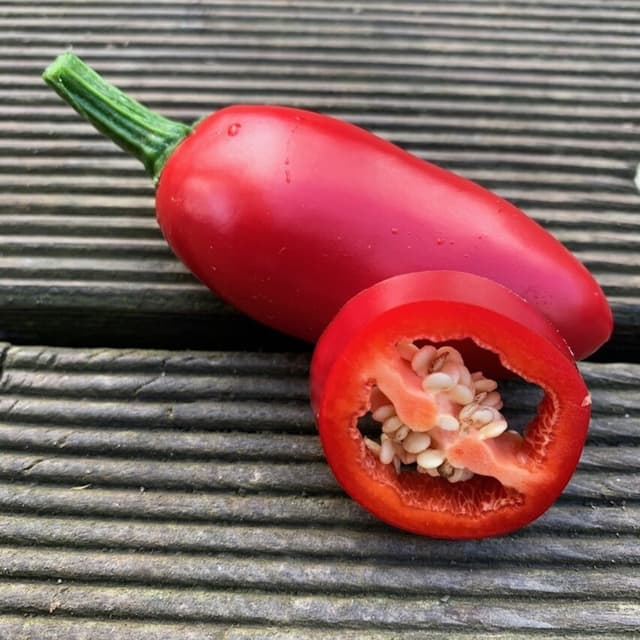 Hot pepper Jalapeno Conchos SeedsCapsicum annuumfrom
 Hot pepper Jalapeno Casablanca SeedsCapsicum annuumfrom
 Hot pepper Jalapeno Azabache SeedsCapsicum annuumfrom
 Hot pepper Jalapeno Yellow Jumbo SeedsCapsicum annuumfrom
 Hot pepper Jalapeno Mammoth SeedsCapsicum annuumfrom
Usually 2 to 4 weeks, depending on soil temperature, according to the New Mexico State University Chile Pepper Institute. A mix at 27-29 °C (80-85 °F) gives the faster end of that range.
8 to 10 weeks before it is safe to plant outside, which is when night lows stay above 10 °C (50 °F). Starting much earlier gives leggy or root-bound plants.
Texas A&M AgriLife gives 75-85 days from transplanting to harvest, and 110-120 days for a direct-sown crop. Cool weather delays the pods.
Yes. Jalapeños are picked green when full-sized and firm; left on the plant they turn red as they ripen. Green picking keeps the plant flowering and gives the larger total crop.
Yes. Pot seedlings on into 13 cm (5 in) pots, keep the compost evenly moist, and feed weekly with a high-potassium liquid fertiliser once flowering starts (RHS).