
Why Your Seeds Are Not Germinating — Six Things to Check
You have sown the seeds, watered the tray and checked it every morning. The surface still looks exactly the same.
Before you start again, compare your setup with the needs of the exact plant. Some seeds emerge within days. Others need a period of cold, a carefully prepared seed coat or simply more time. These six checks will help you decide what to change.
On this page
1. Check the expected time
Find the botanical name on your packet and open the matching growing guide. Use its germination range as a reference rather than expecting every tray to sprout together.
For example, zinnias commonly emerge in about 5–7 days under suitable conditions. Deodar cedar usually takes around 3–4 weeks after preparation. A quiet cedar tray after one week is not necessarily a failed tray.
Write down the sowing date and any treatment completed before sowing. That gives you a useful starting point when deciding whether to wait.

2. Check the temperature
More heat is not always helpful. The best temperature depends on the species, and the temperature around the seed may differ from the room.
Zinnias need warm conditions and germinate poorly in cold soil. Johnny jump-up and pansy need a cooler start: the pansy guide recommends about 18–21 °C and warns that high temperatures can reduce germination.
If possible, measure the growing medium rather than guessing from the weather. Check at different times of day, especially if the tray sits near a sunny window.
Match the sowing conditions to your local climate. A calendar date that works in the Himalayan hills may be unsuitable on a hot Indian plain.
Timing depends on the species
5–7 days — Zinnia, under suitable conditions. 3–4 weeks — Deodar cedar, after preparation. These examples are references, not a promise for every seed lot.
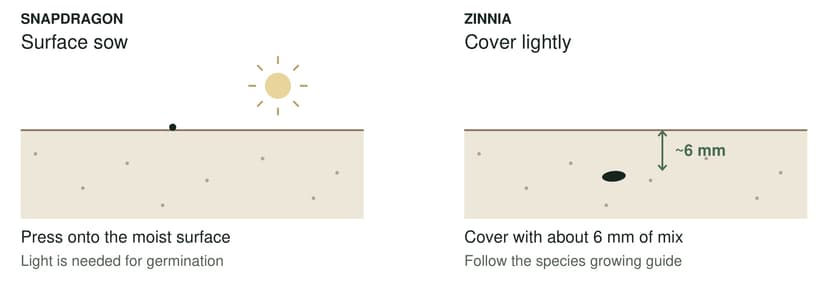
3. Check the sowing depth and light
Seeds do not all need the same covering.
Snapdragon seeds need light for germination. Press them onto the moist surface instead of burying them under compost. Zinnia seeds are normally covered with about 6 mm of soil or seed compost.
Check both the depth and the light instructions before sowing. “Keep dark” does not automatically mean “bury deeply”: pansy seed can be sown shallowly while the tray is kept dark for the initial germination period.
Water gently so small, surface-sown seeds do not wash into gaps or disappear beneath the growing medium.
4. Check moisture and drainage
For most ordinary seed trays, aim for steady moisture without leaving the mix saturated.
A dry surface can be a problem for shallowly sown seed. At the other extreme, wet, dense conditions encourage rot and damping-off. Use a clean, free-draining seed mix and containers with drainage holes.
For fine seeds such as snapdragon, gentle misting or watering from below helps keep the seed in place. Check the actual surface before adding more water.
Aquatic plants are an exception. Lotus is started in water, so use its own instructions rather than applying ordinary seed-tray advice.
5. Check whether preparation was needed
Two common treatments solve different problems.
Stratification exposes seed to a controlled period of moist conditions at a specified temperature. Deodar cedar often germinates more evenly after a short cold, moist treatment.
Scarification opens a hard seed coat so water can enter. Lotus seed is a useful example: its hard coat is carefully filed before it is placed in warm water.
Follow the method for the exact species. Do not soak, file or refrigerate every seed as a precaution. Snapdragon and zinnia normally need no pre-treatment.
6. Check freshness and storage
The history of a seed lot matters. Age and storage conditions can affect how well seeds germinate, even when the sowing method is suitable.
Deodar cedar seed, for example, is best sown fresh. Its guide also identifies old or over-dried seed as a possible cause of poor germination.
Check the packet date, available lot information and storage instructions. Avoid assuming that one storage method suits every species.
If you try again, keep a short record of the seed lot, preparation, temperature, depth and watering. Change one likely problem at a time so the next attempt teaches you something useful.
Conclusion
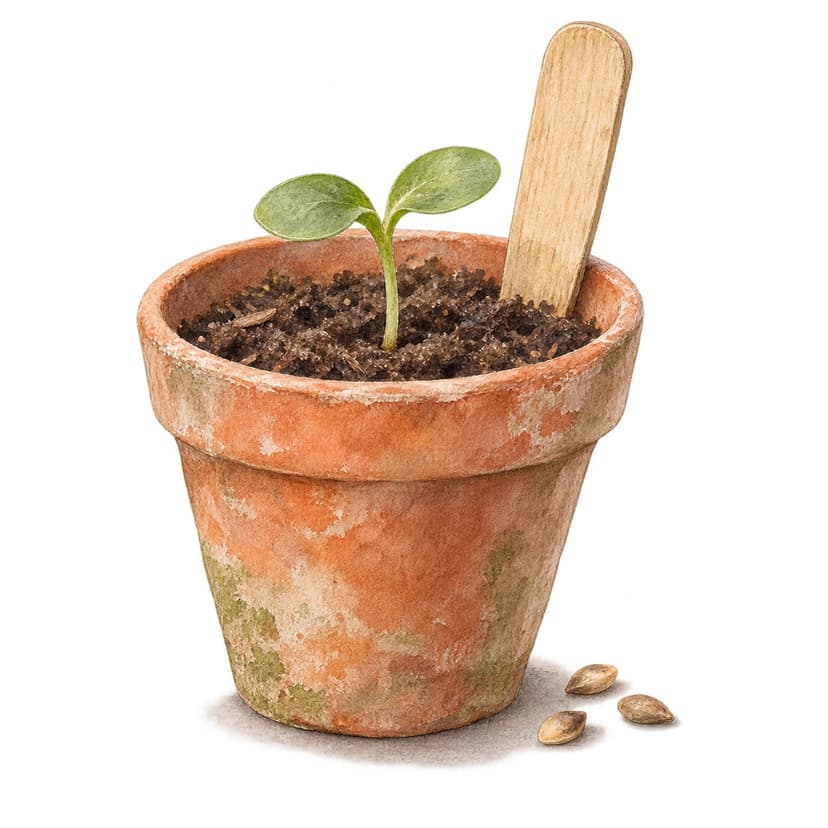
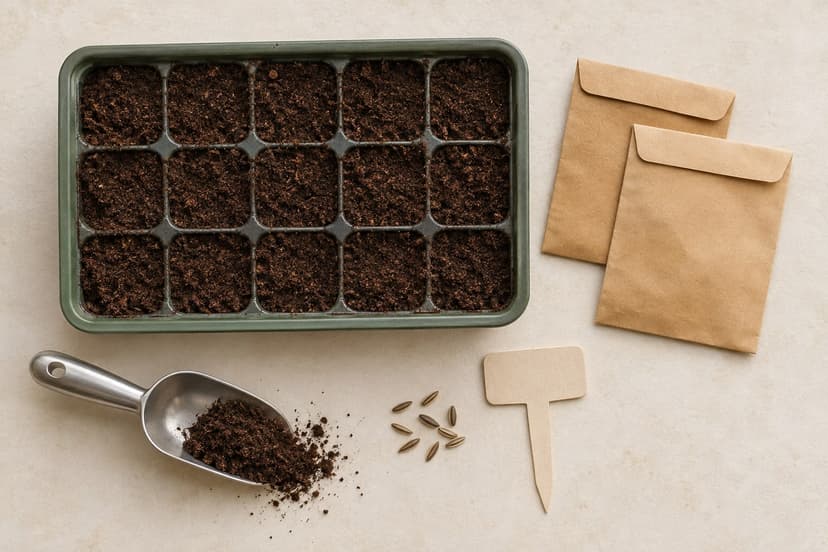
Before you sow again Check the botanical name, expected germination time, temperature, depth, light, moisture and any required treatment. Then use the detailed Deodar growing guides for your plant. A few careful observations are more useful than automatically adding more water or heat. The seedling, potted seedling and seed-tray images are AI-generated editorial illustrations. The sowing-depth diagram is not to scale.