
Seed preparation
Use seed from fully ripe fruit of healthy, vigorous trees. Rub the seeds clean of pulp in water and sow them fresh or soon after drying.
Fruit growing guide
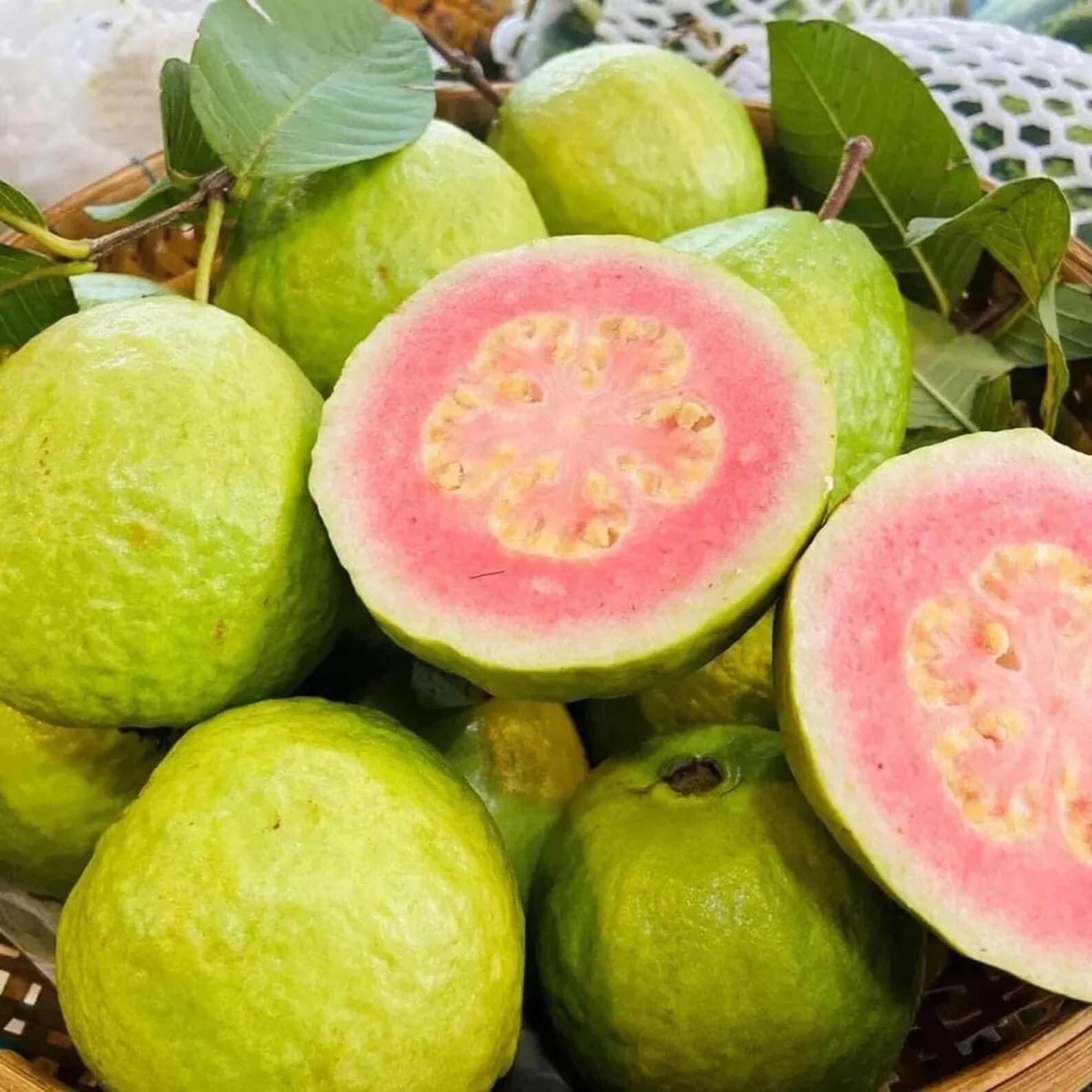
Guava seed germinates in a few weeks in warm, moist sandy mix, and seedlings make vigorous trees or rootstocks. Expect fruit in 3-8 years, and remember that seedlings vary from the parent tree.
Use seed from fully ripe fruit of healthy, vigorous trees. Rub the seeds clean of pulp in water and sow them fresh or soon after drying.
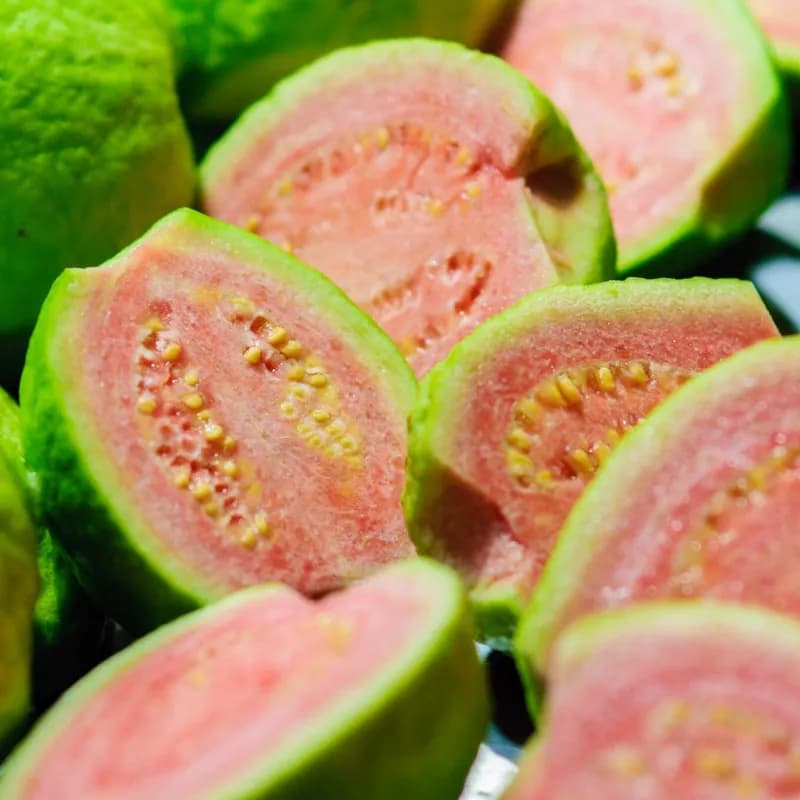
Guava seeds have a hard coat, and in an ICAR trial in Haryana untreated seed germinated poorly. A short dip in dilute sulphuric acid gave the best result (72%), but acid handling is not advised at home. Lightly rubbing seeds on fine sandpaper is a safer way to thin the coat.
Not needed. Guava is a tropical tree and the seed needs warmth, not cold.
A simple home option is to soak the seeds in plain water for 24 hours before sowing. Do not pour boiling water over them: in the same trial, the hottest water treatments reduced germination.
Keep the seed tray warm, ideally 23-28 °C (73-82 °F). Growth slows or stops below about 15 °C (60 °F), so in cool seasons use a heated propagator or a warm windowsill.
Cover the seeds about 6 mm (1/4 in) deep.
A sandy, free-draining seed mix. Guava tolerates a wide pH range, about 4.5-7, and up to 8.5 if iron is supplied.
Keep the mix evenly moist but not waterlogged. A polyhouse or a clear cover over the tray keeps humidity steady; in the Haryana trials germination and growth were better in a polyhouse than in the open.
Light is not needed under the soil cover. Move the tray into bright light as soon as seedlings appear.
Seedlings usually appear in 15-20 days. Some seeds come up later, so keep the tray for several more weeks before giving up.
Move seedlings into individual pots when they are about 4 cm (1.5 in) tall, holding them by a leaf.
Seedlings are usually ready for the field after 6-7 months, at about 30 cm (12 in) tall. In India plant in the rainy season; TNAU plants from June to December in 45 cm (18 in) pits filled with well-rotted manure, neem cake and topsoil, 5-6 m (16-20 ft) apart.
Water well after planting, again on the third day and then about every 10 days in dry weather. Protect young trees from frost: they can be killed at -3 to -2 °C (27-28 °F).
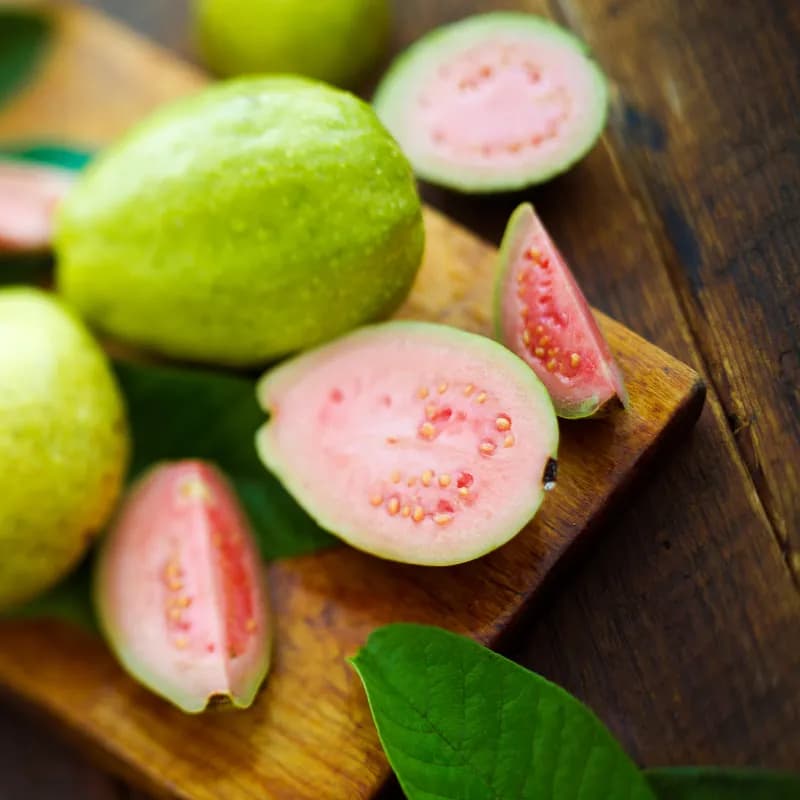
A seedling will not copy the parent variety. Commercial growers in India use air layers of named varieties such as Allahabad, Lucknow 49 and Arka Amulya; a seedling is still a good garden tree or a rootstock.
Guava grows in both wet and dry regions up to about 1,000 m altitude, best with irrigation in dry areas. It tolerates salinity and alkalinity better than most fruit trees.
TNAU applies well-rotted manure plus a balanced NPK fertilizer per tree, split between March and October, and sprays zinc and boron where deficiency appears.
Light pruning keeps trees compact and can bring flowering into a different season, which is how growers spread the harvest.
Sow guava seed warm and moist for vigorous seedlings and rootstocks.
Not exactly. Guava does not come true from seed, so fruit size and flavour vary. Named varieties are propagated by air layering or grafting.
Usually 3-8 years, depending on climate and care. Air-layered plants bear sooner, in 2-3 years.
Only with protection. Young trees die at a few degrees below freezing, so grow guava in a large pot and bring it under cover in winter.
