Free EMS courier delivery across India
Red date, Chinese date, Ziziphus Seeds plant

Fruit growing guide

How to grow jujube from seedZiziphus jujuba

Jujube stones are moderately dormant and germinate promptly only after a moist, cold treatment. This guide covers Chinese jujube (Ziziphus jujuba); seedlings make tough, drought-tolerant trees and good rootstocks for named varieties.

30 °C
Germination temp.
2.5 cm
Sowing depth

At a glance

Germination temperature
Warm; seed tests use 30 °C day / 21 °C night (86/70 °F).
Sowing depth
2.5 cm (1 in).
Germination time
Slow and uneven; allow several weeks after pretreatment.
Light
Not needed to germinate; full sun for trees.
Pre-treatment
60-90 days moist at 5 °C (41 °F).
Transplant or direct sow
Sow in deep pots or nursery drills; plant out young.

Seed preparation

Seed preparation

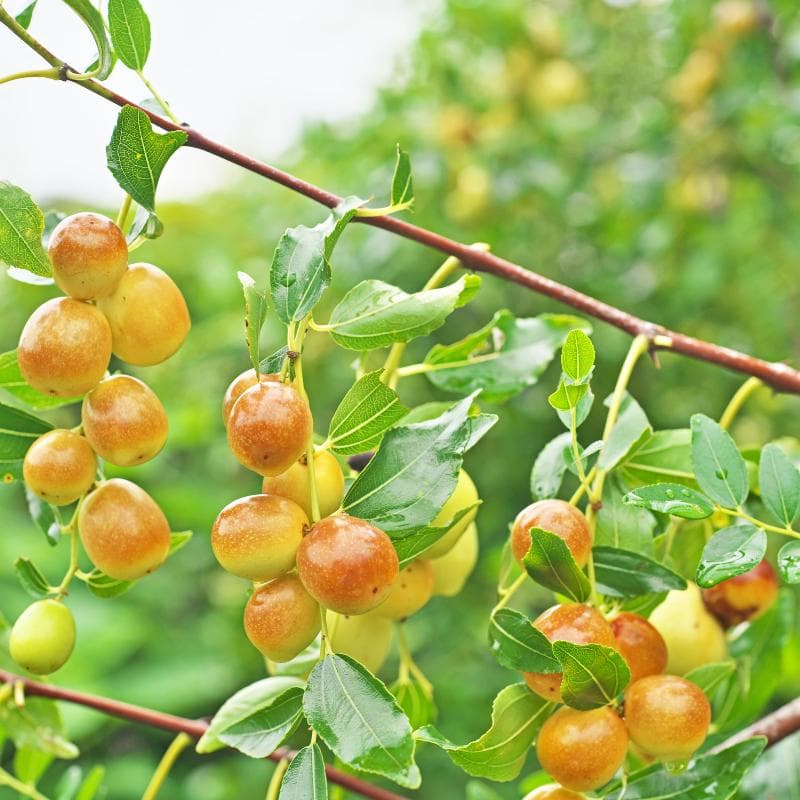
Jujube is sown as the whole stone: a hard, 2-2.5 cm (about 1 in) stone that usually holds two seeds. Remove all flesh by soaking and rubbing in water. Jujube seed appears to be orthodox, so dry, clean stones can be stored at about 5 °C (41 °F).
Scarification

Optional. Nurseries soak stones in sulfuric acid for 2-6 hours before chilling, which is not a home method. At home, the cold treatment below is enough.

Stratification

Recommended. Keep stones in moist sand at 5 °C (41 °F) for 60-90 days. An alternative is about 3 months warm and moist followed by 3 months cold. Where winters are cold you can instead sow untreated stones outdoors in autumn and let winter chill them.

Soaking

Not needed as a separate step: the stones take up water during the moist cold treatment.

Red date, Chinese date, Ziziphus Seeds

Germination conditions

Germination temperature

Warm. Seed-testing labs use alternating 30 °C by day and 21 °C at night (86/70 °F). In the tropics sow pretreated stones at the start of the warm season; in temperate climates sow in spring.

Sowing depth

Cover with 2.5 cm (1 in) of soil.

Growing medium

Deep pots or a nursery bed with sandy, well-drained soil. Use deep containers rather than shallow trays so the root can grow down freely.

Moisture

Keep moist but not wet; jujube seedlings dislike soggy, poorly drained soil.

Light

Not needed until emergence (germination is epigeal: the seed leaves come above ground). Then give full sun.

Germination time

Emergence is slow and uneven, often spread over several weeks. Keep the pots moist and warm and do not discard them early.

Transplanting and first growth

  1. Plant out young

    Move seedlings to their final place while small, keeping the root ball intact. Choose full sun and well-drained soil; in India ber is planted in July-August into 60 cm (2 ft) pits, about 7 m (23 ft) apart.

  2. Feed lightly

    In the first two years give nitrogen in three monthly portions in spring; mature trees need one nitrogen feed in early spring.

  3. Graft for named fruit

    If you want a known variety such as Li or Lang, whip-graft it onto your seedling or a root sprout. In India ber is propagated as budded plants.

Red date, Chinese date, Ziziphus Seeds

Common problems

ProblemStones do not sprout
Cause
Dormancy not broken.
What to do
Give 60-90 days moist at 5 °C, or sow outdoors in autumn in a cold-winter climate.
ProblemPoor fruit on seedling trees
Cause
Seedlings do not come true.
What to do
Graft a named variety onto the seedling.
ProblemThicket of suckers around the tree
Cause
Root sprouting, worse after root injury.
What to do
Cut sprouts at or below ground level and avoid digging near the roots.
ProblemSudden wilting and death in summer
Cause
Cotton root rot in soils where it occurs.
What to do
Do not replant jujube in the same spot.
ProblemMaggots in ber fruit (India)
Cause
Fruit fly.
What to do
Collect and destroy infested fruit and dig under the canopy to expose pupae; TNAU also lists fish-meal traps.

Practical growing tips

Climate

Jujube likes hot, dry summers and tolerates drought; late flowering helps it escape spring frost. In India the related ber (Ziziphus mauritiana) is the usual arid and semi-arid fruit tree and tolerates saline and alkaline soils.

Soil

Fair to good drainage matters more than fertility. Very alkaline soils above pH 7.8 can cause minor-element deficiencies.

Harvest

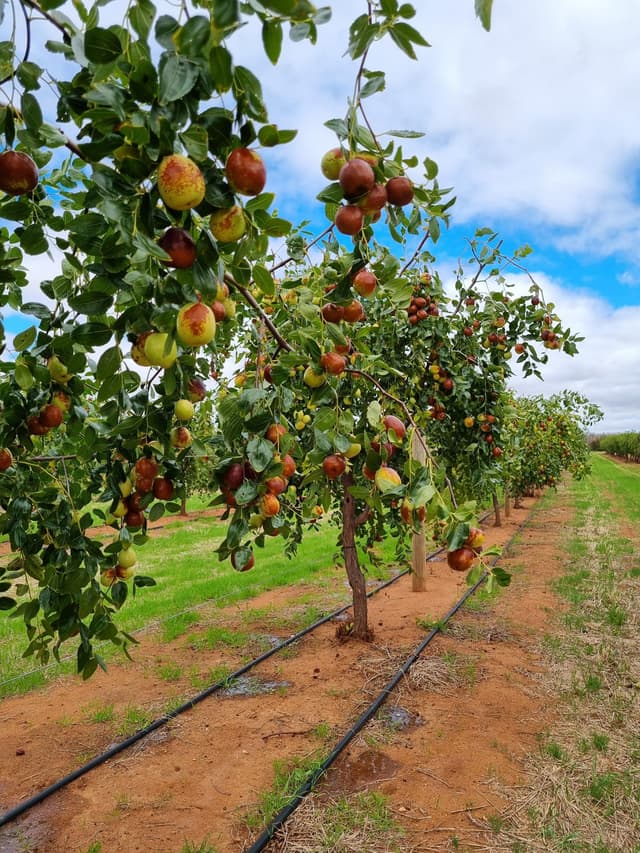
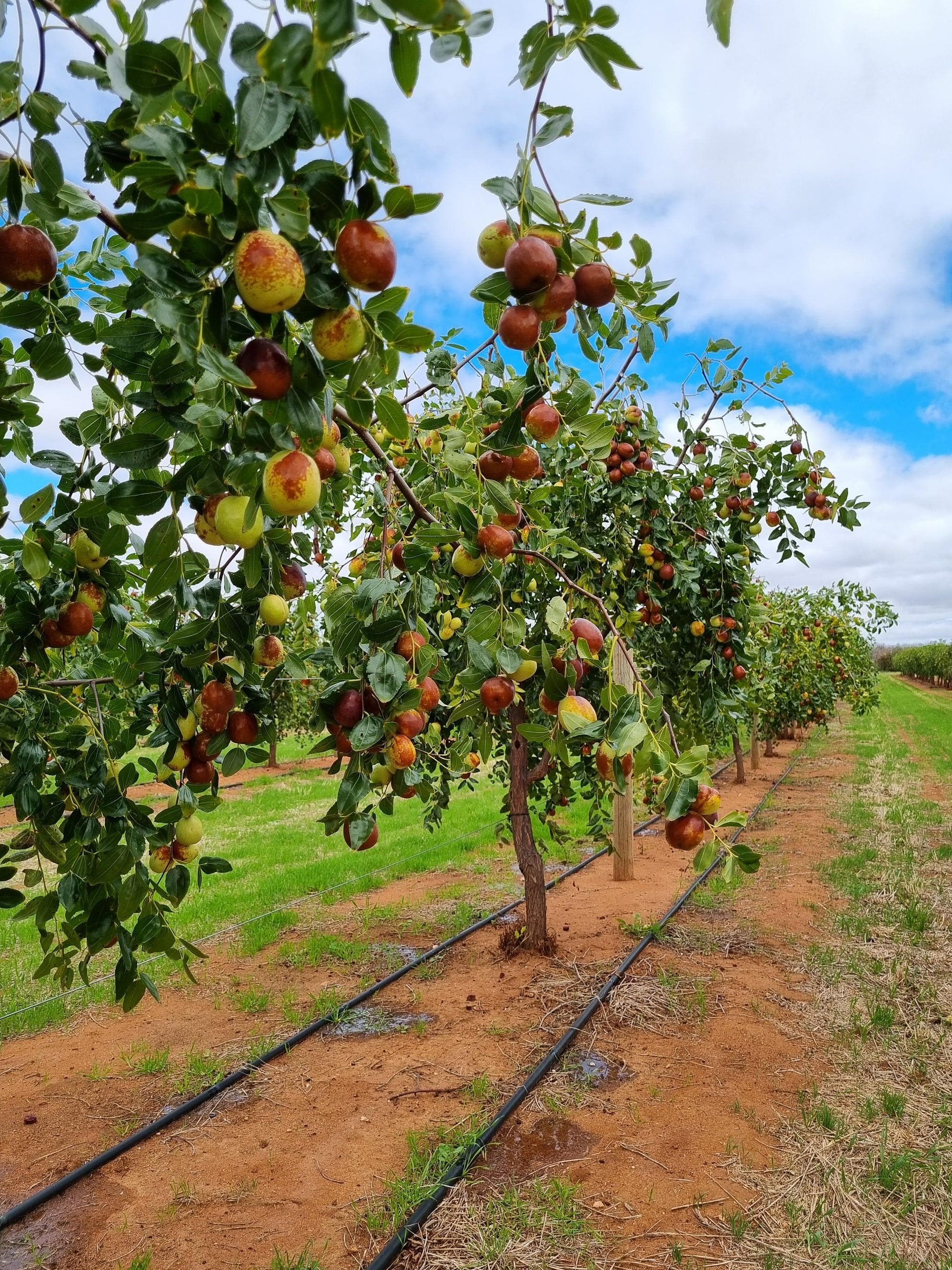
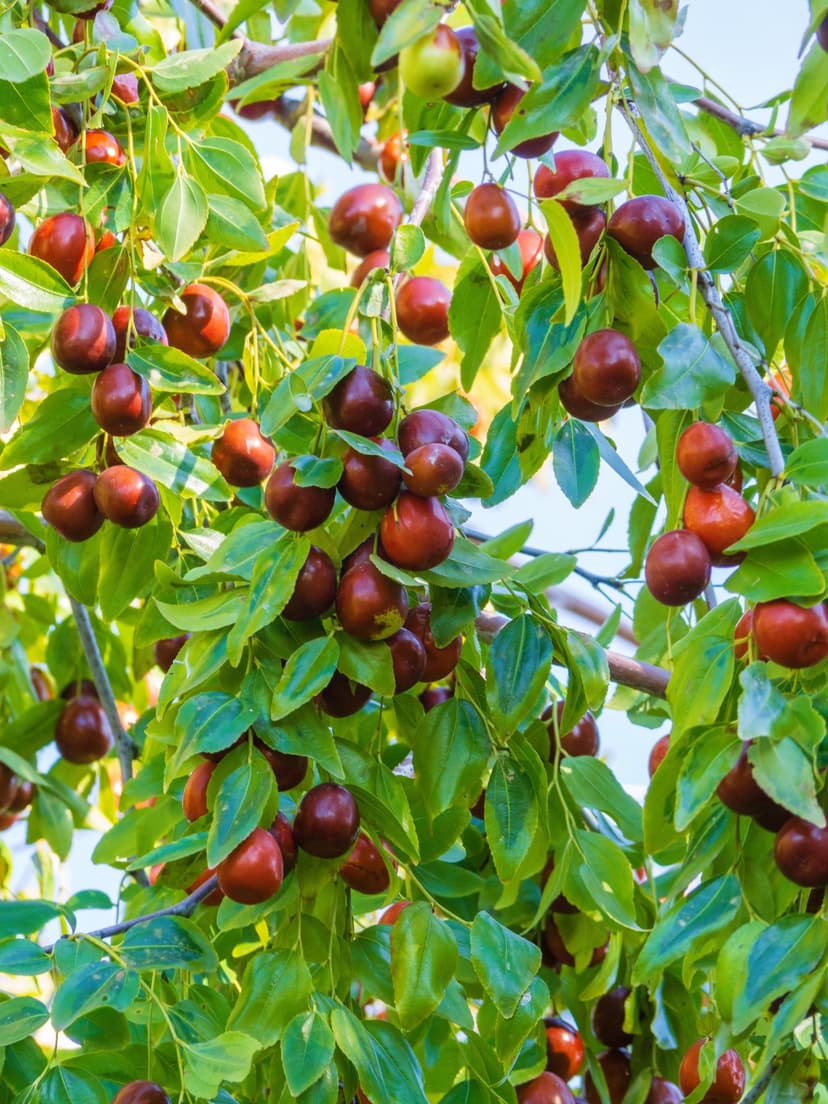
Fruit turns from light green to red or mahogany brown and later wrinkles; it ripens between July and November depending on climate and variety.

Patience

Jujube can bear as early as 1-4 years after planting.

Jujube seeds from Deodar

Chill jujube stones for two to three months and raise tough, drought-tolerant seedlings.

Frequently asked questions

Is jujube the same as Indian ber?

They are close relatives. Chinese jujube is Ziziphus jujuba; Indian ber is Ziziphus mauritiana, a tropical species grown in arid and semi-arid India.

Do I need to crack jujube stones?

No. Sow the whole stone after 60-90 days of moist cold treatment; nurseries sometimes use acid, but home growers do not need it.

Will a seedling jujube give good fruit?

Often the fruit is smaller and of lower quality. Graft a named variety onto the seedling for reliable fruit.