Free EMS courier delivery across India
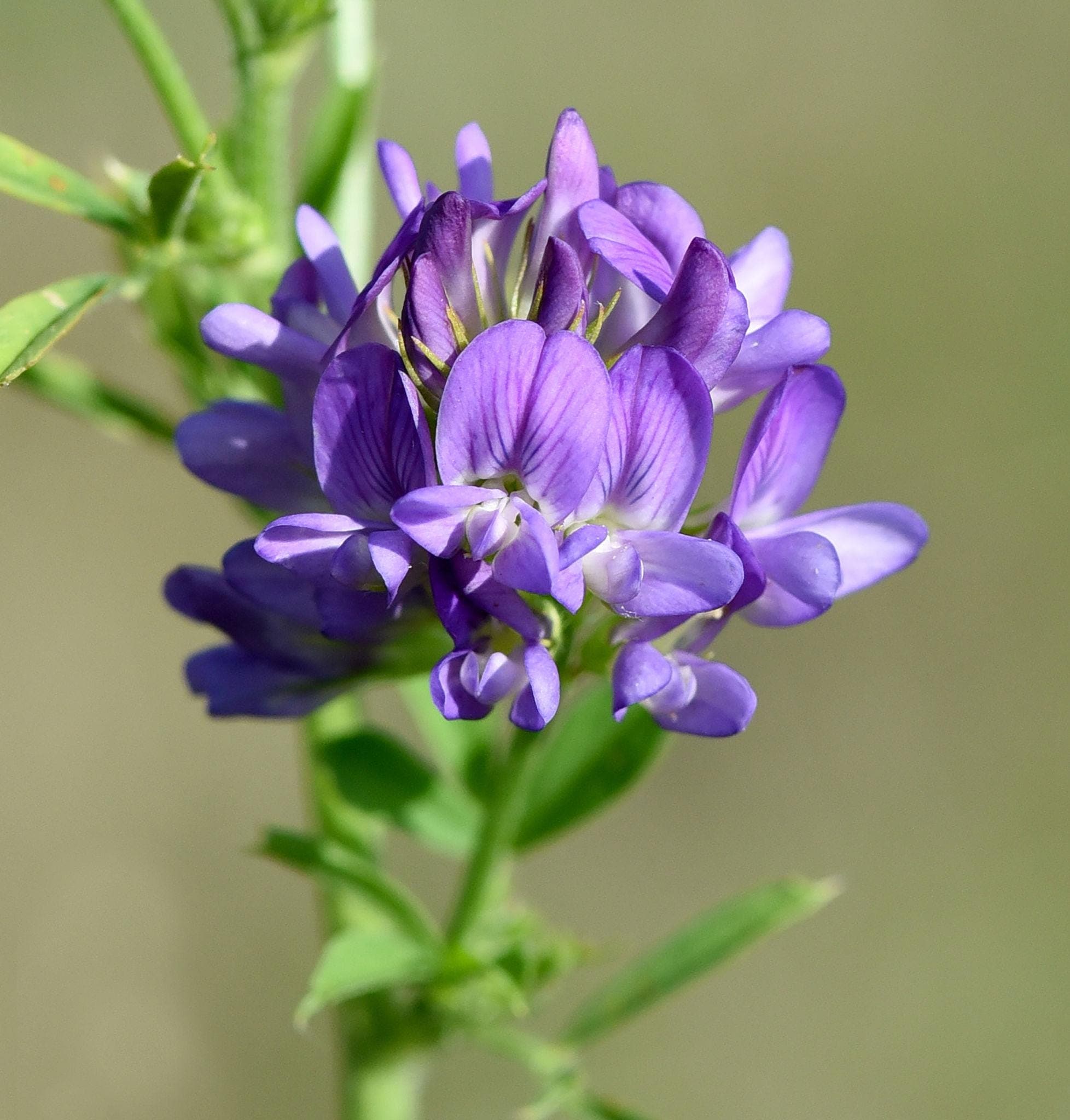
Alfalfa Seeds plant

Fodder crop growing guide

How to grow lucerne (alfalfa) from seedMedicago sativa

Lucerne, also called alfalfa, is a deep-rooted perennial legume that can be cut many times a year. It needs a shallow sowing into a firm seedbed, well-drained near-neutral soil and the right rhizobium inoculant.

20-25 °C
Germination temp.
≈ 6 mm
Sowing depth
Full sun
Light

At a glance

Germination temperature
Optimum 20-25 °C (68-77 °F); strongly depressed at 40 °C (104 °F).
Sowing depth
About 6 mm (1/4 in); no deeper than 13 mm (1/2 in) except in sand.
Germination time
Seedlings emerge in under a week with good moisture and warmth.
Light
Full sun.
Pre-treatment
Rhizobium inoculation unless the seed is already coated.
Transplant or direct sow
Direct sow only.

Seed preparation

Seed preparation

Inoculate raw seed with the alfalfa-specific rhizobium inoculant just before sowing. Much commercial seed is pre-coated; recoat seed whose inoculant date has expired. Heat kills the bacteria, so keep inoculated seed cool and sow it the same day.
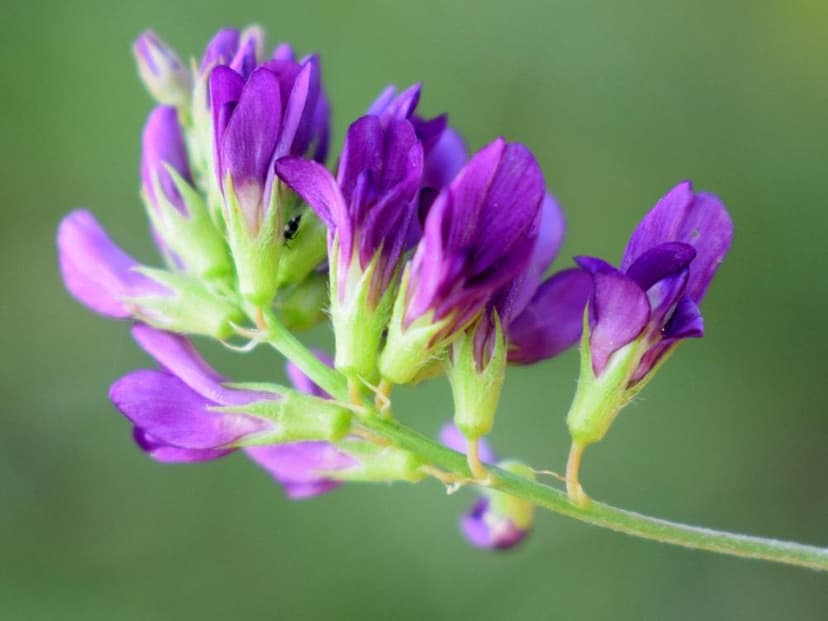
Scarification

Not usually needed for field sowing. Some lucerne seed lots contain a share of hard seed that does not take up water at once; the share differs between cultivars.

Stratification

Not needed.

Soaking

Not needed for field sowing, and soaking can wash off the inoculant. Soaking is only used when sprouting seed for eating.

Alfalfa Seeds

Germination conditions

Germination temperature

Germination is best at 20-25 °C (68-77 °F) and falls sharply at 40 °C (104 °F). Tropical Forages names autumn and early winter as the best sowing time because weed competition is lowest; on the Indian plains that means the cool season after the monsoon. In cold-winter climates autumn-sown plants need three or four trifoliate leaves before winter.

Sowing depth

About 6 mm (1/4 in), at most 13 mm (1/2 in); 2 cm (3/4 in) only in sandy soil. If you broadcast, roll or firm the soil before and after sowing.

Growing medium

Deep, well-drained soil with pH 6.5-7.0. Below pH 5.5 aluminium toxicity sets in, so lime acidic soil at least six months before sowing. Avoid sites that flood.

Moisture

Water immediately after sowing; TNAU gives a second irrigation on the third day. After that, water every 10 days or so rather than keeping the soil wet.

Light

Full sun. Lucerne seedlings compete poorly with weeds and shade.

Germination time

Under a week in good conditions. Gaps after two weeks usually mean the seed was sown too deep or the seedbed was loose.

Transplanting and first growth

  1. Transplanting

    Do not transplant. Drill or broadcast into a fine, firm seedbed; an adult footprint should sink no more than about 6 mm (1/4 in). TNAU sows 20 kg/ha in rows 25 cm apart; Arkansas Extension uses 20-22 kg/ha (18-20 lb/acre) for pure stands.

  2. First growth stage

    Keep the young stand weed-free, by hand weeding in small plots. TNAU takes the first cut 60-65 days after sowing; in established stands cut at early flowering, when about 10% of stems are in bloom.

Alfalfa Seeds

Common problems

ProblemPatchy or failed stand
Cause
Seed sown too deep or a loose, fluffy seedbed.
What to do
Firm the bed, sow about 6 mm deep and check that a few seeds are visible on the surface after sowing.
ProblemPale yellow seedlings without root nodules
Cause
No effective rhizobium, often with acidic soil.
What to do
Lime to pH 6.5-7.0 and use fresh alfalfa inoculant on the next sowing.
ProblemPlants dying in wet patches
Cause
Waterlogging and Phytophthora root rot.
What to do
Grow only on well-drained land or raised beds and avoid over-irrigation.
ProblemNew sowing fails where old lucerne grew
Cause
Autotoxicity; old lucerne releases compounds that harm new seedlings.
What to do
Grow another crop such as a cereal or sudan grass for one year before resowing.
ProblemStand thins after a few cuts
Cause
Cutting or grazing too often, before root reserves recover.
What to do
Allow regrowth to reach early flowering between cuts and avoid continuous grazing.

Practical growing tips

Feed before sowing

TNAU applies 25 t/ha farmyard manure with a basal 25:120:40 kg/ha NPK. In gardens work in compost and correct the pH; inoculated plants do not need regular nitrogen feeding.

Cut at the right stage

Root reserves are lowest about two weeks after cutting and highest at full bloom. TNAU cuts every 20-25 days after the first cut, for 12-14 cuts a year under irrigation in Tamil Nadu.

Expect the climate to set its life span

Lucerne suits temperate, Mediterranean, subtropical and upland tropical areas. In wet humid lowlands, disease and grass competition can limit stands to one or two years.

Feed fresh lucerne with care

Fresh lucerne can cause bloat in cattle. Do not turn hungry animals onto a lush stand; offer dry roughage first.

Alfalfa seeds from Deodar

Sow lucerne shallowly into a firm, well-drained seedbed for many cuts of green fodder.

Frequently asked questions

Do I need an inoculant for alfalfa seeds?

Yes, unless the seed is already coated or lucerne has grown well on the land recently. Effective nodules let the plant supply its own nitrogen.

How deep should I sow lucerne?

About 6 mm (1/4 in), and no more than 13 mm (1/2 in) except in sandy soil. Deep sowing is the most common reason for a failed stand.

When can I take the first cut?

TNAU takes the first cut 60-65 days after sowing, then every 20-25 days. Elsewhere the usual guide is early flowering.