
Seed preparation
Sow dry seed. Yellow mustard seed is larger than brown mustard, about 100,000 seeds per pound (roughly 220 per gram).
Herb growing guide
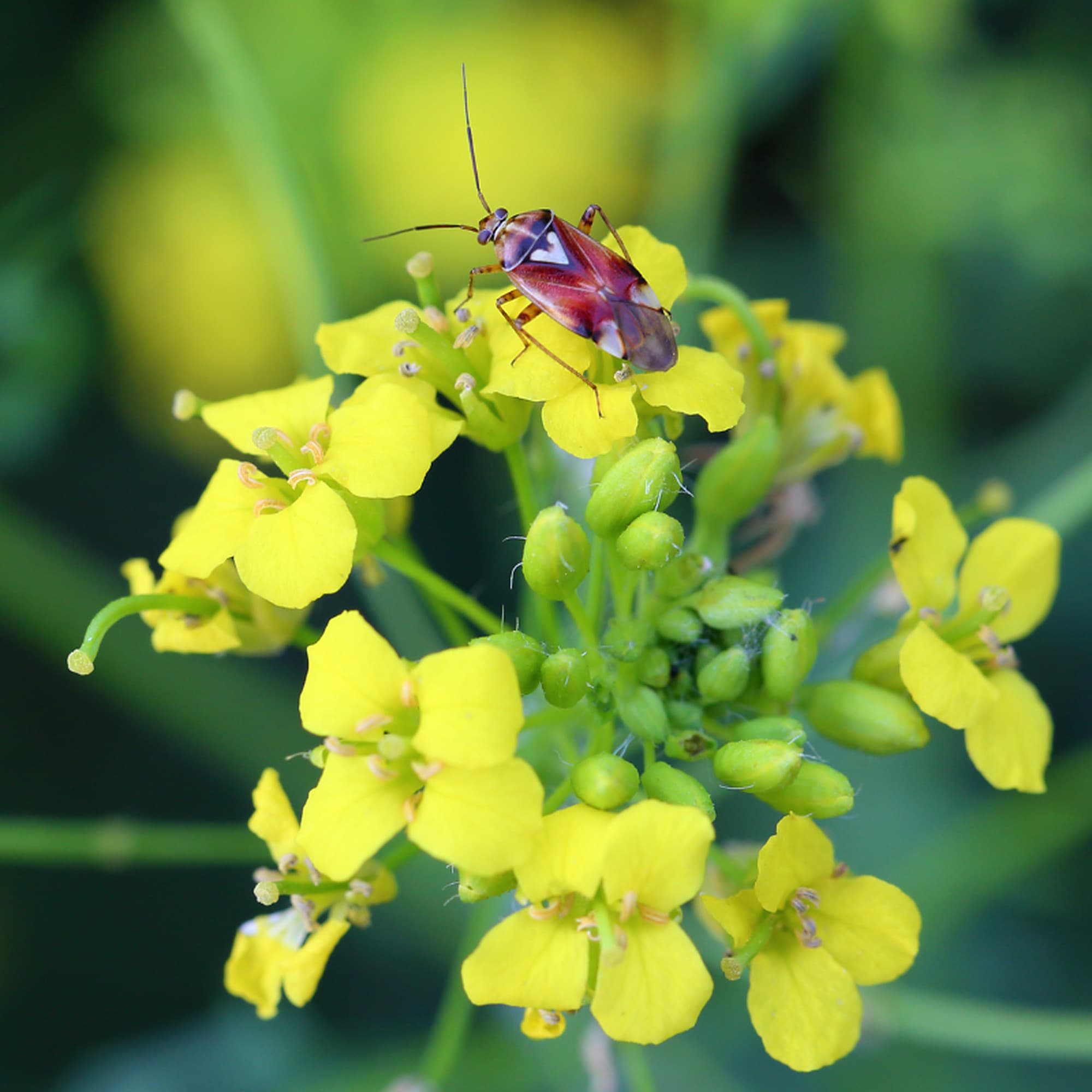
Yellow mustard, also called white mustard, is a separate genus from brown and black mustard and gives the large pale seed used in mild table mustard. It germinates in cool soil, grows fast and is equally useful as a seed crop, a green manure or quick microgreens.
Sow dry seed. Yellow mustard seed is larger than brown mustard, about 100,000 seeds per pound (roughly 220 per gram).
Not needed. The seed absorbs water readily.
Not needed. There is no cold requirement; seed germinates in soil as cool as 4-7 °C (40-45 °F).
Not needed for soil sowing. For microgreens a short soak is optional; unlike garden cress the seed does not turn into a sticky gel.
Laboratory work on white mustard found germination starting at 4-5 °C (39-41 °F), peaking at 25-30 °C (77-86 °F) and stopping at 40-45 °C (104-113 °F). Extension guides advise sowing once soil is at least 4-7 °C (40-45 °F) at 2.5 cm depth. In India this means the rabi season; avoid sowing into very hot soil in pre-monsoon months.
1.5-2.5 cm (1/2-1 in) into firm, moist soil. Under frequent sprinkler watering 3-6 mm (1/8-1/4 in) is enough. Sow up to 5 cm (2 in) only when the topsoil is dry, because emergence and speed both fall as depth increases.
A well-drained loam. For microgreens, a shallow tray of seed compost or coco peat.
Keep the seedbed moist, but do not flood it: in tests, longer flooding reduced germination, seedling length and seedling weight.
Light does not affect germination; seedlings need bright light to stay compact.
Emergence is rapid in moist soil, usually within a week. Field emergence is always lower than a germination test, which is why seed rates allow a margin.
Not needed. For a seed crop sow 9-16 kg per hectare (8-14 lb per acre, about 1-1.5 g per square metre); use the higher rate on heavy, fertile soil or where emergence is difficult.
Plants cover the ground in 4-5 weeks. Yellow varieties mature in about 80-95 days. Hot, dry weather at flowering causes flower and pod abortion, so sow early enough that flowering falls in cool weather.
Sow more densely, about 9-17 kg per hectare, keep the crop growing and well watered, and turn it in before seed sets. For a soil biofumigation effect, chop the plants and dig them into the top 15 cm (6 in) of soil immediately, then wait 3-6 weeks before planting the next crop.
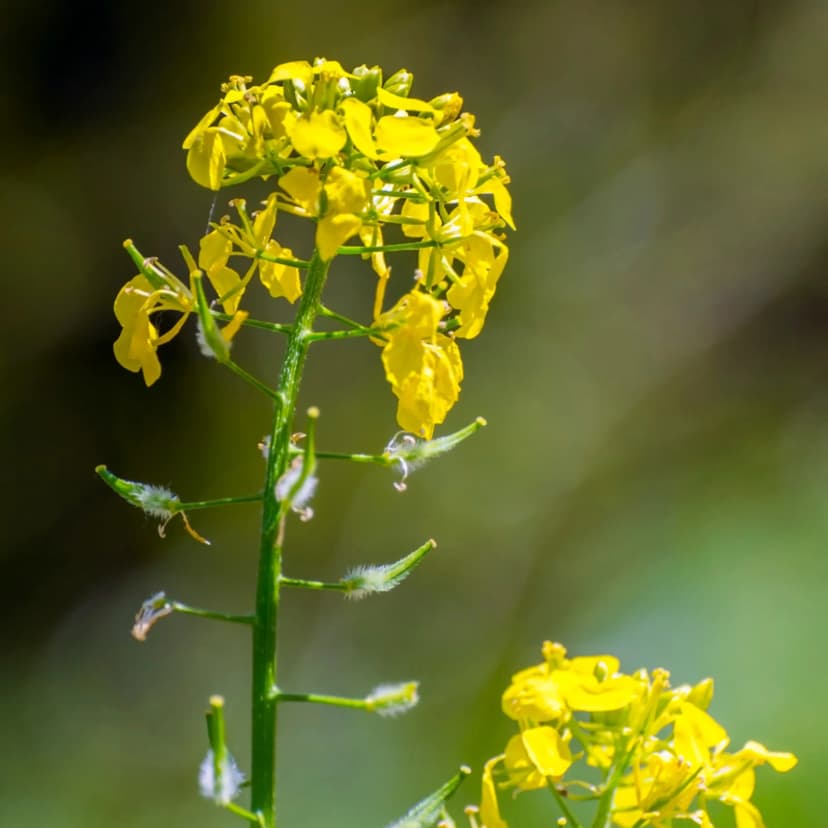
Yellow mustard does not shatter readily, unlike brown mustard. Harvest when most pods are dry, or cut when 60-70% of the seed has turned from green to yellow and let it dry before threshing.
Sow seed thickly on the surface of a tray, cover lightly or press in, keep moist and cut when the seed leaves are fully open.
Yellow mustard is often sown immediately after a cereal harvest as a catch crop; it grows fast enough to produce useful biomass before cool weather stops it.
As a green manure, follow it with a non-brassica crop such as potato, onion or legumes, so that cabbage-family diseases are not carried over.
Grow Deodar yellow mustard seeds for condiment seed, microgreens or a quick green manure.
No. Yellow (white) mustard is Sinapis alba; brown or Indian mustard is Brassica juncea. Yellow mustard has larger, pale seed and a milder heat, and its pods shatter less at harvest.
Before it sets seed, while plants are still growing. Chop and incorporate it at once, then wait 3-6 weeks before planting the next crop.
Seed can germinate up to about 40 °C (104 °F), but heat at flowering causes pod loss. For seed, sow in the cool season; for microgreens, grow indoors in the coolest bright spot.
